DRYADS
Introduction
The dryad, or tree nymph, is an ancient faerie creature inexorably linked to nature and the woods they inhabit by powerful magical bonds. These ethereal beings are cousins of the nereids, or water nymphs, sharing a common heritage with the fey folk who have dwelt in the world since time immemorial. Dryads represent one of the oldest forms of fey life, their existence predating even the Age of the Old Gods, emerging from an unknown combination of new tree life and the mysterious force known as Earth Power.
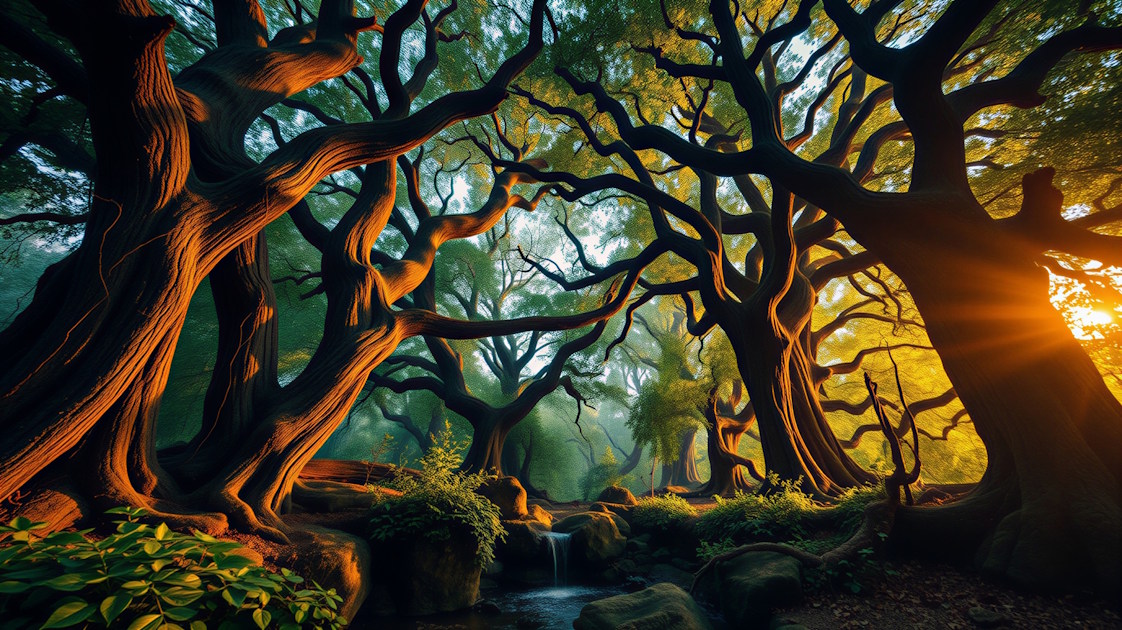
Found only deep within the most ancient of forests, far from civilizations and those they deem outsiders, dryads are creatures of profound mystery and power. Organized into groves that can house anywhere from a single dryad to dozens living in communal harmony, they represent a paradox of isolation and community. Each dryad is bound inexorably to a specific oak tree, unable to stray more than 360 yards from her symbiotic partner without experiencing progressive weakness that will eventually result in death. This limitation confines them to small territories yet creates powerful sanctuaries of concentrated fey magic within the ancient forests they call home.
Dryads are reclusive and shy by nature, even shunning the companionship of other faeries most of the time. This xenophobic behavior has made them distrustful and even sometimes stoic toward others, creating a reputation for aloofness that masks deeper complexities of their nature. Though they are known for their flirtatious, mischievous attitudes—particularly when dealing with mortal men—they can be firm and even dangerous with intruders or others they view as threats to themselves, their trees, or the woods which they call home. They are powerful beings, able to command the forest around them and call on its denizens—both plant and animal—to protect them when necessary.
Dryads are beautiful creatures, greenish in hue and slender in form, embodying the elegant grace of the ancient oaks to which they are bound. They stand about five feet tall on average and never exceed five and a half feet. Their eyes sparkle a brilliant emerald, their hair is long and green, and their skin is a leafy jade. Their features are slight, delicate, and attractive, with ears pointed much like an elf's. Though they generally disdain clothing, they will sometimes don close-fitting garments of grass, bark, and leaves for modesty's sake.
Through the Ages
The Age of the Old Gods (Before Year 0)
During the Age of the Old Gods, dryads existed as they always had—hidden within the deep hearts of the world's great primeval forests, largely untouched by the conflicts and civilizations that shaped the surface world. While human kingdoms flourished under divine guidance and the Old Gods waged their cosmic wars, dryads maintained their ancient groves and perfected the traditions and magic that would define their kind for millennia to come.
This period saw the establishment of the great dryad groves throughout the forests of Darshavon and beyond, sacred places where multiple dryads lived together in harmonious communion with their trees and the surrounding forest. Each grove developed its own distinct character and traditions while maintaining the core dryad values of connection to nature, protection of their oaks, and cautious isolation from the outside world. The most ancient and powerful groves from this era would become legendary places of beauty and magic, spoken of in hushed tones by those fortunate enough to learn of their existence.
The dryads' relationship with the natural world during this age was fundamentally different from that of most other races. Rather than seeking to dominate or reshape their environment, they lived in perfect harmony with the forest ecosystem, their magic enhancing and supporting the natural rhythms rather than disrupting them. This approach allowed them to thrive in environments that remained challenging to most other races while preserving the pristine character of their woodland homes.
During this period, dryads occasionally formed relationships with the ancient druids who served as bridges between civilization and wilderness. These druids, recognizing the dryads as kindred spirits and powerful allies in maintaining natural balance, earned the privilege of entering sacred groves and learning secrets that remained hidden from others. Some of the most powerful druidic traditions trace their origins to knowledge shared by dryads in ancient times, though the fey have always guarded their deepest secrets carefully.
The Age of Resilience (Year 0-100)
The Fall of the Old Gods and the collapse of human civilization had varying impacts on dryad communities, depending on their location and proximity to the cataclysm's affected areas. Dryads dwelling in the deep forest interior, far from human settlements and the epicenters of divine conflict, experienced the age primarily through the arrival of refugees seeking shelter and the disruption of long-established relationships with druid orders that disappeared during the chaos.
Those groves located closer to human settlements faced greater challenges, as desperate survivors fled into the forests in search of safety, food, and shelter. The dryads' response to this influx varied—some offered cautious assistance to those who approached with respect, while others defended their boundaries with fierce determination, unwilling to allow the surface world's chaos to penetrate their sanctuaries. The memory of this period would shape dryad attitudes toward outsiders for centuries to come, reinforcing their natural caution while also creating a few rare instances of lasting friendship between dryad groves and nearby human communities.
The disappearance of the ancient druid orders represented a significant loss for dryad society. These druids had served as interpreters and intermediaries, helping to maintain balance between the fey realm of the groves and the mortal world beyond. Without them, dryads found themselves more isolated than ever, forced to navigate an increasingly chaotic world without the guidance and partnership they had long relied upon. Some groves turned even more inward during this period, closing themselves off almost entirely from outside contact.
The corruption and taint that spread across many lands during this age posed new threats to dryad groves. Where the earth itself became poisoned by residual divine energies or other supernatural influences, dryads found themselves weakened, their trees sickened by soil that should have nourished them. Some groves were lost entirely during this period, their dryads dying along with their trees as corruption spread through their sanctuaries. These losses are remembered in dryad oral traditions as cautionary tales about the dangers that lurk in the world beyond their protective magic.
The Age of Change (Year 101-450)
The Age of Change saw dryads face new challenges as the Four Fiefdoms of humanity stabilized and began expanding their influence into previously untouched wilderness areas. The growing human population and its need for timber, farmland, and resources put increasing pressure on the edges of the great forests, forcing dryads to develop more sophisticated strategies to maintain their territorial integrity while avoiding open conflict with the emerging human kingdoms.
This period witnessed the full development of the defensive magic and tactics that would characterize dryad grove protection for centuries to come. Dryads perfected their abilities to entangle intruders, to become invisible within their forests, and to coordinate their defenses across entire grove territories. They learned to establish clear boundaries that warned away casual trespassers while maintaining sufficient mystery to discourage determined exploration. The reputation of dryad groves as places of beauty and danger grew during this age, keeping most human expansion at a safe distance.
The isolation that had characterized earlier periods began to break down slightly during this age, as some dryad groves found it necessary or desirable to establish limited relationships with nearby human settlements, druid circles, or ranger organizations. These relationships were always carefully controlled and limited in scope, reflecting dryad suspicion of outside influence while acknowledging that complete isolation might leave them vulnerable to threats they could not handle alone. A few grove communities became known for cautiously friendly relationships with their neighbors, occasionally providing healing or guidance in exchange for protection and respect.
The traditions of grove organization and inter-grove communication that would characterize later dryad society became more formally established during this period. Dryads developed protocols for sharing information about threats, coordinating responses to dangers affecting multiple groves, and maintaining their collective identity as a people despite their scattered, isolated communities. These arrangements helped prevent conflicts that could have weakened dryad society while maintaining the independence that each grove valued above all else.
The Age of Advancement (Year 451-539)
The current Age of Advancement has presented dryads with unprecedented challenges, as human technological progress and an expanding civilization have made forests less isolated sanctuaries than they were in previous eras. The development of better roads, faster communication, and more efficient resource extraction has brought human activity deeper into forests that had previously been too remote or too dangerous for regular contact.
The increased mobility and reach of human civilization have made it more difficult for dryads to maintain their traditional isolation. News of beautiful forest spirits spreads more quickly, attracting curious visitors, would-be scholars, and sometimes those with malicious intent. Dryads have been forced to adapt their defensive strategies, becoming more skilled at concealment and misdirection while maintaining the firm boundaries that protect their groves from unwanted intrusion.
The current period has also seen changes in the types of threats dryads face. Beyond simple wood-cutters and hunters, they now must contend with alchemists seeking rare forest ingredients, scholars attempting to study fey magic, and occasionally dark forces that recognize dryad groves as concentrations of magical power that can be exploited or corrupted. The sophistication of these threats has required corresponding sophistication in defensive measures, with dryads learning to recognize and counter magical surveillance, to identify corrupted individuals before they can cause harm, and to coordinate their defenses against organized groups.
Despite these challenges, some dryad groves have found opportunities in the changing world. The growing appreciation for natural beauty and the increasing number of humans who genuinely respect wilderness have created possibilities for more positive relationships than existed in earlier ages. A few groves have become informal guardians of larger forest territories, subtly guiding human activity away from sensitive areas while allowing sustainable use of less critical resources. These relationships remain cautious and limited, but they represent a new model for how dryads might coexist with an increasingly crowded world.
Cultural Practices
Seasonal Celebrations and Rituals
The Dryad cultural calendar is intimately tied to the seasonal cycles that govern forest life, with major celebrations marking the changes in their environment and the opportunities or challenges that each season brings. These festivals serve to reinforce grove unity while celebrating the deep connection between dryads and the natural world that sustains them.
The Spring Emergence celebrates the renewal of life in the forest and marks the beginning of the year's activities. This is the most joyous of dryad celebrations, featuring elaborate ceremonies that honor new growth, the return of migrating animals, and the awakening of their trees from winter dormancy. This celebration takes on special significance when new dryads emerge from maturing oaks within the grove's boundaries, an event that brings the entire community together in welcome and instruction. The spring ceremonies often include days of dancing, singing, and the creation of healing acorns that will be used throughout the coming year.
The Summer Flowering honors the peak of life and abundance in the forest, when their groves display their full beauty, and the magic flows most freely. This period features competitions in dancing and singing, as well as displays of magical skill that showcase individual talents while reinforcing cultural values. Dryads create elaborate performances that blend movement, music, and illusion, weaving enchantments felt throughout their territory. These performances serve both as a celebration and as a form of territorial marking, reminding anyone who ventures too close that the grove is protected by powerful magic.
The Autumn Gathering focuses on preparing for the challenges of winter, including preserving relationships with forest animals, strengthening protective wards, and deepening bonds among grove members to sustain them through the difficult months ahead. This season also involves creating enchanted acorns with various properties, with elder dryads teaching younger ones the techniques for shaping and directing the inherent magic of these seeds. The autumn ceremonies emphasize gratitude for the forest's bounty and acknowledgment of the cyclical nature of existence.
The Winter Contemplation marks the darkest and coldest time of year, when dryads spend more time blended within their trees, drawing on their oaks' strength to endure the season's harshness. The winter gatherings emphasize patience, endurance, and reflection, with dryads sharing stories of past winters survived and passing down cultural knowledge from older to younger generations. These quiet ceremonies provide opportunities for teaching, for strengthening bonds among grove members, and for deepening spiritual understanding that prepares dryads for the cycles of life and death that govern all existence.
The Dance of Life
Dancing plays a central role in dryad culture, going far beyond simple entertainment or exercise. Their dances express their joy in existence, their deep connection to forest rhythms, and their magical nature in ways that words cannot capture. The grace and fluidity of dryad dancing often border on the supernatural, with movements that seem to defy normal physical limitations while expressing emotions and concepts that transcend ordinary communication.
Ritual dances mark important occasions and transitions, from the emergence of new dryads to the death of ancient trees, from seasonal changes to moments of particular beauty or significance in the grove's life. These dances carry magical power, channeling energy from the earth and trees to heal, bless, protect, or commemorate. The most powerful dryad dances can enchant observers, drawing them into the performance and affecting their emotions and perceptions in ways that linger long after the dance has ended.
Young dryads learn to dance through imitation and practice, watching their elders and gradually mastering movements and their meanings. Each dryad develops her own style while respecting the traditional forms passed down through generations, creating performances that are simultaneously traditional and unique. The greatest dryad dancers become legendary figures within their groves, their performances remembered and discussed for centuries, their movements becoming part of the cultural heritage passed down to future generations.
Song and Story
The singing voices of dryads are legendary throughout the lands, capable of expressing emotions and beauty that mortal voices cannot match. Their songs range from simple folk melodies to complex compositions that weave multiple harmonies and carry layers of meaning beyond the literal words. The ethereal quality of dryad voices resonates with something fundamental in the listener's soul, evoking powerful emotional responses and creating memories that endure with crystalline clarity long after the song has ended.
Dryad singing serves numerous functions within their society. Songs preserve history and knowledge, passing information from generation to generation through memorable verses that encode important teachings and cultural wisdom. They celebrate seasonal changes, mark important events, and express the full range of dryad emotions from joy to sorrow. Certain songs carry magical power, their melodies and words functioning as spells that produce specific effects when performed correctly. The most dangerous aspect of dryad singing lies in its ability to enchant listeners, drawing them into emotional states that the dryad shapes and controls through her performance.
Storytelling complements singing as a means of preserving culture and passing down knowledge. Dryads are master storytellers whose narratives can hold audiences spellbound for hours, weaving tales that combine entertainment, instruction, and subtle magic. Their stories draw upon centuries of observation and experience, incorporating wisdom from their long lives and knowledge passed down through countless generations. These stories serve multiple purposes beyond simple entertainment, preserving important history, teaching moral lessons and practical wisdom, and sometimes functioning as subtle enchantments themselves.
Relationships with the Forest
Dryads maintain intimate relationships with all aspects of their forest home, from the smallest insects to the largest predators, from the delicate flowers of the understory to the ancient trees of the canopy. They communicate regularly with plants and animals, gathering information about events within their territory while ensuring that the intricate web of relationships that comprise the forest ecosystem remains balanced and healthy.
Animal companions play important roles in many dryads' lives, providing company, assistance, and connection to aspects of forest life that the tree-bound dryads cannot directly experience. Birds serve as messengers and scouts, reporting on distant events and carrying warnings or invitations across distances that would be difficult for dryads to forestwalk. Deer, foxes, and other mammals often become regular visitors to groves, drawn by the safety and abundance these sanctuaries provide while serving as early warning systems for approaching threats.
The relationships dryads maintain with their trees extend beyond their own symbiotic oaks to encompass all the trees within their grove territory. They can sense the health and needs of these trees, recognizing diseases before they become serious, identifying damage that requires attention, and understanding the complex patterns of competition and cooperation that govern forest growth. This knowledge allows dryads to serve as gardeners of their groves, subtly influencing growth patterns to maintain the balance that allows their territory to thrive.
Craftsmanship
Woven Garments and Natural Decoration
Though dryads generally prefer to go unclothed, viewing garments as unnecessary barriers between themselves and their natural environment, they have developed sophisticated techniques for creating beautiful clothing from natural materials when modesty or circumstance requires it. Their weavers work with living grass, supple bark, fresh leaves, and other forest materials to create garments that appear to be part of the dryad's body rather than separate clothing.
These natural vestments demonstrate remarkable craftsmanship, with intricate patterns woven into designs that reflect each dryad's personality and status within her grove. The garments remain fresh and vital for extended periods, sustained by the same magic that maintains the dryads themselves. They provide minimal actual protection but serve important social and aesthetic functions, allowing dryads to present themselves appropriately when interacting with other races and to express their creativity and skill.
Beyond clothing, dryads create various decorative items for their groves using natural materials. They weave flowers into garlands and crowns, arrange stones and shells into patterns of power and beauty, and encourage certain plants to grow in specific formations that enhance the grove's enchantment. These decorations serve both aesthetic and magical purposes, strengthening the protective wards around the grove while creating environments of surpassing beauty that reflect dryad values and sensibilities.
Acorn Enchantment
The acorns of dryad oaks are magic unto themselves, containing within their shells the concentrated essence of both the mighty tree and the fey power that dwells within it. However, dryads can alter or shape this inherent magic to create acorns with specific abilities suited to particular purposes. This represents one of the most versatile and important aspects of dryad craftsmanship, as the effects that can be placed upon acorns are limited primarily by the dryad's imagination, skill, and the amount of power she is willing to invest in their creation.
Healing acorns are perhaps the most commonly created enchantment, capable of curing wounds, neutralizing poisons, or alleviating diseases when ingested. The recipient experiences a warm, flowing sensation as the magic works through their body, knitting torn flesh, purging toxins, and restoring vitality with the concentrated life force of the oak itself. Such acorns are sometimes given as gifts to those who have earned a dryad's favor or gratitude, representing treasures of inestimable value.
Petrification acorns transform anything they touch into stone, creating instant statues of living creatures or obstacles of solid rock from organic matter. Dryads are immune to this effect, allowing them to handle these dangerous items safely while using them as weapons against serious threats. The transformation happens almost instantaneously upon contact, leaving the victim no time to react or defend themselves.
Other enchantments include acorns that burst into clouds of sleeping spores, acorns that contain visions or messages that play out in the mind of whoever opens them, acorns of growth that produce trees maturing in months rather than decades, and countless other variations limited only by dryad creativity and magical skill. The creation of enchanted acorns marks an important coming-of-age milestone, as young dryads learn the techniques from their elders through careful instruction and practice.
Grove Cultivation
While not craftsmanship in the traditional sense, the cultivation and maintenance of their groves represents perhaps the most important creative work dryads perform. They shape their territories over decades and centuries, encouraging certain plants while discouraging others, creating clearings in strategic locations, fostering the growth of particularly beautiful or useful species, and gradually transforming their groves into living works of art that reflect their aesthetic sensibilities and practical needs.
This cultivation involves a sophisticated understanding of plant biology, ecology, and the subtle flows of Earth Power that influence forest growth. Dryads learn which plants thrive in which conditions, how to transplant delicate species successfully, and how to encourage or discourage the spread of various forest flora. They understand how water flows through their territory, how sunlight penetrates the canopy at different times of day and year, and how to create the conditions necessary for their grove to flourish.
The results of this patient cultivation are groves of surpassing beauty and vitality, places where the forest seems more alive, more vibrant, and more welcoming than the surrounding woods. These sanctuaries demonstrate what forests might become if allowed to develop without human interference, yet they also show the benefits of careful, loving stewardship by beings who understand and respect the natural world.
Trade
Limited External Commerce
Dryads engage in trade with outside races only rarely and always under strictly controlled conditions that minimize risk to their groves while providing access to materials or knowledge they cannot obtain within their forest domains. Their approach to commerce reflects their fundamental values of caution, privacy, and protection of their sanctuaries, with every trade relationship carefully evaluated for potential benefits and risks.
The goods that dryads are willing to trade typically include rare forest products that cannot be obtained elsewhere, such as unique medicinal herbs, enchanted acorns (though never the most powerful varieties), knowledge of forest lore, and occasionally healing services for those who have earned their trust. These items are highly valued by healers, alchemists, and others who recognize their worth, creating opportunities for mutually beneficial exchange despite the dryads' caution about outside contact.
Trade relationships are typically conducted through intermediaries—trusted druids, rangers, or residents of nearby settlements who have proven their respect for dryad customs and territorial boundaries. These intermediaries serve as buffers between the dryads and the broader world, screening potential trading partners and ensuring that commercial relationships remain within the strict limits that dryad society can tolerate. Dryads will rarely deal directly with outsiders, and then only with individuals who have spent years building trust and demonstrating their reliability.
Services and Assistance
Beyond physical trade, dryads occasionally provide services to those they deem worthy, though such assistance is always given on dryad terms and within carefully defined limits. Healing represents the most common service, with dryads using their extensive herb lore and magical abilities to treat injuries and illnesses that confound ordinary healers. Those fortunate enough to receive dryad healing often experience recovery that borders on the miraculous, though they must understand that such gifts come with implicit obligations to respect the forest and its guardians.
Information about the forest represents another valuable service dryads can provide. Their absolute knowledge of their territory, maintained through constant communication with plants and animals, makes them uniquely qualified to advise travelers, guide hunting parties to appropriate prey while steering them away from sensitive areas, or warn nearby settlements of approaching dangers. Some dryad groves maintain an informal watch over larger forest territories, serving as guardians who subtly influence human activity to minimize damage while allowing sustainable use of resources.
The most valuable and rarest service dryads provide is the sharing of knowledge—teaching healing techniques, explaining properties of rare plants, or instructing worthy students in the subtle arts of natural magic and forest stewardship. This knowledge is never given lightly, shared only with individuals who have proven their dedication, respect, and trustworthiness through years of appropriate behavior. Those who receive such instruction join a select group of druids, rangers, and herbalists whose skills are enhanced by wisdom passed down from the fey themselves.
Resource Management and Grove Protection
Dryad approaches to resource management reflect their long-term perspective and their understanding that their survival depends on maintaining the health and productivity of their forest environment. They ensure that any resources they harvest or trade remain renewable, never allowing commercial activities to compromise the long-term health of the ecosystem that supports their existence.
The protection of critical forest resources from outside exploitation represents a constant concern. Dryads vigorously defend rare plants, ancient trees, and sensitive areas within their territories, using their full magical arsenal against those who would damage or destroy these irreplaceable resources. The reputation of dryad groves as places where trespassers face severe consequences serves as an effective deterrent against most unauthorized resource extraction, though it also creates tension with human communities that view forests primarily as sources of timber and other materials.
Social Structure
Grove Organization and Leadership
Dryad groves vary widely in their size and organization, from solitary dryads dwelling alone to communities of dozens living together in elaborate social structures. The formation of groves is organic rather than planned, occurring when multiple dryad oaks mature in proximity to each other, and the emerging dryads discover mutual benefit in cooperation and companionship. Once established, groves develop their own distinct characters and traditions while maintaining the fundamental dryad values of independence, connection to nature, and protection of their oaks.
Within groves, leadership typically emerges naturally based on age, wisdom, and personal charisma rather than through formal selection processes or hereditary succession. The eldest dryad usually holds particular influence due to her accumulated knowledge and longer perspective, but her authority is moral and consensual rather than coercive. She might be called upon to represent the grove in dealings with outsiders, to mediate disputes between grove members, or to make final decisions when the community cannot reach consensus, but she cannot compel obedience and must maintain respect and trust to retain her position.
Decision-making in dryad groves typically occurs through consensus after discussion among all members, with each dryad having the opportunity to voice her opinion and concerns. This process can be time-consuming, as dryads have different perspectives and priorities that must be reconciled, but it ensures that all members feel heard and that final decisions reflect genuine collective agreement rather than imposed solutions. Only in emergencies requiring immediate action does the eldest or most powerful dryad make unilateral decisions, and even then, she is expected to explain and justify her choices once the crisis has passed.
The relationships among grove dryads often carry familial qualities even though they are not related by blood in any conventional sense. They think of each other as sisters, creating bonds of loyalty and affection that mirror family connections. Younger dryads recently emerged from their trees receive guidance and teaching from their elders, learning skills and customs in relationships resembling those between mothers and daughters. The entire grove functions as an extended family unit, providing each member with the social connection and emotional support that makes their long lives meaningful.
Relationships with the Outside World
Dryad groves maintain carefully managed relationships with the world beyond their boundaries, ranging from complete isolation to cautiously friendly contact with nearby human settlements, druid circles, or ranger organizations. The grove's reputation and the attitudes of its inhabitants determine how outsiders are received, with some groves being essentially forbidden to all non-dryads while others maintain limited but positive relationships with respectful neighbors.
The protocols for entering a dryad grove vary by community and circumstance, but certain general principles apply. Approaching with respect and peaceful intent is essential, as is announcing one's presence and waiting for acknowledgment rather than simply walking in uninvited. Bringing gifts appropriate to forest beings—beautiful objects, useful tools, interesting information—can smooth initial contact, though dryads disdain offerings that seem designed to bribe rather than honor. Most importantly, visitors must demonstrate genuine appreciation for the natural world and a willingness to abide by grove customs and restrictions.
Those who violate grove sanctity through deliberate harm, disrespect, or attempted exploitation face severe consequences. Dryads protect their homes with fierce determination, understanding that their lives and the lives of their trees depend on maintaining their sanctuary's integrity. Punishments can range from magical compulsion to leave and never return, to entanglement in plants that hold captives indefinitely, to outright attack by enraged dryads wielding the full power of their enchanted groves.
Half-Dryads and Mixed Lineage
The offspring of unions between dryads and mortal men occupy unique positions within both dryad and human societies. These half-dryads inherit aspects of both parents' natures, aging more slowly than pure humans but faster than pure dryads, typically living for two or three centuries if they avoid violence and disease. They are not bound to specific trees in the same way their dryad mothers are, granting them freedom to travel and explore that pure dryads lack while depriving them of the deep connection that sustains pure dryad life.
Half-dryads can blend with trees and forestwalk as their mothers can, though these abilities are less powerful and more limited in range than those of pure dryads. They inherit the characteristic beauty of their fey parentage along with some of the natural magic, though the extent of their abilities varies widely depending on the strength of their dryad heritage and their own dedication to developing their gifts. Some half-dryads embrace their fey nature, spending their lives in or near their mothers' groves and learning as much as they can about their magical heritage. Others are drawn to the mortal world, using their extended lifespans and unique abilities to bridge the gap between human civilization and the wilderness.
Dryad groves typically accept half-dryad children born within their communities, raising them alongside young dryads and teaching them the ways of the forest. However, these children inevitably face the reality that they can never be fully dryad, lacking the tree-bond that defines true dryad existence. This tension between two worlds creates both opportunities and challenges, with half-dryads sometimes serving as intermediaries between their mothers' groves and the outside world while also struggling to find their place in either society.
Mythology and Beliefs
The Forest Spirit Pantheon
Dryad religious beliefs center around reverence for the natural forces that govern forest life and the mysterious Earth Power that gives rise to both trees and the dryads themselves. Rather than worshipping distant gods, dryads recognize and honor the immediate spiritual presences that they experience directly in their daily lives—the consciousness within their trees, the life force flowing through the forest, and the seasonal cycles that govern all existence.
The Great Oak represents the ultimate manifestation of tree-consciousness, viewed as the first and greatest of all oaks from which all others descended. Dryads believe that every oak tree carries within it a fragment of the Great Oak's awareness, creating a vast network of consciousness that spans all forests and connects every dryad to her sisters across the world. This belief explains their ability to communicate through trees and provides spiritual justification for their role as protectors of the forest.
Sylvana the Eternal embodies the endless cycle of growth, death, and renewal that characterizes forest life. She is honored during seasonal transitions, particularly in autumn and winter, when the visible death of leaves and the dormancy of trees serve as reminders that apparent endings are merely transformations leading to eventual renewal. Dryads invoke Sylvana's name when their trees approach the end of their lifespans, seeking comfort in the understanding that death represents transformation rather than a true ending.
The Green Mother represents the Earth Power itself, the mysterious force that combines with tree life to give birth to new dryads. She is honored during spring ceremonies celebrating the emergence of new dryads and invoked by those seeking to understand the deeper mysteries of their existence. The Green Mother is viewed as both creator and sustainer, the fundamental power that makes dryad life possible and connects them to the earth from which their trees draw sustenance.
Sacred Rituals and Life Transitions
The emergence of a new dryad from a maturing oak represents the most sacred moment in dryad religious life, a miracle of creation that reminds the grove of its own beginnings while welcoming a new sister into their community. The entire grove gathers to witness this emergence, singing songs of welcome and performing dances of blessing that help orient the newly emerged dryad to her existence. The following days involve intensive instruction as the young dryad learns about her nature, her abilities, and her place within both her grove and the broader forest.
The bonding ceremony between a dryad and her tree, though it occurs naturally during emergence, is commemorated with rituals that reinforce this fundamental relationship. Young dryads learn to blend completely with their oaks, spending extended periods merged with their trees to deepen the connection and strengthen the flow of life force between partners. Elder dryads guide these early blendings, teaching the subtle arts of tree-consciousness and helping young dryads understand the symbiotic relationship that will sustain them throughout their lives.
The death of a dryad and her tree is treated with profound reverence rather than mourning, viewed as the natural completion of a life cycle and a final gift to the forest. When an oak begins its final decline, the dryad makes one last complete blending, merging so thoroughly with her tree that the two become truly inseparable. As the tree dies, the dryad's body transforms along with it, both returning to the soil to nourish new growth. The grove gathers to witness this transition, singing songs of gratitude for the life that was and celebrating the transformation rather than lamenting the loss.
Prophecies and Omens
Dryad culture includes sophisticated systems for interpreting forest signs and understanding their implications for the grove's future. These practices emphasize careful observation of natural patterns rather than abstract mystical experiences, with dryads believing that the forest itself communicates important information through the behavior of animals, the patterns of plant growth, and the subtle shifts in weather and season.
The flight patterns of birds, the movement of deer, the flowering of certain plants, and countless other natural phenomena all carry potential meanings that skilled interpreters can read. Elder dryads become adept at recognizing significant patterns, distinguishing random variations from signs of important changes or approaching threats. This skill provides practical benefits in anticipating dangers while reinforcing dryad understanding of their connection to the natural world.
Some dryad groves preserve prophecies passed down through generations, speaking of future challenges and opportunities that will test their ability to maintain their way of life in a changing world. These prophecies typically emphasize themes of endurance, adaptation, and the importance of remaining true to core values while accepting that the world around them will continue to change. They provide guidance for decision-making while acknowledging that the future remains uncertain and that each generation must find its own path.
Dwellings
The Symbiotic Oak
A dryad's dwelling is, fundamentally, her tree itself. The oak to which she is bound serves as home, refuge, protection, and the source of her existence. She can merge with this tree at will, spending time "blended" within its living wood where she experiences the tree's awareness and draws directly on its vitality. This blending represents the most intimate aspect of the dryad-tree relationship, with the two beings sharing consciousness and sensation so completely that they become temporarily indistinguishable.
The interior experience of blending is difficult for non-dryads to comprehend. The dryad perceives through the tree's senses—feeling the flow of water and nutrients through its vascular system, sensing the warmth of sunlight on its leaves, and experiencing the wind as movement through its branches rather than pressure on its skin. She can see, after a fashion, through the tree's awareness of light and shadow, though this perception differs fundamentally from normal vision. Time seems to slow while blended, with hours passing like minutes as the dryad rests in the timeless consciousness of her oak.
When not blended, dryads typically rest in natural hollows within their trees, spaces that develop over time through a combination of natural growth and subtle magical influence. These hollows provide shelter from the weather while keeping the dryad close to her source of strength. Some dryads enhance these spaces with simple comforts—soft mosses for bedding, carefully arranged stones or shells, flowers placed where their fragrance will be most pleasant—though their needs are minimal and their aesthetic emphasizes natural beauty over constructed luxury.
Grove Sanctuaries
Beyond individual trees, dryad groves themselves serve as collective dwellings and sanctuaries. The physical space of a grove differs markedly from the surrounding forest, displaying enhanced beauty, vitality, and health that mark it as special even to casual observers. The trees grow taller and stronger, the undergrowth is lush but never overgrown, flowers bloom in profusion regardless of season, and the entire area radiates a sense of peace and timeless beauty.
Water features prominently in most dryad groves, with springs, streams, or pools providing both practical resources and aesthetic enhancement. The water flowing through groves typically possesses unusual purity and clarity, filtered through layers of magically enhanced soil and blessed by proximity to a powerful fey presence. The sound of flowing water combines with bird song and rustling leaves to create constant, gentle music that characterizes the grove's acoustic environment.
The concentrated presence of multiple dryads creates an environment that permeates every aspect of the grove. Plants grow faster and healthier, recovering quickly from damage and displaying unusual vigor. Animals that spend time in groves heal more rapidly from injuries, recover from illnesses, and often live longer than members of their species typically survive. The accelerated healing property extends to visitors as well, with humans and other intelligent races experiencing faster recovery from wounds and diseases while residing within the grove's influence.
Territorial Boundaries and Protection
Dryad groves maintain carefully defined boundaries that separate their sanctuaries from the surrounding forest. These boundaries are not typically marked by physical barriers but rather by magical wards and natural features that create clear dividing lines between grove territory and the wider woods. The transition from an ordinary forest to a dryad grove can be dramatic, with changes in atmosphere, beauty, and the character of plant life making it obvious even to those lacking magical sensitivity.
The protective wards surrounding groves create a barrier that repels corruption, malice, and harmful intent. This protection operates on multiple levels simultaneously—physical discomfort that intensifies with proximity to the grove, psychological unease that grows into overwhelming dread, spiritual resistance that actually repels beings whose nature is fundamentally inimical to the grove's existence. Those with evil in their hearts find themselves growing increasingly uncomfortable as they approach, experiencing a mounting sense of wrongness that usually convinces them to turn away before actually breaching the boundary.
However, these protections are not absolute. Subtle corruption that attacks the foundation of grove existence—poisoning the soil, contaminating the water, spreading diseases that target the dryad oaks specifically—can bypass the wards by masquerading as natural processes until it grows strong enough that the dryads cannot easily stop it. The vulnerability of grove defenses to such subtle attacks represents one of the greatest weaknesses in their protective magic.
Cuisine and Drink
Sustenance Through Symbiosis
Dryads receive their primary sustenance through the same mechanisms that nourish their symbiotic trees—sunlight converted to energy through photosynthesis, water drawn up through root systems, and nutrients extracted from fertile soil. This plant-like metabolism means they do not require food in the conventional sense and can survive indefinitely through their connection to their oaks and the earth beneath them. However, this does not mean they are incapable of eating or that they lack appreciation for flavors and the sensory experiences food provides.
While blended with their trees, dryads experience nourishment directly as their oaks do, feeling the slow transformation of sunlight into sustenance, the satisfaction of water reaching thirsty roots, and the subtle pleasure of rich soil providing necessary minerals. These experiences differ fundamentally from eating yet provide their own form of fulfillment, reinforcing the dryad's connection to her tree and to the forest ecosystem that supports both partners.
The freedom from nutritional need allows dryads to approach food as pure pleasure rather than necessity. When they choose to eat, it is for the enjoyment of flavors, textures, and the social experience of sharing meals rather than to satisfy hunger. This perspective makes them excellent hosts when they choose to offer hospitality, as they can focus entirely on creating memorable sensory experiences without concern for nutritional adequacy.
Forest Delicacies
When dryads do choose to eat, they favor the natural bounty of their forest homes. Fresh berries picked at peak ripeness, tender shoots of edible ferns, flower petals with delicate flavors, honey harvested from wild bees, and nuts from various trees all feature prominently in their occasional meals. They understand which plants are safe and delicious, which flavor combinations complement each other, and how to prepare simple dishes that highlight natural flavors without overwhelming them with complex preparation.
Fruits hold particular appeal for dryads, offering concentrated sweetness and variety that changes with seasons. They know the perfect moment to harvest each species, understanding when berries reach their peak sweetness, when certain tree fruits develop their best flavor, and which flowers produce edible petals at different times of year. The sharing of particularly fine fruit discoveries becomes a social activity within groves, with dryads who find exceptional specimens bringing them back to share with their sisters.
Certain mushrooms and fungi that grow in their forest receive special attention for their unique flavors and occasional magical properties. Dryads understand which species are safe, which carry mild psychoactive effects that produce interesting experiences, and which should be avoided despite tempting appearances. The gathering and preparation of special mushrooms sometimes accompany important ceremonies, with particular varieties reserved for significant occasions.
Ceremonial Foods and Beverages
Certain foods and drinks hold special significance in dryad culture, served during celebrations or used to mark important occasions. Acorn flour, ground from the nuts of their own trees, can be prepared as a paste or simple bread that carries symbolic meaning related to the dryads' connection to their oaks. While the taste is somewhat bland and bitter, consuming food made from their produce represents a form of communion that deepens the spiritual aspects of their symbiotic relationship.
Wild honey mixed with water creates a simple mead that dryads sometimes prepare for celebrations. The fermentation process fascinates them, transforming simple ingredients into something more complex through the action of wild yeasts. The resulting beverage is typically quite sweet and relatively low in alcohol, valued more for its flavor and the social aspects of shared drinking than for any intoxicating effects.
Berry wines are more elaborate preparations, produced through longer fermentation processes that yield stronger, more complex-flavored beverages. Dryads who develop skill in wine-making become valued members of their groves, their creations featured at seasonal celebrations and important gatherings. The most skilled wine-makers understand how to blend different fruits, how long to allow fermentation to proceed, and how to create beverages that capture the essence of particular seasons or memorable years.
Education and Knowledge
Emergence and Early Learning
A dryad's education begins the moment she emerges from her oak, though the term "education" barely captures the immediate transmission of instinctive knowledge that accompanies her birth. New dryads emerge with an innate understanding of their nature, their abilities, and their place within the forest ecosystem. They know instinctively how to blend with their trees, communicate through root networks, and exercise their basic magical abilities, though refining these innate capabilities requires practice and instruction from their elders.
The first days after emergence involve intensive socialization and cultural instruction as the young dryad learns about her grove, her sisters, and the customs and traditions that will guide her life. Elder dryads take particular interest in these newly emerged sisters, teaching them the skills they will need while helping them understand the broader context of dryad existence. This instruction covers everything from the practical details of grove life to the deeper philosophical questions about their nature and purpose.
Physical coordination develops quickly, with new dryads learning to move through their forest environment with the grace characteristic of their kind. They practice forestwalking under supervision, beginning with short journeys between nearby trees and gradually extending their range as they develop confidence and skill. They learn to recognize the boundaries of their territory, understanding how far they can safely travel from their oaks before the connection begins to weaken.
Skills and Abilities
The development of dryad skills occurs through a combination of direct instruction, observation, and practice over decades or even centuries. Elder dryads teach younger ones the subtle arts of animal empathy, showing them how to read the emotional states and intentions of forest creatures through careful observation of posture, movement, and scent. They pass down accumulated knowledge of animal behavior, seasonal patterns, and the complex relationships that govern forest ecosystems.
Healing knowledge represents one of the most important areas of education, with young dryads learning to identify hundreds of plants and understand their medicinal properties. This instruction involves not merely memorizing which herbs heal which ailments but understanding the underlying principles of how different plants interact with living systems. Elder dryads share knowledge accumulated over centuries, including insights into rare conditions, unusual herbal combinations, and the integration of herbal medicine with magical healing.
Musical and artistic training develops throughout a dryad's life, with young ones learning traditional songs and dances while gradually developing their own styles and compositions. They learn which melodies carry power, which movements can channel magical energy, and how to weave enchantments into performances. The teaching of these skills involves both direct instruction and observation, with young dryads watching accomplished performers and gradually incorporating techniques into their own developing abilities.
Magical Knowledge and Lore
The deeper mysteries of dryad magic are typically reserved for those who show particular aptitude and dedication. Not all dryads develop equal skill in magic—some focus more on physical abilities, others on social roles, while still others dedicate themselves to mastering the complex arts of enchantment and magical manipulation. Those who show promise receive additional instruction from the most skilled magic-users within their grove, learning techniques that are never shared with outsiders and rarely discussed even among dryads themselves.
The creation of enchanted acorns represents an important milestone in magical education. Young dryads typically begin with simple healing acorns, learning to shape the inherent magic within their trees' seeds to produce specific beneficial effects. As they develop skill, they progress to more complex enchantments, eventually mastering the techniques necessary to create the full range of specialized acorns that dryads employ for various purposes. The most talented eventually develop their own unique enchantments, creating new varieties that reflect their individual creativity and magical understanding.
Understanding grove magic and maintaining protective wards requires years, or even decades, to develop fully. Young dryads gradually learn how the concentrated presence of multiple dryads creates environmental effects, how to strengthen and maintain territorial boundaries, and how to recognize and respond to threats that might penetrate their defenses. This knowledge proves essential for the grove's survival, ensuring that each generation understands how to protect their sanctuary and maintain the magic that makes it special.
Knowledge Preservation and Transmission
Dryad culture emphasizes the preservation and transmission of accumulated knowledge through oral traditions, direct instruction, and the shared experiences of long lives lived within stable communities. Stories, songs, and ceremonies encode important information in memorable forms that can be passed down through generations without requiring written records. This approach to knowledge preservation has served dryads well for millennia, maintaining cultural continuity while allowing for gradual evolution and adaptation.
The long lifespans of dryads facilitate knowledge transmission, as elders remain active and engaged for centuries, providing continuity and wisdom that spans multiple generations of shorter-lived races. A dryad who lived through significant historical events can provide first-hand accounts centuries later, ensuring that important lessons are not forgotten or distorted by repeated retelling. This living history creates cultural depth and understanding that would be difficult to achieve through written records alone.
However, dryad knowledge remains vulnerable to catastrophic loss when entire groves are destroyed. The death of all members of a grove eliminates not merely individual lives but potentially centuries or millennia of accumulated wisdom, unique techniques, and cultural traditions. This vulnerability makes the protection of groves not merely a matter of individual survival but a responsibility to preserve knowledge and culture for future generations of dryads throughout the forest.