Dwarven Thanes
Introduction
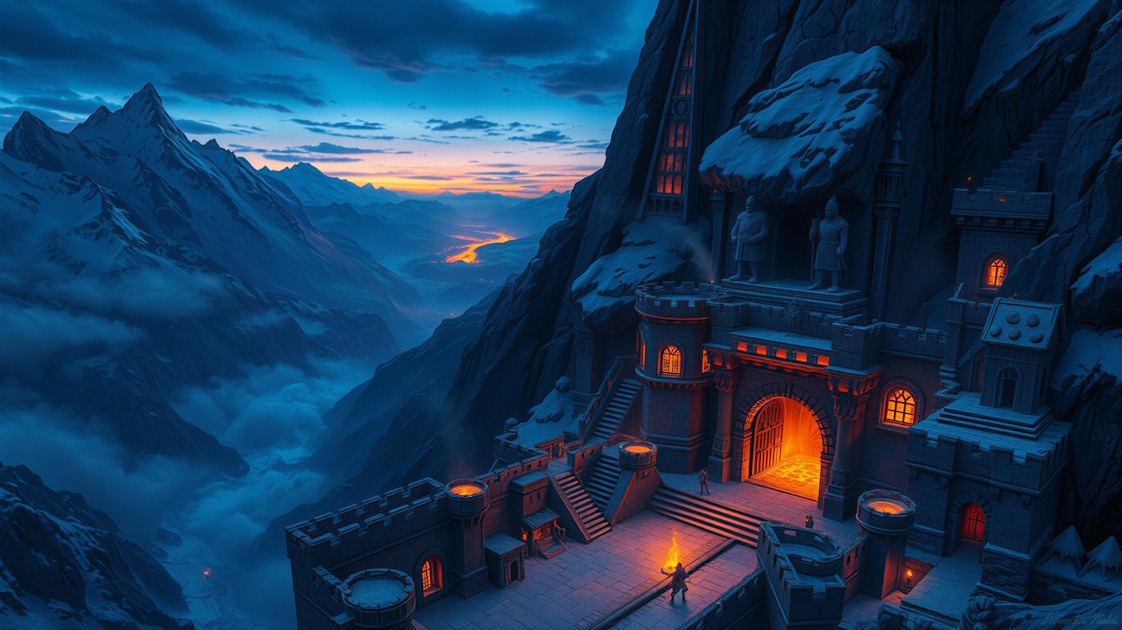
The dwarven people of Uhl are a chthonic, congenial folk who have dwelt beneath the mountains since time immemorial. Unlike the fractured kingdoms of humans or the isolated realms of other races, the dwarves maintain their civilization through seven magnificent underground fortresses known as the Thanes: Rillock, Dwathenmoore, Heidelheim, Akenraen-tor, Berjendale, Merkinjel, and Brokken-tor. Each stands as a sovereign realm unto itself, ruled by a thane and governed by ancient traditions that predate even the legendary Kingdom of Darshavon.
These seven thanes represent the pinnacle of dwarven achievement—magnificent halls carved from living stone, illuminated by the warm glow of forges that have burned for millennia. Though separated by hundreds of mountainous miles, the thanes share a common cultural heritage rooted in unity, strength of will, and above all, patience. The dwarves are renowned throughout Uhl as master blacksmiths, armorers, brewmasters, and stonemasons whose works are treasured from the courts of Kallendor to the marketplaces of the Freelands.
What makes the dwarven thanes unique is their combination of fierce independence and unwavering tradition. Each fortress has evolved its own customs, specializations, and relationships with the surface world, yet all remain fundamentally dwarven in character. They are a short, stocky people standing about four to four and a half feet tall, with ruddy cheeks and brown, black, or red hair and beards. The beard of a dwarven man is sacred, worn with extreme pride as a symbol of honor, courage, and devotion. To shave or trim one's beard marks the deepest disgrace, branding the dwarf an exile no longer considered part of the community.
The thanes have weathered the ages with remarkable stability, their underground fortresses protecting them from many of the catastrophes that ravaged surface civilizations. While human kingdoms rose and fell, while the Old Gods destroyed themselves in cosmic warfare, the dwarves maintained their vigil beneath the mountains, their hammers ringing true and their forges burning bright. Today, in the Age of Advancement, the seven thanes continue their ancient ways while carefully managing relationships with the surface world—trading their matchless craftsmanship for the goods they cannot produce themselves, defending their territories against goblin incursions, and preserving traditions that stretch back to the very foundations of the world.
Through the Ages
The Age of the Old Gods (Before Year 0)
The seven dwarven thanes claim origins predating recorded history, their foundation myths recounting a time when Grommara, the Mother of Stone, molded the first dwarves from the very mountains themselves. According to legend, these primordial beings emerged fully realized from the rock, imbued with an intimate understanding of stone, metal, and the earth's deep places. Whether this occurred before or during the Age of the Old Gods remains a matter of scholarly debate, but dwarven oral traditions insist their people walked the world before even the High King of Darshavon claimed his throne on Oslo.
During the height of Darshavon's power, the dwarven thanes maintained cautious but profitable relationships with the surface kingdom. Dwarven smiths supplied weapons and armor to Darshavon's armies, while dwarven miners provided precious metals that filled the royal treasury. The thanes valued their independence; however, they refused to acknowledge any authority beyond their own thane lords. Several attempts by ambitious human monarchs to assert sovereignty over dwarven territories ended in diplomatic stalemate or, in rare cases, brief military conflicts that convinced surface dwellers that forcing dwarves from their mountain strongholds was prohibitively costly.
Each thane developed its distinctive character during this era. Rillock, located in what would become Anolga, established trade relationships with coastal communities while mastering the art of ship-fitting and maritime metalwork. Heidelheim in the Ugull Mountains became renowned for its gem-cutting, while Merkinjel in the Alzion Mountains specialized in weapons that could withstand the extreme conditions of high-altitude warfare. The thanes occasionally competed with one another through contests of skill and craftsmanship, but true warfare between dwarven holds remained unthinkable—a cultural prohibition rooted in their shared heritage and mutual respect.
The Age of Resilience (Year 0 to 100)
The Fall of the Old Gods and the destruction of Darshavon affected the dwarven thanes far less catastrophically than it did surface civilizations. Protected by hundreds of feet of solid stone, the dwarves weathered the divine cataclysm while human kingdoms burned. The greatest impact came not from the cosmic battle itself but from its aftermath—the collapse of established trade networks, the chaos among surface populations, and the sudden increase in goblin activity as the Underland erupted in violence during the power vacuum following the gods' destruction.
The dwarven response to this crisis demonstrated their characteristic patience and pragmatism. Rather than attempting to exploit human weakness or expand their territories, the thanes focused on consolidating their defenses and maintaining internal stability. The great halls that had always served as commercial centers became fortresses prepared for extended isolation. Dwarven farmers expanded their underground gardens and fungal cultivation, while brewmasters ensured sufficient stores to sustain their populations through what many feared would be an age of darkness.
Some thanes maintained contact with human survivors, providing crucial support during the desperate early years. Brokken-tor, recognizing that chaos in what would become Vranna threatened their own security, supplied weapons and metal goods to organized human defenders. These actions created bonds that would last for centuries. Other thanes, like Akenraen-tor in the Alderden Mountains, turned inward, minimizing contact with the surface world until the situation stabilized.
This period also saw increased conflict with goblin forces. The Underland, always a threat, became exponentially more dangerous as goblin tribes fought amongst themselves and raided the surface with unprecedented ferocity. The dwarven thanes found themselves defending not just against isolated raiding parties but against organized assaults led by ambitious goblin warlords seeking to claim dwarven fortresses for themselves. These conflicts forged the dwarven military traditions that persist to the present day, with the Iron Shields earning their fearsome reputation through countless underground battles.
The Age of Change (Year 101 to 450)
As the Four Fiefdoms emerged from Darshavon's ashes and surface civilization slowly rebuilt, the dwarven thanes adapted their trade relationships to the new political reality. Rather than dealing with a single unified human kingdom, each thane now negotiated independently with multiple surface powers. This actually benefited dwarven interests, as competition among human kingdoms for access to dwarven goods drove up prices and gave the thanes greater leverage in negotiations.
Rillock formalized its close relationship with Anolga during this period, with dwarven smiths becoming integral to Anolgan shipbuilding and maritime industries. The alliance proved mutually beneficial—Anolgan raiders provided security for dwarven trade routes along the coast, while dwarven metalwork enhanced Anolgan naval capabilities. This partnership became so close that Rillock dwarves developed a distinct maritime culture unusual among their mountain-dwelling kin.
Heidelheim established contact with the krill tribes of the Merrow Woods, a diplomatic achievement that surprised many given the krill's notorious xenophobia. The relationship remained limited and formal, based on mutual respect for martial prowess and careful adherence to established protocols. Dwarven and krill warriors would occasionally meet at predetermined locations to exchange goods and information, neither side ever venturing deep into the other's territory.
During this age, Merkinjel and Akenraen-tor expanded their trade networks beyond the Four Fiefdoms. Merkinjel, positioned in the Alzion Mountains, developed relationships with Seacean merchants and occasionally dealt with traders from the mysterious Freelands. Akenraen-tor established profitable trade with Panthora, the eslar kingdom, exchanging dwarven metalwork for eslar magical artifacts and alchemical compounds. These long-distance trade relationships required sophisticated logistics and trusted intermediaries but opened new markets for specialized dwarven crafts.
The Age of Advancement (Year 451 to Present)
The current age has brought both opportunities and challenges to the dwarven thanes. The technological innovations emerging from Kallendor, particularly King Classus IV's airship development, have revolutionized trade while also threatening traditional dwarven monopolies on certain goods and services. The airships can transport cargo faster than traditional caravans, potentially bypassing dwarven trade routes, though the quality of dwarven craftsmanship ensures continued demand for their products.
Goblin threats have intensified in recent decades, particularly with the rise of Lord Gral and his organized forces operating from Greth. The thanes in the Ugull Mountains—Dwathenmoore, Heidelheim, and Brokken-tor—find themselves on the front lines of this conflict, coordinating their defenses while maintaining their traditional independence. The informal council meetings between these three thanes have become more frequent, though they carefully avoid any appearance of forming a formal alliance that might compromise their sovereignty.
Brokken-tor's relationship with Vranna and the King's Patrollers has grown particularly important as Lord Gral's ambitions threaten both dwarven and human interests. Dwarven warriors from Brokken-tor have fought alongside the patrollers in several significant engagements, while dwarven engineers have helped reinforce the ancient wards around the Cavern of the Well. This cooperation represents a deepening of the alliance forged during the Age of Resilience, based on recognition of common interests and mutual respect.
In the present day (Year 539), the seven thanes remain prosperous and secure, their ancient fortresses as impregnable as ever. They continue to produce crafts that command premium prices throughout the known world, their brewmasters create ales celebrated from Alchester to the Freelands, and their warriors maintain vigilant defense against threats both above and below ground. While they watch the rapid changes in surface civilizations with some concern, the dwarves maintain confidence that their patient, traditional approach will continue serving them well, just as it has for countless generations.
The Seven Thanes
Akenraen-tor
Rising from the highest peaks of the Alderden Mountains, Akenraen-tor—the Sky Touched Forge—is the most elevated of all dwarven halls, its uppermost chambers reaching altitudes where the air grows thin and the stars seem close enough to touch. Under the leadership of Thane Thorek Skywatcher, fourth of the Skywright dynasty, the fortress has developed unmatched weather prediction capabilities and a culture that blends traditional dwarven values with extensive astronomical knowledge and sky-worship practices found nowhere else in dwarven society. Its forges exploit the unique atmospheric conditions of extreme altitude to produce precision instruments and crystal-based devices prized across Uhl, while the Skyreach Rangers maintain a network of high-altitude outposts that provides intelligence across vast distances no ground-based surveillance could match.
Learn more about Akenraen-tor.
Berjendale
Standing sentinel in the Alzion Mountains against the goblin strongholds that infest the southern peaks, Berjendale—the Iron Gates of the South—has evolved into the most militaristic of the Seven Thanes, its massive gates and black stone walls a monument to centuries of unrelenting warfare. Under the rule of a thane who seized power through direct combat rather than traditional consensus, Berjendale has transformed from a defensive bastion into an aggressive military power whose warriors demonstrate capabilities that blur the line between conventional dwarven warfare and something far more unsettling. The fortress’s offensive campaigns have pushed goblin forces further from dwarven territory than at any point in living memory, but the mysterious alliance behind the thane’s enhanced warriors has left the other thanes wondering what price Berjendale may eventually be asked to pay for its victories.
Learn more about Berjendale.
Brokken-tor
Nestled in the Ugull Mountains, Brokken-tor—the Engines of Innovation—has earned its reputation as the most technologically advanced of the dwarven halls, where the traditional rhythms of hammer and anvil are augmented by the precise clicking of gears and the steady hum of mechanical devices. Under Thane Vera Ironworks, the fortress has carried the ancient dwarven obsession with precision into a realm of mechanical sophistication that previous generations could never have imagined, from the famous Clockwork Halls that coordinate workshops across the entire facility to the Great Engine Chamber housing devices of staggering complexity. Brokken-tor’s engineers have established collaborative relationships with surface innovators—contributing notably to the airship technology reshaping the Four Fiefdoms—while navigating the tension between openness and the preservation of the craft traditions that make their work possible.
Learn more about Brokken-tor.
Dwathenmoore
Far beneath the northern mountains, where the stone grows warm with the earth's inner heat, Dwathenmoore—the Deepest Halls—stands as the most remote and most traditional of the seven thanes. No other dwarven settlement has delved so far below the surface, and the geothermal forces harnessed by its legendary Deep Forges produce metals and alloys whose extraordinary properties cannot be replicated elsewhere. Under the steady leadership of Thane Borin Deepdelver, Dwathenmoore maintains customs dating back to before the Fall of the Old Gods while fielding the Deep Guard, elite tunnel fighters unmatched in underground combat. The fortress's deliberate isolation from the surface world has only deepened during the current age, its contact limited to infrequent trade missions that exchange Deep Forge metals for goods the halls cannot produce themselves—an arrangement conducted entirely on Dwathenmoore's terms.
Learn more about Dwathenmoore.
Heidelheim
Carved into the frozen peaks of the northernmost mountains, Heidelheim—the Northern Bastion—stands as a monument to dwarven resilience in an environment defined by eternal winter. Its double-walled architecture conserves heat with near-perfect efficiency, its celebrated Ice Gardens produce fresh crops year-round through geothermal ingenuity, and its smiths create jewelry and metalwork of extraordinary intricacy during long winters that provide nothing but time and firelight in which to perfect their art. Under Thane Dain Frostbeard’s patient, consensus-driven leadership, Heidelheim maintains the most traditional governance among the Seven Thanes, while its elite Frost Guard has transformed the fortress’s brutal conditions into tactical advantages that make them unmatched in cold-weather combat. Recent disruptions to the seasonal cycles that have governed Heidelheim’s existence for centuries now challenge the fortress to adapt ancient customs to new and unpredictable realities.
Learn more about Heidelheim.
Merkinjel
Deep within the Alzion Mountains, Merkinjel—the Golden Vaults—sits upon the richest gold deposits ever discovered in the known world, a fortune that has made it the wealthiest of the Seven Thanes and one of the most influential economic powers in all of Uhl. Governed by Thane Glenda Goldheart and anchored by the master artisans of the Auric Guild, whose goldsmiths produce work of such extraordinary refinement that it commands prices no other dwarven craft can match, Merkinjel has transformed raw mineral wealth into a prosperity that extends far beyond its own halls. The gold that flows outward through carefully managed trade relationships has shaped currencies, financed kingdoms, and given a single dwarven fortress leverage over surface economies whose rulers can only envy the mountain from which that power is drawn.
Learn more about Merkinjel.
Rillock
Carved into the Anolgan Peaks where the rugged hills of Anolga meet the salt winds of the Barrens Ocean, Rillock is the most accessible of all the dwarven strongholds and the one most deeply intertwined with the human world. Its close partnership with the Anolgan people—forged through centuries of shared struggle against gaugath raiders and maintained through trade, cultural exchange, and mutual defense—has produced a community unlike any other thane: a fortress with doors as wide as its walls are thick, where dwarven metalwork and Anolgan wool change hands in market halls that welcome human visitors with a regularity that more insular thanes find remarkable. Rillock’s coastal position and open character make it both the most approachable face of dwarven civilization and, among the more traditional thanes, a subject of debate about how far openness can go before it ceases to be dwarven at all.
Learn more about Rillock.
Thane Lords
Culture and Society
Dwarven culture is fundamentally communal, rooted in the clan system that underpins their society. The dwarves are a people who believe in what they can see, smell, and touch, having little use for abstract concepts like luck or fate. This practical outlook shapes every aspect of their lives, from their craftsmanship to their relationships. Family ties are paramount, with dwarven families typically including four or five children, all loved equally regardless of gender—a progressive approach that sometimes surprises surface dwellers accustomed to more patriarchal societies.
The rhythm of dwarven life follows patterns established over millennia. Days begin with the ringing of the forge bells, calling craftsmen to their workshops where the real work of dwarven civilization occurs. The sounds of hammering metal, chiseling stone, and the low rumble of conversation fill the great halls, creating a constant background symphony that defines the dwarven experience. Evenings bring gatherings around the hearth, where families share meals, tell stories, and reinforce the bonds that hold their society together.
Honor occupies a central place in dwarven culture, manifested most visibly in the sacred status of the beard. A dwarf's beard represents not just personal pride but the honor of his entire clan and lineage. The tradition of never shaving or trimming the beard (except in cases of the most heinous crimes) creates a visible marker of dwarven identity and moral standing. Exiled dwarves forced to shave their beards face not just personal shame but complete social death—they are no longer considered dwarven by their former kin and are viewed with a mixture of disdain and pity by others.
Dwarven humor tends toward the robust and earthy, with jokes often relating to mining mishaps, brewing experiments gone wrong, or the peculiar habits of surface dwellers. They appreciate wordplay and clever riddles, particularly those involving technical knowledge or crafting terminology. Competitions and contests form a major part of social interaction, with dwarves constantly testing their skills against one another in good-natured rivalry that strengthens relationships rather than creating enmity. The saying "A dwarf without a challenge is a dwarf half-dead" captures this competitive spirit.
Despite their gruff exterior, dwarves are fundamentally congenial and hospitable. The ancient laws of guest-right remain sacred, requiring hosts to provide food, drink, and shelter to any who arrive peacefully at their doors. This hospitality extends even to traditional enemies under certain circumstances, creating complex social situations in which dwarven hosts might feed and house guests they'll be fighting the following day. Once guest rights are granted, however, both parties are bound by their terms until the guest departs.
Music and storytelling play crucial roles in dwarven culture, serving as the primary means of preserving history and passing down knowledge. The dwarves have little use for reading or writing, considering the written word a pale imitation of the living voice and memory. Oral traditions pass from generation to generation with remarkable accuracy, as skilled storytellers train their memories to recall vast amounts of information. Songs accompany work, coordinate group efforts, and celebrate important events, with different thanes developing distinctive musical styles while sharing a common repertoire of ancient ballads.
Architecture and Craftsmanship
Dwarven architecture represents perhaps the finest expression of their civilization—magnificent structures carved directly from living stone, blending functionality with beauty in ways that surface-dwelling architects can barely comprehend. The great halls of the seven thanes are not merely buildings but expressions of dwarven philosophy, each pillar and archway placed with perfect precision, each carving telling stories that stretch back to the foundations of dwarven history.
The entrance to a typical dwarven thane is a masterwork of defensive engineering and aesthetic achievement. Massive doors of iron or steel, often elaborately decorated with clan symbols and legendary scenes, stand at the end of long approach tunnels designed to funnel attackers into killing zones. Beyond these outer defenses lie the public halls—soaring chambers supported by columns carved from single pieces of stone, their surfaces covered with intricate reliefs depicting dwarven history, mythology, and the achievements of renowned craftsmen. The scale of these spaces can be overwhelming, with ceilings rising a hundred feet or more, yet every detail is executed with meticulous precision.
At the heart of each thane lies the Great Forge, a communal space where the most important work occurs. These forges are engineering marvels, their ventilation systems drawing air from the surface through carefully calculated shafts that also serve defensive purposes. The heat from the forges warms surrounding areas, creating comfortable living temperatures throughout the complex. The Great Forge serves not just as a workplace but as the symbolic center of dwarven identity—the place where raw stone and metal are transformed into objects of beauty and utility through skill, patience, and dedication.
Individual dwellings within the thanes are carved into the walls of the main halls or situated alongside passages, creating neighborhoods organized by clan and profession. These homes feature curved corridors leading to spacious living areas adorned with family treasures, weapons, and artifacts accumulated over generations. Central to each dwelling is the hearth, a warm fire that serves as a gathering place and a symbol of unity. The walls are often lined with shelves holding crafted items—weapons, jewelry, tools—each with its own story and significance to the family.
Dwarven craftsmanship extends far beyond architecture to encompass every aspect of material culture. Blacksmithing represents the most celebrated craft, with dwarven smiths transforming raw ore into weapons, armor, and tools using ancient techniques passed down through countless generations. Each piece is treated as a work of art, often engraved with intricate designs that tell stories or incorporate clan symbols. The quality of dwarven metalwork is legendary—swords that hold their edge through years of use, armor that turns aside blows that would pierce lesser protection, tools that outlast the craftsmen who made them.
Stonework represents another pinnacle of dwarven achievement. Master stonemasons shape and carve stone with such precision that joints between blocks are nearly invisible, creating structures of incredible durability and beauty. The ability to read stone, understanding its grain and weaknesses, allows dwarven masons to work with materials that would defeat surface craftsmen. Elaborate facades, towering columns, and intricate carvings demonstrate their ability to blend functionality with artistry, creating structures that are simultaneously practical living spaces and profound artistic statements.
Gem-cutting has been refined to an art form among certain thanes, particularly Heidelheim. Dwarven gem-cutters possess an almost supernatural ability to see the potential in raw stones, intuitively understanding how to cut and polish them to reveal their maximum beauty. Each gem is selected meticulously and cut with techniques that enhance natural colors and brilliance. The jewelry created by dwarven craftsmen serves multiple purposes—as adornment, as symbols of status and achievement, and as family treasures passed down through generations, each piece carrying the stories of those who wore it before.
Geography and Resources
The seven dwarven thanes occupy strategic positions throughout the mountain ranges of Uhl, each fortress carved into living stone and positioned to maximize access to valuable resources while providing defensible locations. Though separated by hundreds of miles, the thanes form an interconnected network of dwarven civilization spanning multiple mountain ranges and geological regions.
Rillock - The Coastal Fortress
Unique among the seven thanes, Rillock lies within Anolgan territory, carved into the coastal mountains overlooking the Barrens Ocean. This position gives Rillock access to both traditional mountain resources and maritime opportunities unavailable to other thanes. The fortress sits at the junction of several rich ore veins, providing iron, copper, and small deposits of silver. The proximity to the sea has influenced Rillock's specialization in maritime metalwork, ship fittings, and the production of rust-resistant alloys essential for naval applications. The surrounding mountains also contain extensive coal deposits that fuel Rillock's forges.
Ugull Mountain Thanes - The Northern Strongholds
Three thanes occupy different regions of the extensive Ugull Mountains: Dwathenmoore, Heidelheim, and Brokken-tor. These northern fortresses sit at the frontier between human civilization and the goblin-infested peaks, making them both militarily crucial and rich in resources. Dwathenmoore specializes in deep mining operations, extracting precious metals from veins that extend miles into the earth. Heidelheim has access to exceptional gem deposits, including veins of diamonds, rubies, and sapphires that support its famous gem-cutting industry. Brokken-tor, positioned closest to Vrannan territory, combines mining operations with extensive fungal cultivation in vast underground caverns, making it largely self-sufficient in food production.
Akenraen-tor - The Eslar Gateway
Located in the Alderden Mountains, Akenraen-tor occupies a position that facilitates trade with the eslar kingdom of Panthora. The surrounding mountains contain unusual mineral deposits, including rare crystals and exotic ores that blend well with eslar magical practices. This has made Akenraen-tor the primary producer of materials used in enchanted items and alchemical processes. The fortress itself is noted for its extensive libraries (unusual for dwarves) where records of mineral properties and crafting techniques are meticulously maintained through a combination of oral tradition and limited written documentation.
Merkinjel - The Southern Bastion
Situated in the Alzion Mountains, Merkinjel faces constant threat from goblin forces while maintaining access to some of the richest iron deposits in all of Uhl. The fortress specializes in weapons production, particularly arms designed for the extreme conditions of mountain warfare. The surrounding territory includes not only extensive ore deposits but also particular types of stone ideal for grinding and sharpening, making Merkinjel's whetstones famous throughout the known world. The thane's position also gives it access to trade routes leading to both Seacea and the mysterious Freelands.
Berjendale - The Hidden Fortress
The most isolated of the seven thanes, Berjendale's exact location is known to few outside dwarven circles. This thane specializes in producing items that require extreme secrecy and security during manufacture. The surrounding mountains contain unusual deposits of metals with unique properties, allowing Berjendale's smiths to create alloys unavailable elsewhere. The fortress is also known for its extensive underground lakes and rivers, which power sophisticated hydraulic systems used in heavy forging operations.
All seven thanes benefit from the dwarves' mastery of underground agriculture. Extensive gardens of the deep use advanced hydroponic techniques enriched by natural minerals, producing fungi, roots, and various underground crops that supplement food obtained through trade. These gardens provide not just sustenance but also ingredients for brewing and cooking, with each thane developing distinctive varieties suited to their local conditions. The mineral-rich water flowing through dwarven territories enhances plant growth while also serving practical purposes in forging and crafting operations.
Trade and Diplomacy
The dwarven thanes engage in extensive trade with surface civilizations and other races, exchanging their matchless craftsmanship for goods they cannot produce themselves. Each thane manages its own trade relationships independently, though they share information and occasionally coordinate to prevent surface powers from playing one thane against another. This decentralized approach to diplomacy has proven remarkably effective, allowing each thane to optimize its relationships while maintaining the collective strength that comes from shared dwarven identity.
Rillock's close relationship with Anolga represents perhaps the most integrated dwarven-human alliance. Dwarven smiths from Rillock maintain permanent workshops in several Anolgan ports, working directly with shipwrights to produce specialized fittings, anchors, and other maritime equipment. In exchange, Anolgan traders provide Rillock with access to exotic goods from distant lands, agricultural products from raided territories, and naval protection for dwarven trading vessels. This relationship has become so established that some Rillock dwarves have learned to sail, an unusual skill among their mountain-dwelling kin.
Brokken-tor's alliance with Vranna and the King's Patrollers operates on different principles—shared military interests against common goblin threats. Dwarven warriors fight alongside human patrollers in the Simmaron Woods, while Vrannan agricultural products supplement Brokken-tor's underground gardens. The relationship includes technology transfer, with dwarven engineers sharing mining and metallurgical knowledge while learning Vrannan agricultural techniques. This cooperation has created personal bonds between individual dwarves and humans that transcend formal diplomatic arrangements.
Heidelheim's limited contact with the krill of the Merrow Woods stands as one of the most unusual diplomatic relationships in Uhl. Both races are naturally xenophobic and territorial, yet they've developed a careful protocol for interaction based on mutual respect for martial prowess. Meetings occur at predetermined locations on specific dates, with both sides bringing goods for exchange—dwarven metalwork for krill herbal preparations and exotic forest products. No dwarf ventures deep into krill territory, and no krill descends into Heidelheim's halls, yet the relationship has persisted for centuries without serious incident.
Merkinjel's trade with Seacea and the Freelands requires sophisticated logistics given the distance involved. Caravans protected by both dwarven and hired guards transport high-value, low-weight goods—finished weapons, jewelry, specialized tools—that justify the expensive and dangerous journey. In return, Merkinjel receives rare materials, specialized components, and luxury goods unavailable in the mountain regions. These long-distance trade relationships have made Merkinjel's merchants unusually cosmopolitan by dwarven standards, familiar with the customs and languages of distant peoples.
Akenraen-tor's relationship with Panthora represents a meeting of two highly skilled but fundamentally different civilizations. The eslar appreciate dwarven craftsmanship for its reliability and durability, while the dwarves respect eslar magical knowledge despite their own skepticism about arcane matters. Trade focuses on materials rather than finished goods—dwarven ores and crystals in exchange for alchemical compounds and magical reagents. Both sides maintain formal diplomatic protocols, with designated trade representatives managing interactions according to carefully negotiated terms.
Inter-thane relationships follow patterns established over millennia. The seven thanes maintain their independence jealously, yet they recognize their shared heritage and common interests. Regular gatherings of thane representatives occur at neutral locations where news is exchanged, potential threats discussed, and disputes mediated. These meetings include competitions showcasing each thane's specialties—Heidelheim's gem-cutters against Merkinjel's weapon-smiths, Rillock's naval fittings against Dwathenmoore's mining equipment. These contests serve multiple purposes: maintaining friendly rivalry, establishing relative status, and ensuring that all thanes continue pushing the boundaries of their crafts.
Military and Defense
Dwarven military doctrine emphasizes defensive strength, perfect knowledge of terrain, and the overwhelming application of force when battle becomes necessary. Each thane maintains standing military forces known as the Iron Shields, elite warriors trained from youth in both individual combat and coordinated tactics. These forces combine the dwarves' natural resilience and strength with superior equipment and extensive training to create some of the most formidable fighters in all of Uhl.
The defensive architecture of dwarven thanes makes them virtually impregnable to conventional assault. Approach tunnels funnel attackers into predetermined kill zones where defenders can employ crossbows, dropped barriers, and collapsing ceilings. Multiple fallback positions allow defenders to trade space for time while inflicting maximum casualties. The great doors that seal each thane can withstand siege for years, supplied by underground gardens and deep wells that make starvation impossible. Several times throughout history, goblin armies have besieged dwarven fortresses only to give up after months of fruitless assault.
Iron Shields train in both surface and underground combat, mastering the unique challenges of each environment. Underground warfare emphasizes close-quarters combat, where the confines of tunnels negate numerical superiority, giving disciplined dwarven warriors an advantage over larger but less organized forces. Surface operations require different tactics, with dwarven heavy infantry forming shield walls that can hold against cavalry charges while their crossbowmen provide devastating supporting fire. The dwarves' natural stamina allows them to maintain fighting effectiveness far longer than human opponents, wearing down enemies through sheer endurance.
Weapons and armor produced by dwarven smiths give Iron Shields significant equipment advantages. Each warrior carries weapons forged specifically for their build and fighting style—axes, hammers, and short swords designed to deliver crushing blows rather than relying on reach. Armor is typically plate or heavy chain mail, crafted to exacting standards and fitted precisely to the wearer. Shields are reinforced with metal rims and bosses, capable of being used as offensive weapons. This superior equipment, combined with extensive training and natural toughness, makes individual dwarven warriors worth several human or goblin opponents in pitched battle.
Military organization follows the clan structure, with related warriors fighting together in units led by proven veterans. This creates exceptional unit cohesion, as warriors trust their shield-mates with the certainty that comes from lifelong familiarity. Larger formations coordinate through established protocols and extensive training rather than complex command structures, allowing dwarven forces to maintain effectiveness even when communications are disrupted. The saying "A dwarf fights for his kin" captures this clan-based military organization.
Inter-thane military cooperation occurs when threats exceed what individual fortresses can handle on their own. The three Ugull Mountain thanes—Dwathenmoore, Heidelheim, and Brokken-tor—have developed particularly close military coordination in response to organized goblin threats. They share intelligence about enemy movements, provide mutual support during major attacks, and occasionally conduct joint offensive operations against goblin strongholds. These cooperative efforts carefully avoid implying any formal alliance or subordination, maintaining each thane's sovereignty while recognizing practical military necessities.
In recent decades, the dwarven thanes have adapted their military practices to address evolving threats. Lord Gral's organized goblin forces employ more sophisticated tactics than traditional raiding parties, requiring the Iron Shields to develop counter-strategies. Some thanes have begun incorporating human military advisors to learn about developments in surface warfare, while maintaining core dwarven fighting methods. This selective adaptation demonstrates dwarven pragmatism—willing to learn from others while preserving traditions that have proven effective over centuries of conflict.
Heroes of Legend
Thorgrim Ironbeard - The Unbroken
Thorgrim Ironbeard of Dwathenmoore was perhaps the greatest military hero in dwarven legend, celebrated for his defense of his thane during the massive goblin assault known as the Siege of Endless Dark. For three years, goblin armies besieged Dwathenmoore, attempting to starve out the defenders or breach the great doors through relentless assault. Thorgrim commanded the Iron Shields during this crisis, organizing the defense with such skill that the goblins never came close to breaching the outer halls despite suffering thousands of casualties in their attempts.
What makes Thorgrim legendary is not just his military skill but his ability to maintain morale during the siege's darkest moments. When supplies grew dangerously low, he instituted rationing that applied to thane lords and common miners alike, earning respect through shared sacrifice. When disease threatened to weaken the defenders, he personally nursed the sick alongside the healers. When some counseled surrender, he stood at the great doors and challenged anyone who doubted dwarven endurance to face him in single combat—a challenge no one accepted.
The siege finally broke when Thorgrim led a desperate sally from a secondary exit, attacking the goblin supply lines and destroying months of accumulated provisions. This bold strike forced the goblins to withdraw or face starvation themselves, turning the siege into a triumph of dwarven determination. Thorgrim's beard, which he swore not to trim until the siege ended, had grown to legendary length by the time of victory, and bards still sing of "Thorgrim's oath" when describing unbreakable determination. His axe, Grudgekeeper, is preserved in Dwathenmoore's Hall of Ancestors as a reminder that no siege can break dwarven resolve.
Brunhilde Gemheart - The Master Cutter
Brunhilde Gemheart of Heidelheim revolutionized the art of gem-cutting, developing techniques that remain closely guarded secrets of her thane. Born with an almost supernatural ability to see the potential within raw stones, Brunhilde spent decades perfecting methods that could reveal the maximum beauty of each gem while minimizing waste. Her innovations transformed Heidelheim from a prosperous thane into the acknowledged center of gem-cutting excellence throughout the known world.
Brunhilde's masterpiece was the Seven Stars of Heidelheim, a matched set of diamonds cut with such precision that they seemed to capture and multiply light, creating the illusion of containing living fire. These gems were so extraordinary that five different human kingdoms attempted to purchase them, leading to a bidding war that brought unprecedented wealth to Heidelheim. Brunhilde refused all offers, however, declaring that the Seven Stars belonged to all dwarves and would remain in Heidelheim as symbols of what patient dedication could achieve.
Beyond her technical innovations, Brunhilde transformed gem-cutting from a trade into an art form. She insisted that each stone should be studied for weeks or even months before the first cut, understanding its unique properties and determining the ideal form to reveal its character. This patient approach ran counter to the commercial pressures to produce quickly, but the results justified the time invested. The phrase "patient as Brunhilde" entered dwarven vocabulary to describe someone willing to wait for perfect results rather than settling for good enough. Her techniques are still taught in Heidelheim, passed down through careful apprenticeship from master to student.
Durin Coalbeard - The Peacemaker
Durin Coalbeard of Brokken-tor achieved legendary status not through martial prowess or crafting genius but through his diplomatic skills and wisdom. During a period when tensions between several thanes threatened to erupt into actual conflict—an almost unthinkable breach of dwarven solidarity—Durin traveled between the fortresses negotiating agreements that satisfied all parties while preserving dwarven unity. His success in preventing inter-thane warfare earned him respect that transcended clan and thane boundaries.
Durin's greatest achievement was the Compact of Seven Hammers, an agreement that formalized protocols for resolving disputes between thanes through contests of skill rather than warfare. Under this compact, disagreements would be settled by competitions between master craftsmen, with neutral judges from uninvolved thanes determining the victor. This system channeled competitive instincts into productive rather than destructive channels, ensuring that dwarven energy went into creating masterworks rather than destroying each other.
What made Durin exceptional was his ability to understand the perspectives of all parties in a dispute. He could articulate each side's position so clearly that disputants felt truly heard, creating foundations for compromise. His mediation techniques are still studied by those who aspire to leadership roles, and the saying "Seek Durin's wisdom" means to look for solutions that serve everyone's interests rather than forcing zero-sum outcomes. Though he never held the position of thane lord, Durin's influence on dwarven civilization exceeded that of most who wore that title, proving that wisdom and diplomacy can achieve what force of arms cannot.
Laws and Governance
Each dwarven thane operates as a sovereign political entity ruled by a thane lord who embodies the values and strength of the community. Unlike hereditary monarchies common in human kingdoms, dwarven leadership is selected through a system that balances heredity, merit, and community consensus. When a thane lord dies or becomes incapable of ruling, the council of elders—comprising the most respected clan leaders within the thane—meets to select a successor. While descendants of previous thane lords are given strong consideration, the position ultimately goes to whoever the council deems most capable of leading the community.
The thane lord's authority is extensive but not absolute. Major decisions require consultation with the council of elders, and certain traditional matters fall under the jurisdiction of master craftsmen in their respective fields. A thane lord who attempts to rule without wisdom or refuses to listen to his advisors will face increasing resistance, potentially resulting in being replaced through the same council process that elevated him. This system creates accountability while maintaining stable leadership, as the bar for removing a sitting thane lord is high enough to prevent frivolous challenges.
Dwarven law is based primarily on oral tradition, with legal principles passed down through generations and interpreted by the council of elders. The core of dwarven law revolves around concepts of honor, fair dealing, and community obligation. Contracts made before witnesses are considered absolutely binding—breaking one's sworn word is among the most serious offenses in dwarven society. Disputes are typically resolved through mediation by respected elders, with formal legal proceedings reserved for serious criminal matters or complex property disputes.
Criminal justice in dwarven society emphasizes restitution and restoration of honor rather than punishment for its own sake. A thief must return what was stolen plus additional compensation for the offense, while also performing service to the community to restore his standing. Violent crimes are treated more severely, with the offender's entire clan bearing some responsibility for making restitution to the victim's clan. This collective responsibility creates strong incentives for clans to maintain discipline and address problems before they escalate into criminal behavior.
The most severe punishment in dwarven society is exile, marked by the forced shaving of the offender's beard. This sentence is reserved for the most heinous crimes—murder of a clansman, betrayal of the thane to enemies, or gross violations of guest-right. An exiled dwarf loses all clan affiliation and community protection, effectively becoming dead in the eyes of dwarven society. The severity of this punishment creates a powerful deterrent, while its rarity demonstrates that most dwarves internalize community values so thoroughly that extreme sanctions are almost never necessary.
Inter-thane relations are governed by ancient customs and the relatively recent Compact of Seven Hammers. The compact establishes protocols for resolving disputes through contests of skill rather than warfare, while ancient traditions dictate proper behavior during trade negotiations, diplomatic meetings, and the rare occasions when one thane must seek assistance from another. These customary laws carry the weight of centuries and are honored with the same seriousness as formal legal codes, creating a stable framework for relationships between the seven sovereign thanes.
Social Structure
Dwarven society is organized around the clan system, with family ties forming the fundamental unit of social organization. Each clan consists of related individuals descended from common ancestors, typically bearing names that reflect significant aspects of their lineage or notable historical achievements. Within each thane, multiple clans coexist, their relationships creating a complex web of alliances, friendly rivalries, and mutual obligations that bind the community together.
At the apex of dwarven society stands the thane lord and his immediate family, who bear ultimate responsibility for the community's welfare and defense. The thane lord is not a distant monarch but an active leader who participates in community life, often maintaining his own forge or workshop to demonstrate continued mastery of practical skills. His clan enjoys prestige and certain privileges, but these come with corresponding obligations to provide leadership, settle disputes, and make personal sacrifices when the community's interests demand.
The council of elders occupies the next tier of social hierarchy, comprising the leaders of major clans and the most respected members of the community. These individuals have proven their wisdom through decades of service and achievement, earning the right to guide community decisions and preserve traditional knowledge. Elder status cannot be purchased or inherited—it must be earned through demonstrable contribution to dwarven society, whether through exceptional craftsmanship, military service, wise counsel, or other valued achievements.
Master craftsmen form a respected middle tier, individuals who have achieved the highest levels of skill in their chosen professions. A master smith, master stonecutter, or master brewer commands respect across clan lines, their expertise valued more highly than noble birth. The path to master status requires years of dedicated apprenticeship followed by the creation of a masterwork that demonstrates superior skill and understanding. This meritocratic element of dwarven society allows talented individuals from any background to achieve high status through dedication and ability.
Journeymen and skilled workers constitute the bulk of dwarven society—competent craftsmen who have completed their apprenticeships and contribute productively to the community. These individuals may not have achieved master status, but they perform the daily work that keeps dwarven civilization functioning. Their social standing depends on their reputation for quality work, fair dealing, and contribution to clan and community welfare. Marriage typically occurs within this tier, with families evaluating potential matches based on skill, character, and clan compatibility.
Apprentices and children occupy the lowest tier of the formal social structure, learning the skills and values they'll need as adults. Dwarven culture places enormous importance on proper training, with master craftsmen taking personal responsibility for their apprentices' development. This creates mentor relationships that often last for life, with successful apprentices maintaining loyalty and respect for the masters who trained them even after achieving independent status.
Gender plays a less restrictive role in dwarven society than in many human cultures. While certain professions trend toward one gender—mining tends to attract more males, while brewing often draws more females—no formal barriers prevent individuals from pursuing their interests. Dwarven women can achieve master status, serve on councils of elders, and even become thane lords if the council judges them most qualified. The practical dwarven outlook values competence over conformity to gender expectations, creating a society where ability determines opportunity.
Arts and Entertainment
Dwarven artistic expression is fundamentally practical, with the line between art and craft often blurred to the point of invisibility. The most celebrated dwarven art takes the form of functional objects elevated to aesthetic excellence—a perfectly balanced war axe with handle carved to depict legendary battles, a drinking horn with gold inlay showing scenes from dwarven mythology, armor that protects while displaying the craftsman's technical mastery. The dwarves see little point in creating beauty divorced from utility, though they pursue beauty within functional constraints with passionate dedication.
Music occupies a central place in dwarven culture, serving purposes ranging from work coordination to historical preservation to pure entertainment. Work songs help synchronize hammer blows in the forge or coordinate mining crews, their rhythms evolved over centuries to maximize efficiency while building group cohesion. Ballads recount the deeds of legendary heroes, preserving history through memorable melodies and verses refined through countless retellings. Drinking songs celebrate the joys of good ale and better company, with each thane maintaining distinctive favorites while sharing a common repertoire of ancient favorites.
Dwarven musical instruments reflect their makers' priorities—durability, deep resonant tones, and the ability to fill vast underground halls with sound. Drums carved from single pieces of stone produce powerful rhythms that can be heard throughout entire thanes, serving both musical and communication purposes. Horns of bronze or steel create sounds that echo through tunnels, useful for signaling as well as celebration. String instruments are less common but highly prized, their construction requiring extreme precision to achieve proper tone and resonance.
Storytelling represents perhaps the highest of dwarven verbal arts. Master storytellers can recount events from centuries past with such vividness that listeners feel transported to those times. The oral tradition requires prodigious memory, as stories must be preserved without written records, but it also allows for dynamic presentation adapted to specific audiences and situations. A skilled storyteller can transform the recounting of a legendary battle into an epic that keeps an entire hall spellbound for hours, or condense complex clan histories into brief but memorable summaries.
Competitions and contests form a major source of entertainment, with dwarves constantly testing their skills against one another. Forging competitions challenge smiths to create specific items within time limits, judged on both technical excellence and aesthetic achievement. Stone-carving contests produce elaborate sculptures or decorative panels, while brewing competitions culminate in mass tastings that can devolve into legendary celebrations. These contests serve multiple purposes—entertainment, skill development, establishing relative status, and identifying the next generation of masters.
The Festival of the Deep Earth represents the pinnacle of dwarven celebration, a multi-day event held annually that combines thanksgiving for the year's bounty with competitions, feasting, and general revelry. Each thane celebrates according to its own traditions, but common elements include the lighting of ceremonial forges, contests in various crafts, the brewing of special festival ales, and the telling of the most ancient stories from dwarven mythology. The festival creates a break in the regular rhythm of work, allowing the entire community to gather, celebrate their achievements, and reinforce the bonds that hold dwarven society together.
Carving—whether stone, metal, or the rare wood—represents the most purely decorative of dwarven arts. Relief carvings on pillars and walls tell stories, commemorate events, or simply display aesthetic patterns pleasing to the dwarven eye. These carvings accumulate over generations, creating layered historical records that document the life of each thane. The most skilled carvers achieve fame that extends beyond their own halls, with other thanes sometimes commissioning work from renowned masters willing to travel between fortresses.
Cuisine and Drink
Dwarven cuisine is robust, hearty, and designed to sustain people engaged in the demanding physical labor of mining and forging. The food emphasizes rich flavors and generous portions, with meals serving as important social occasions that reinforce community bonds. The saying "A dwarf who eats alone is a dwarf who's lost his way" captures the communal nature of dwarven dining, where meals are occasions for family gathering, storytelling, and the strengthening of social ties.
Thickstone stew represents the quintessential dwarven dish—a hearty blend of meat, root vegetables, fungi, and herbs slow-cooked in massive cauldrons until the ingredients meld into a thick, filling meal. Each family maintains its own variation on the basic recipe, with secret ingredients and techniques passed down through generations. The stew's name comes from its consistency, thick enough that a spoon can stand upright in a properly made batch. During major gatherings, competing families proudly present their stews for communal sampling and good-natured competition over whose version is superior.
Roasted mountain goat features prominently in dwarven cuisine, particularly during celebrations. The meat is seasoned with herbs from underground gardens, slow-roasted over forge fires, and served with rich gravies made from the drippings. The preparation of roasted goat for major feasts is a communal effort, with multiple families contributing to the process—some providing the meat, others the herbs, still others tending the fires and making the gravies. This collective preparation reinforces the social bonds that are as important as the meal itself.
Barley bread, dense and flavorful, accompanies nearly every dwarven meal. The bread is often prepared with nuts and dried fruits, adding sweetness and texture to the earthy flavors. Dwarven bakers take enormous pride in their craft, with secret family recipes passed from generation to generation. The bread's density makes it an excellent traveling food, as a single loaf can sustain a dwarf for days while remaining edible far longer than lighter human breads. The phrase "breaking bread together" carries deep significance in dwarven culture, symbolizing the establishment or maintenance of friendship and trust.
Underground gardens provide fungi, roots, and various crops that supplement the dwarven diet. Mushrooms in dozens of varieties are cultivated in the deep caverns, ranging from massive specimens that can feed an entire family to tiny flavorful varieties used as seasonings. Root vegetables adapted to growing in minimal light provide essential nutrients while storing well in the cool underground temperatures. Herbs grown in carefully tended plots add flavor to dishes while also serving medicinal purposes, creating gardens that serve both culinary and healing functions.
Dwarven brewing represents perhaps the most celebrated aspect of their cuisine, with master brewers achieving fame that extends far beyond their own thanes. Stonebrew ale, the most famous dwarven creation, is a potent beer known for its deep flavor and rich amber color. Brewed from carefully selected grains and mountain spring water, stonebrew is said to grant the drinker warmth and courage—claims that have some basis in the ale's substantial alcohol content. The brewing process is treated with almost religious reverence, with traditional songs and rituals accompanying each stage from grain selection through final aging.
Cider production represents another brewing specialty, particularly in thanes with access to surface orchards or trading relationships that provide fruit. Dwarven cider is fermented to perfection, creating a bubbly beverage that ranges from sweet and light to strong and tart depending on the apples used and the fermentation time. Fire whiskey, distilled from grains and infused with spices, is reserved for special occasions and serious drinking. This high-proof liquor evokes the warmth of the forge and is traditionally consumed in small quantities during toasts to significant achievements or in memory of fallen heroes.
Communal feasting forms a central part of dwarven social life. The Harvest Festival, celebrating the year's production from both mines and gardens, sees entire clans gathering for massive meals that last for hours. Tables groan under the weight of roasted meats, bread loaves, bowls of stew, and countless barrels of ale and cider. The atmosphere fills with laughter, story-sharing, and the sounds of merriment as the community celebrates its collective success and reinforces the bonds that hold it together. The Giant's Platter, a massive serving of assorted meats and breads, symbolizes the strength and unity of the clan, with the head of the family offering toasts that invoke ancestors and the old gods who once guided dwarven destiny.
Education and Knowledge
Dwarven education is founded on the apprenticeship system, where practical skills are transmitted directly from experienced masters to young learners through hands-on training and patient guidance. This approach emphasizes learning by doing rather than theoretical study, reflecting the dwarven belief that true knowledge resides in the hands as much as the head. From early childhood, dwarves are encouraged to explore their interests and identify their talents, whether in smithing, stonecutting, gem carving, brewing, or other essential crafts.
The apprenticeship typically begins around age twelve, when a young dwarf is formally bound to a master craftsman for a training period lasting seven to twelve years depending on the craft's complexity. During this time, the apprentice lives and works with the master, learning not just technical skills but also the values and traditions that define dwarven craftsmanship. The relationship between master and apprentice often becomes as close as that between parent and child, creating bonds that persist long after the apprenticeship ends.
The apprenticeship progresses through clearly defined stages. Initial years focus on basic skills and the development of proper work habits—learning to maintain tools, prepare materials, and perform the foundational tasks that underlie all advanced work. Middle years introduce more complex techniques as the apprentice's skills develop, with increasing responsibility for independent work under the master's supervision. Final years involve the apprentice taking on projects with minimal guidance, demonstrating mastery of fundamental techniques while beginning to develop their own style and approaches.
Completion of apprenticeship requires the creation of a "journeyman piece"—a work that demonstrates competence in all fundamental techniques of the craft. This piece is judged by a committee of masters who evaluate both technical execution and understanding of the craft's principles. Successful completion grants journeyman status, allowing the individual to work independently and accept payment for their services. However, achieving master status requires additional years of experience and the creation of a "master piece" that demonstrates not just competence but exceptional skill and innovation.
The oral tradition forms the foundation of dwarven knowledge preservation beyond practical crafts. Elders play crucial roles in maintaining this tradition, passing down stories rich with lessons about values, history, and proper behavior. Through storytelling, younger generations learn about legendary dwarven heroes, significant events in their thane's history, the clan's origins, and the ancient days when the Old Gods walked the world. These stories do more than entertain—they encode cultural values, preserve historical memory, and reinforce dwarven identity across generations.
Storytelling gatherings occur regularly around the hearth, creating opportunities for intergenerational bonding and knowledge transfer. These sessions follow established patterns—beginning with stories suitable for children, progressing to more complex narratives as the evening advances, and often concluding with the most ancient tales reserved for serious listeners. The repetition inherent in oral tradition ensures that important stories are heard many times, embedding them deeply in memory and creating shared cultural references that bind the community together.
Crafting serves as both skill development and philosophical education. Lessons in craftsmanship include teachings about material properties, the importance of precision, and the significance of creativity within established forms. As dwarves work side by side, knowledge flows freely through questions and demonstrations, creating learning environments where theory and practice are inseparable. Each item crafted represents not just a product but a connection to heritage, instilling deep respect for the artistry involved and the generations of craftsmen who refined the techniques being learned.
The Festival of Knowledge, celebrated annually in each thane, showcases the achievements of both young and experienced artisans. During this event, apprentices demonstrate skills they've mastered, journeymen present significant works, and masters offer workshops teaching advanced techniques. The festival creates opportunities for cross-clan learning, as masters from different families share insights and approaches. Competitions during the festival identify the most promising young craftsmen while also maintaining standards of excellence that preserve the quality for which dwarven work is renowned throughout Uhl.
Mythology and Beliefs
Dwarven mythology centers on a pantheon of ancient deities who shaped the world and gave the dwarves their essential characteristics before falling in battles that predated even the Fall of the Old Gods. While these gods are long dead, the dwarves continue celebrating them through rituals and festivals, maintaining connections to their heritage while acknowledging the reality that divine intervention is no longer possible. This pragmatic approach to religion—honoring the dead gods without expecting their aid—reflects the dwarven character perfectly.
Grommara, the Mother of Stone, stands as the primary goddess in dwarven mythology. Depicted as a giantess with hair composed of flowing rocks and minerals, Grommara symbolizes strength, endurance, and the creative power that transforms raw materials into works of beauty and utility. According to creation myths, Grommara molded the first dwarves from the very stones of the mountains, breathing into them her own qualities of patience, resilience, and skill. Though she is no more, dwarves invoke Grommara's name during the forging process, asking symbolically for her blessings on their work while knowing that success depends on their own skill and dedication.
Morden Fireforge, the Keeper of Flames, represents the transformative power of fire and the creative force that allows smiths to reshape metal and stone. Morden is associated with both the literal fires of the forge and the metaphorical fire of inspiration and passion for the craft. Festivals dedicated to Morden involve storytelling and rituals celebrating the power of fire, featuring traditional dances performed around enormous bonfires that fill the great halls with warmth and light. The phrase "Morden's blessing" describes work that exceeds expectations, attributing exceptional results to the god's metaphorical guidance even while acknowledging that the craftsman's skill produced the actual outcome.
Rurik, the Guardian of the Realm, embodies protection, valor in battle, and the defense of home and family. Depicted with a mighty hammer symbolizing both creative and destructive power, Rurik represents the dwarven commitment to defending what they've built. During times of war or significant threat, dwarves offer symbolic prayers to Rurik for strength and guidance, often crafting small talismans in his honor to carry into battle. These practices serve psychological purposes—focusing the mind and reinforcing courage—even though the dwarves don't expect actual divine intervention.
Creation myths describe the first dwarves emerging from the mountains fully realized, imbued with knowledge of stone, metal, and the skills necessary for civilization. One popular tale recounts how the mountains themselves were formed through epic battles between ancient dwarven heroes and monstrous creatures that sought to invade their lands. Each mountain and valley holds echoes of these primordial conflicts, and tales of heroism are recounted during communal gatherings to inspire future generations. These myths serve multiple purposes—explaining geographical features, providing moral lessons, and connecting contemporary dwarves to their legendary past.
The Stone Binding ritual, performed during significant life events, demonstrates how mythology remains embedded in daily dwarven practice. During this ceremony, individuals bind themselves to their clan and ancestors through offerings of crafted stone items, symbolically connecting to the mountains from which the first dwarves emerged. The ritual doesn't assume that dead gods or ancestors will actively intervene, but it reinforces connections across generations and grounds participants in traditions that predate living memory.
The Forge Blessing, conducted before significant crafting endeavors, similarly blends mythology with practical psychology. Artisans gather to celebrate the creative process, chanting prayers to Grommara and Morden while praising the elements and their contributions to the craft. This tradition strengthens camaraderie and creates a reverent mindset that improves focus and dedication to the work ahead. The dwarves understand that the blessing's power comes from its effect on the craftsmen rather than from divine intervention, but this doesn't diminish its importance or effectiveness.
Ancestor veneration represents perhaps the most active element of dwarven spiritual practice. Shrines to ancestors appear in every home, adorned with offerings of crafted items, food, and tokens representing the individual's life and achievements. Dwarves believe that while the gods are gone, the spirits of their ancestors remain in some form, their accumulated wisdom accessible to those who honor them properly. The Festival of Remembrance, dedicated to honoring the departed, sees families gathering to share stories of their forebears, ensuring that the legacy of previous generations lives on through shared memory and continued practice of the values they embodied.
Present Day Challenges and Conflicts
The rise of Lord Gral and his organized goblin forces represents the most immediate military threat facing the dwarven thanes, particularly those in the Ugull and Alzion Mountains. Gral's forces employ more sophisticated tactics than traditional goblin raiders, conducting coordinated assaults that test dwarven defenses in ways not seen for centuries. The three Ugull thanes—Dwathenmoore, Heidelheim, and Brokken-tor—find themselves on the front lines of this conflict, requiring constant vigilance and significant resources to maintain security.
Unlike previous goblin threats characterized by disorganized raiding, Gral's forces conduct systematic campaigns aimed at establishing permanent control over territory. This strategic approach forces the dwarven thanes to maintain higher alert levels, conduct more frequent patrols, and dedicate more warriors to defensive duties than in previous generations. The economic cost of this heightened military posture is substantial, diverting resources from crafting and trade to military preparedness. Some younger dwarves have begun questioning whether offensive operations against goblin strongholds might prove more effective than purely defensive strategies, creating generational tensions about how best to address the threat.
The technological innovations emerging from human kingdoms, particularly Kallendor's airship development, create both opportunities and anxieties for the dwarven thanes. Airships can transport goods faster than traditional caravans, potentially bypassing dwarven trade routes and reducing demand for certain services. While the quality of dwarven craftsmanship ensures continued market for their products, the thanes recognize that they cannot simply rely on traditional advantages. Some have begun investing in their own technological development, attempting to integrate new methods with ancient techniques, while others argue for doubling down on quality and craftsmanship that machines cannot replicate.
Inter-thane coordination faces challenges despite the threat from organized goblin forces. The fierce independence that defines each thane sometimes prevents the level of military cooperation that would maximize effectiveness against common enemies. While the Ugull Mountain thanes have developed closer working relationships, translating this into formal alliance structures proves difficult given deeply embedded cultural values about sovereignty. Younger dwarves sometimes express frustration with what they perceive as counterproductive adherence to tradition, while elders warn that compromising independence for temporary military advantage could fundamentally alter dwarven civilization in ways that would persist long after current threats have passed.
Trade relationships with surface kingdoms grow increasingly complex as human political situations evolve. Rillock's close ties to Anolga create vulnerabilities when that kingdom comes into conflict with other fiefdoms, potentially forcing the thane to choose between neutrality and supporting their primary trading partner. Merkinjel's long-distance trade requires navigation of complex political situations in Seacea and beyond. Akenraen-tor's relationship with Panthora depends on maintaining good relations with the notoriously insular eslar. These diplomatic challenges require constant attention and sophisticated management to prevent trade disruptions that could seriously impact thane economies.
Succession questions trouble several thanes as current thane lords age without clear successors. The system of selection by council of elders works well when obvious candidates emerge, but becomes problematic when no individual commands clear support. Heidelheim faces particular uncertainty, as the current thane lord's children have pursued specialized crafts rather than developing the broad leadership skills traditionally expected. Some dwarves advocate for reforming the selection process to make it more predictable, while others argue that the current system's flexibility is precisely what has allowed it to function well for millennia.
Resource depletion in some of the older mines creates economic pressures that force difficult decisions. While dwarven mining techniques are exceptionally efficient, even the richest veins eventually play out. Some thanes face choices between investing in exploring deeper or more remote deposits—expensive and dangerous undertakings—or focusing on value-added processing of materials obtained through trade. These decisions have profound implications for thane economies and employment, as communities built around specific mining operations must adapt to changing circumstances.
The isolation of Berjendale, the most remote thane, has intensified as trade routes become more dangerous and the thane's specialized production requires extreme secrecy. This isolation creates both security advantages and economic vulnerabilities, as the thane becomes increasingly dependent on intermediaries for trade while its unique products command premium prices. Some within Berjendale question whether the benefits of isolation justify the costs, while others view their remoteness as essential to maintaining the advantages that make them valuable.
Concluding Remarks
The seven dwarven thanes stand as monuments to the power of tradition, craftsmanship, and patient determination. While human kingdoms have risen and fallen, while gods themselves have perished in cosmic battles, the dwarves have maintained their civilization beneath the mountains through unwavering commitment to the values that define them. Their magnificent halls carved from living stone, their forges that have burned for millennia, their crafts that set standards of excellence throughout the known world—all testify to what can be achieved through skill, dedication, and the wisdom to preserve what works rather than chasing every new fashion.
Yet the dwarven thanes face challenges in the current age that test whether ancient traditions can adapt to changing circumstances without losing their essential character. The organized goblin threats led by cunning leaders like Lord Gral, the technological innovations emerging from human kingdoms, the complex diplomatic situations created by shifting political alliances—all require responses that balance tradition with innovation, independence with cooperation, pride with pragmatism. The dwarves' success in navigating these challenges will determine whether the seven thanes remain sovereign powers or must fundamentally alter their relationship with the wider world.
What remains unchanged is the dwarven commitment to excellence in their crafts, their fierce loyalty to clan and community, and their patient approach to problems that would drive other races to desperate action. The saying "A mountain does not move for the wind" captures this essential quality—the dwarves will adapt where necessary, but they will not be pushed into hasty changes that compromise the foundations of their civilization. Whether defending their halls against goblin assault, negotiating trade agreements with surface kingdoms, or training the next generation of craftsmen, the dwarves approach each challenge with the same methodical determination that has served them since Grommara allegedly molded the first of their kind from mountain stone.
The seven thanes—Rillock with its maritime expertise, the Ugull Mountain fortresses standing against goblin hordes, Akenraen-tor bridging dwarven and eslar civilizations, Merkinjel producing weapons for distant markets, and mysterious Berjendale maintaining its secretive isolation—together represent the diversity possible within a shared cultural framework. Each has developed its own specializations and relationships while remaining fundamentally dwarven in character. This combination of unity and diversity, of shared heritage and individual identity, forms perhaps the greatest strength of dwarven civilization.
As the Age of Advancement continues and the world of Uhl enters increasingly uncertain times, the dwarven thanes stand as they always have—patient, skilled, and immovable in their dedication to the principles that define them. Their hammers still ring true in the depths of the mountains, their ales still flow in celebration of good work and good company, and their commitment to excellence in craftsmanship still sets the standard by which others measure their own achievements. Whatever challenges tomorrow brings, the dwarves will face them as they have faced every challenge since the first of their kind emerged from the stone—with strength, skill, and the unshakeable confidence that comes from knowing who they are and what they stand for.