Four decades after the Fall of the Old Gods, when the worst chaos had settled and the hard work of rebuilding had begun, a boy named Roderick was born in a growing settlement deep within the Simmaron Woods. By this time, the ramshackle tents and hastily built shelters of the refugee years had given way to proper log houses and stone foundations, though the community still bore the character of a place built by survivors who remembered harder times.
The settlement, now called Millhaven for the grain mill that marked its prosperity, existed because the ancient treaties between the dryads of Sollin-kel and the Fallen Kingdom still held power, offering protection to those who sought sanctuary beneath the forest's ancient canopy. Roderick's parents were second-generation settlers. His grandfather had been a royal gamekeeper before the Fall, and the family had passed down both woodcraft skills and the stories of the world that was lost.
From the moment he could walk, Roderick's world was the forest. While children in more civilized places learned letters and numbers, he learned to read the subtle signs that distinguished safe mushrooms from poisonous ones, to recognize the difference between the track of a deer and the track of something that only looked like a deer. His first teacher was Old Henrik, a grizzled trapper who had served as a scout for the King's Patrollers before the world ended. Henrik's weathered hands guided Roderick's small fingers along bark scarred by goblin claws, teaching him that survival meant understanding that danger wore many faces.
But Roderick's education went deeper than mere woodcraft. The Simmaron Woods in those days was still a place where different peoples maintained the cooperation forged in desperation during the worst years after the Fall. He grew up watching his father trade honey and herbs with goblins whose grandfathers had fought alongside humans during the chaos. He saw his mother tend wounds on creatures that previous generations would have killed on sight. In the settlement's fire-lit gatherings, he heard stories told in three languages—the human common tongue, the clicking speech of the mountain goblins, and the musical phrases of the few dryads who still spoke to mortals. These were not desperate alliances born of immediate need, but established traditions that had proven their worth over generations.
The Making of a Woodsman
By his twelfth year, Roderick could move through the forest with the silence of falling snow. His long limbs had grown strong from climbing the massive oaks and ironwood trees that towered above the settlement, and his keen eyes could spot the telltale signs of a goblin war band at distances that impressed even the veteran refugees. But more than physical skills, he had absorbed something rarer—an understanding that the forest itself was alive, aware, and worthy of respect.
The real test came during the harsh winter of his fourteenth year, when goblin raiders from the high mountains swept down into the Woods, driven not by malice but by the same desperation that motivated everyone in those days. The settlement's defenders were few and weary, their weapons worn thin by years of constant vigilance. Roderick suggested the desperate gambit that saved them all.
He had noticed that the raiders bore the clan markings of the Broken Rock tribe—goblins his mother had treated for frost-sickness just the previous spring. While the settlement's fighters prepared for a siege they could not win, Roderick slipped away into the storm-lashed night. He found the goblin camp just before dawn, walked directly to their fire with empty hands raised, and spoke the few words of their tongue he had learned: "Broken Rock remembers. Broken Rock owes life-debt."
The negotiation that followed lasted three days and established protocols that would endure for generations. The Broken Rock goblins would winter in the deep caves north of the settlement, sharing their knowledge of mountain paths in exchange for healer services and stored grain. When spring came, both peoples would be stronger for the alliance.
It was this act of desperate diplomacy that caught the attention of Commander Aldric Ironwood.
The Call to Service
Commander Ironwood arrived at Millhaven on a morning when frost painted the world silver and the breath of all living things rose like prayers in the still air. He was a bear of a man, broad-shouldered and gray-bearded, wearing the faded blue cloak and oak-leaf badge of the King's Patrollers. Though the kingdom they had served was long gone, Ironwood and his patrollers continued their watch over the frontier, protecting settlements that had grown from refugee camps into thriving communities.
The Commander had come to investigate reports of unusual goblin activity in the northern reaches, as part of his regular circuit through the Woods. What impressed him was not crisis management but daily competence—the way young Roderick moved effortlessly between human and goblin traders, translating not just words but cultural nuances that could make the difference between successful negotiations and dangerous misunderstandings.
"Boy," Ironwood called, his voice carrying the authority of decades in command. "Who organized this... arrangement?"
Roderick straightened, meeting the Commander's steady gaze with the confidence of someone who had learned early that honesty was safer than cleverness. "I suggested it, sir. But it was the whole settlement that made it work."
Ironwood studied the young man for a long moment, taking in his callused hands, his alert posture, and the way even the goblin adults seemed to defer to his judgment despite his youth. "And why did you think it would work when centuries of war said it wouldn't?"
"Because, sir," Roderick replied, gesturing toward a goblin child who was sharing bread with a human toddler, "hungry people are just hungry people, no matter what they look like."
That evening, around the settlement's central fire, Ironwood spoke with Roderick's parents and the settlement's informal council. He painted a picture of a world larger than their small refuge, of threats that required coordinated responses and skills that went beyond mere survival. The King's Patrollers, he explained, needed recruits who understood both war and peace, who could build bridges as readily as they could burn them.
"The boy has gifts," Ironwood said, his eyes reflecting the firelight. "Not just for woodcraft, though that's considerable. He sees connections. In the world we're trying to rebuild, that might be the most valuable skill of all."
Years of Training
Roderick's formal training as a King's Patroller began on his sixteenth birthday, when he swore the ancient oath in a ceremony held at the ruins of an old dryad grove. The words felt strange on his tongue—speaking of service to a crown that no longer existed, loyalty to ideals that the world seemed to have forgotten. But Commander Ironwood helped him understand that though the oath was to the memory of the High King of Oslo, it was also to the idea of righteous authority itself, to the notion that someone must stand watch between the innocent and those who would harm them.
The physical training was brutal but familiar. Years of forest life had already built the strength and endurance needed for long patrols. Learning to fight with sword and bow came naturally to hands that had wielded ax and hunting knife since childhood. But the deeper lessons took longer to absorb.
Under Ironwood's tutelage, Roderick learned the delicate art of frontier diplomacy. He studied the formal protocols that governed interactions with dryad groves, learning the precise phrases needed to request safe passage or negotiate for healing herbs. He memorized the clan marks and seasonal patterns of goblin tribes, understanding which groups understood reason and which responded only to strength. Most importantly, he learned to read the subtle signs that indicated when negotiation was possible and when violence was inevitable.
By his twenty-sixth year, Roderick had earned his place as a full patroller, assigned to routine sweeps and emergency responses throughout the Woods. His natural leadership abilities and gift for finding common ground between conflicting groups marked him as officer material. When Commander Ironwood offered him a promotion to lieutenant, Roderick accepted, understanding that a greater rank meant greater responsibility for the lives of others.
The Lieutenant's Burden
As Lieutenant Roderick the Bold—a title earned during a daring rescue of trapped miners from a goblin cave-in—his duties expanded beyond simple patrol work. He became Ironwood's primary liaison with the various communities scattered throughout the Woods, the man who carried messages between human settlements and goblin camps, who negotiated resource-sharing agreements and settled disputes before they became blood feuds.
The work was exhausting and often thankless. For every successful mediation, three conflicts ended in violence. For every alliance that held through a hard winter, two more crumbled under the pressure of fear and ancient prejudice. But Roderick persevered, driven by the memory of that first desperate winter when cooperation had meant the difference between survival and extinction.
His greatest challenge came not from external threats but from within his own ranks. Many of the older patrollers struggled to accept his methods, viewing his willingness to treat with goblins as weakness or even treason. They had lived through the worst of the post-Fall chaos, when goblin raids had burned settlements and left children orphaned. That these same creatures could become trading partners if not allies seemed like madness.
Roderick's response was not argument but example. When goblin hunters shared intelligence about a corrupted bear stalking the trade roads, Roderick made sure the older patrollers saw the results. When Broken Rock warriors fought alongside human defenders to repel a bandit attack, he ensured the veterans witnessed goblin courage firsthand. Slowly, grudgingly, minds changed.
But it was during the crisis of the Midwinter's Rift that Roderick's vision of cooperation would face its ultimate test.
The Night the World Almost Ended
The Midwinter's Rift of Year 86 began as a subtle wrongness in the protective wards around the Cavern of the Well. Roderick, making a routine inspection of the wards, noticed that their usual steady pulse had developed an irregular rhythm, like a heart struggling under some terrible strain. Within days, the irregularity became a visible dimming. Within weeks, cracks appeared in the ancient statues that had stood unmarked since the ancient druids had placed them there.
Commander Ironwood assembled every mage and scholar within a week's travel, but their combined knowledge proved insufficient. Druid power channeled through dryad magic had crafted the warding statues using techniques that had died with their creators. The approaching Midwinter's Rift, an event that occurred at irregular intervals, was destabilizing protections that no living mortal understood.
Then came word that made a dire situation catastrophic: Parthen, a high priest of the dead god Sarrengrave, Lord of Rot, had gathered his zealots and marched on the Cavern. The priest intended to exploit the Rift-weakened wards, disabling them permanently and releasing the dark power of the Well of Darkness upon the world.
As the longest night of the year approached and the wards continued to fail, panic spread through the Woods. Refugees fled south toward the distant cities, abandoning settlements they had spent decades building. Goblin clans retreated to the highest peaks, seeking distance from whatever might escape the Cavern. The carefully built networks of cooperation that Roderick had helped establish dissolved in the face of primal terror.
Desperate, Roderick proposed the solution that would define the rest of his life and death.
"We can't restore the old magic," he told the emergency council gathered in the Hall's main chamber. "But we don't need to. We need new magic—mortal magic that doesn't depend on divine power or dryad blood. And we know more about ward-craft than our ancestors ever did, because we've been maintaining these barriers since the druids placed them."
The plan he outlined was audacious in its scope and revolutionary in its implications. Instead of trying to preserve the failing wards, they would replace them with a new system designed by mortals for mortals. But the knowledge needed for such an undertaking was scattered across a dozen different traditions—human ward-craft learned from pre-Fall archives, goblin crystal magic passed down through shamanic bloodlines, even fragmentary techniques preserved by the few remaining dryads.
"It means trusting each other completely," Roderick warned the assembled leaders. "Human, goblin, faerie—we all contribute our secrets, or we all perish together. There's no middle ground."
The alliance that formed over the next few days was unprecedented in the region's history. Goblin shamans shared crystalline focusing techniques that their clans had guarded for centuries. Human mages contributed ward-weaving patterns preserved in hidden archives. A dryad of Sollin-kel, ancient beyond mortal comprehension, offered her knowledge of how she and others had structured the original barriers.
Roderick served as more than just a coordinator—he became the living embodiment of the cooperation the crisis demanded. When goblin and human mages clashed over theoretical approaches, he mediated disputes with the patience of someone who had spent years building trust between traditional enemies. When fear and exhaustion threatened to break the alliance, he reminded everyone of what they had fought to preserve.
The Ultimate Sacrifice
The restoration ritual took place on the longest night of the year, as the Midwinter's Rift reached its peak and reality itself seemed to grow thin. Parthen and his zealots launched their assault even as sorcerers, shamans, and dryads prepared four new wards using techniques that blended every magical tradition represented in the alliance. But the ritual to activate them required more than just combined knowledge—it needed a permanent guardian, someone willing to bind their spirit to the protective magic to ensure it would never again fail for lack of understanding.
Roderick volunteered without hesitation.
The binding process was agonizing in ways that transcended physical pain. As the new wards activated and began their eternal vigil around the Cavern, Roderick felt his mortal existence dissolving, replaced by something between life and death. His consciousness became intertwined with the protective energies, his memories and knowledge preserved as an integral part of the barrier itself. Parthen's assault broke against the renewed wards like waves against stone. Though the priest's god was long dead, his zealots fought with fanatical fury—but it was not enough. The restoration held, and Parthen's dreams of unleashing the Well's corruption died with him in the Cavern's depths.
But the sacrifice accomplished what centuries of conflict had failed to achieve. The new ward system held, powered not by distant divine authority but by the combined will and knowledge of all the peoples who called the Woods home. The corruption remained contained, the settlements survived, and the precedent was established that cooperation could overcome any threat.
As dawn broke on the first day of the new year, Roderick's physical form faded into the morning light, but his spirit remained bound to the wards he had helped create. His fellow patrollers found only his empty cloak and badge, placed carefully beside the largest ward-stone as if he had simply stepped out of them and walked into legend.
The Eternal Watch
For over four and a half centuries, Roderick's spirit has maintained its vigil, bound to the protective barriers by oath and sacrifice. He exists in a state between worlds, aware of the passage of time but unable to fully participate in it. He watches as new generations of patrollers take up the watch, as the settlements he helped protect grow into prosperous towns, as the cooperation he championed becomes accepted tradition.
But he also watches as new threats emerge, as political pressures strain the alliances he helped forge, as the lessons of the past are forgotten by those who never lived through the consequences of division. Lord Gral's rise in the mountains concerns him—the goblin warlord represents everything Roderick fought against, the triumph of fear and hatred over wisdom and cooperation. Even worse, over the generations since his sacrifice, knowledge of the Cavern of the Well and the Well of Darkness faded until their existence became legend.
His existence is not peaceful rest but continued responsibility. The knowledge of how to restore the wards lives within his bound spirit, waiting to be shared when the next crisis arrives. He feels every fluctuation in the protective matrix, every sign of weakness or decay. When the current Midwinter's Rift destabilizes the mortal-crafted barriers, Roderick's spiritual alarm calls him forth from nearly five centuries of patient watching.
FIRST APPEARANCE
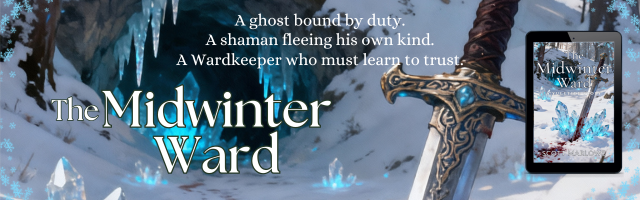
Roderick first appears in The Midwinter Ward.