Vranna
Introduction
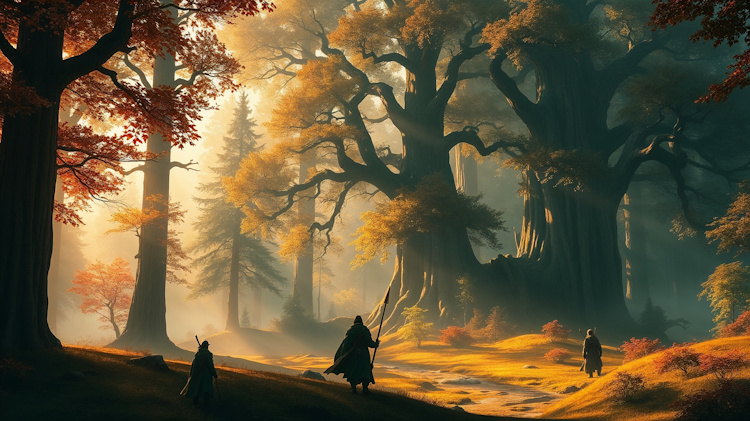
Vranna, the northernmost of the Four Fiefdoms, is the agricultural powerhouse and breadbasket that feeds much of the known world. Bordered by Anolga to the west and Kallendor to the east, the kingdom's fertile valleys and ancient forests define both its character and its destiny. The Ugull Mountains mark Vranna's northern frontier, creating a complex borderland where goblin threats and dwarven alliances shape daily existence.
What distinguishes Vranna from its sister kingdoms is not military might or technological innovation, but the quiet strength of productive abundance and careful diplomacy. While Kallendor reaches for the skies with airships and Anolga raids the seas, Vranna nurtures the earth and tends the forests that sustain civilization itself. The kingdom's vast agricultural estates produce surplus grain and livestock that make it indispensable to regional stability, while the boundless Simmaron Woods harbor both ancient magic and the vigilant King's Patrollers who guard against goblin incursions from the fortress of Greth.
Vranna's identity is rooted in practicality, resilience, and respect for tradition. Its people understand that true power lies not in conquest but in consistency, not in grand gestures but in the daily work of cultivation and protection. The kingdom's capital, Thesia, serves as a center of trade and governance, while towns like Homewood exemplify the Vrannan spirit of harmonious coexistence with the natural and supernatural forces that permeate the realm. From the sacred groves of the Simmaron to the fertile plains surrounding Thesia, Vranna embodies the enduring strength of a people who know that kingdoms rise and fall, but the land endures.
Through the Ages
The Age of the Old Gods (Before Year 0)
During the height of the One Kingdom of Darshavon, the northern territories that would become Vranna served as the agricultural heartland of the realm. The ancient Simmaron Woods already existed as one of the great primeval forests, sung into being by the dryads of Sollin-kel in the earliest days of creation. The King's laws recognized the sovereignty of the fey realm within the forest's boundaries, and a contingent of King's Patrollers maintained a small outpost near what would later become Homewood, serving as official liaisons between the fey realm and the kingdom's administration.
The fertile valleys of northern Darshavon produced abundant harvests that helped feed the entire kingdom, while trade relationships with dwarven communities in the Ugull Mountains provided access to superior tools and craftsmanship. The druid Delbin Kinkaed established his grove in the heart of the Simmaron Woods during this period, forming a profound connection with the dryads and becoming a bridge between the mortal and fey worlds. Even then, the Cavern of the Well in the northern reaches represented a wound in the world, its corruption contained only by powerful wards established by the combined wisdom of dryads and druids.
The Age of Resilience (Year 0 to 100)
The Fall of the Old Gods brought catastrophic change to the northern territories. When the gods destroyed themselves in their final battle, both Delbin Kinkaed and the ancient Order of Druids vanished from the mortal realm, leaving only their legacy of wards and sacred groves. The Simmaron Woods, protected by lingering enchantments, survived the initial devastation better than most places, but without their guardians, they could not shield the forest entirely from the chaos that followed.
Refugees from the destroyed kingdom sought shelter beneath the ancient trees, and many settled at the forest's southern edge, establishing crude settlements that would eventually become Homewood. The Simmaron King's Patrollers, led by Commander Aldric Ironwood, made the fateful choice to honor their oaths to protect frontier communities despite lacking royal authority, thereby providing crucial stability during the darkest period in recorded history. They began training local volunteers and refugees, creating the foundation for the Hall system that would later emerge.
The northern agricultural regions faced significant challenges as the Ugull Mountains erupted with goblin activity following the divine cataclysm. However, the region's fertile lands and established dwarven trading relationships provided crucial resources during these chaotic years. Local lords who could organize effective defenses began attracting followers from scattered communities, laying the groundwork for Vranna's eventual emergence as a unified kingdom.
The Age of Change (Year 101 to 450)
As the world slowly healed, the northern territories crystallized around the ancient city of Drakemoor, where a confederation of noble houses had successfully coordinated defenses against goblin raids and territorial disputes. The kingdom's abundant agricultural resources and established trade relationships with dwarven communities provided a stable economic foundation that allowed for steady expansion and consolidation of power. This practical approach to governance, focusing on defense and prosperity rather than grand ambitions, became a defining characteristic of Vrannan culture.
The settlement of Homewood evolved from a desperate refugee camp into a thriving town, its inhabitants learning to coexist with the guardianless forest through careful observation of the magic that still flowed through root and stone. Around the year 200, when the Four Fiefdoms began to take shape from Darshavon's ashes, the Simmaron Woods found themselves within Vranna's borders. The rulers of Vranna, descended from survivors who had found refuge in various forests during the Age of Resilience, formally recognized the Woods as a protected realm and established Homewood as a sanctuary settlement.
The Hall of the Simmaron was formally recognized during this period, incorporating both surviving pre-Fall patrollers and the local volunteers they had trained. The Hall system preserved the King's Patrollers' identity and standards while adapting to the new political realities. The people of Homewood became the forest's new guardians by necessity, discovering Delbin Kinkaed's abandoned grove and tomb, which had somehow remained pristine despite centuries of abandonment.
The Rise of the Four Fiefdoms (Year 101 to 300)
Within the broader Age of Change, this formative era saw Vranna establish its identity among the emerging kingdoms. The capital was moved from Drakemoor to the more centrally located Thesia, which offered better access to both the agricultural heartland and the vital trade routes connecting the kingdom to its neighbors. Vranna's abundant harvests began to influence regional politics, as other kingdoms grew dependent on Vrannan grain to feed their populations.
During this period, the Simmaron Compact of Year 381 granted the Hall of the Simmaron unprecedented autonomy while formalizing its unique relationship with the Woods' fey inhabitants. This agreement recognized that the Simmaron patrollers, while still King's Patrollers in name and tradition, required special provisions to fulfill their mission effectively. The Compact became a model for how Vranna would handle complex relationships between human authority and ancient powers.
The Age of Advancement (Year 451 to Present)
The current age has seen Vranna solidify its position as the agricultural powerhouse of the Four Fiefdoms. Sophisticated farming techniques and careful estate management produce consistent surpluses even in difficult years, making the kingdom indispensable to regional stability. The Bay of Ester, connecting to the Barrens Ocean, has become an increasingly important trade hub as Vrannan merchants expand their reach beyond traditional land routes.
However, this period of prosperity has been shadowed by growing threats. Twenty years ago, the cunning goblin lord Gral emerged from the Ugull Mountains, uniting the scattered goblin tribes and re-establishing the fortress of Greth. Unlike previous goblin leaders focused on simple raiding, Gral possesses strategic brilliance and long-term ambitions. His forces have probed the northern edges of the Simmaron Woods with increasing sophistication, testing ancient defenses and learning from each encounter.
The Simmaron patrollers, who had grown accustomed to decades of relative peace, suddenly found themselves facing an organized and increasingly dangerous enemy. Commander Elena Brightwater, newly elected to lead the Hall, has worked to adapt patroller tactics to meet this evolving threat, incorporating new technologies while maintaining the ancient traditions that define the King's Patrollers. The forest's magic continues its ancient rhythms, but without the druids' guidance, it sometimes flows in unpredictable ways that both help and hinder those who call the Woods home.
Culture and Society
Vrannan culture is fundamentally shaped by the kingdom's agricultural heritage and its unique position as a border realm between civilization and wilderness. The people of Vranna take pride in practical accomplishments over ostentatious displays, valuing hard work, reliability, and the wisdom that comes from understanding natural cycles. Where Kallendorians celebrate innovation, and Anolgans glorify martial prowess, Vrannans honor those who can coax abundance from the earth and maintain harmony with the forces that predate human kingdoms.
The rhythm of Vrannan life follows the agricultural calendar, with planting and harvest seasons marking the year's major divisions. Even city dwellers in Thesia remain connected to these cycles, as the kingdom's prosperity depends ultimately on the success of its farms and estates. This connection to the land creates a culture that thinks in terms of seasons and generations rather than immediate gains, fostering patience and long-term planning in both personal and political matters.
Social interactions in Vranna emphasize community cooperation and mutual obligation. The concept of "harvest fellowship" extends beyond farming to encompass any collaborative effort in which neighbors assist one another with large tasks. A barn-raising, a wedding celebration, or even the defense of a border town becomes an opportunity for the community to demonstrate its collective strength. This tradition of mutual aid has proven crucial during times of crisis, whether in the face of goblin raids or natural disasters.
The influence of the Simmaron Woods permeates Vrannan culture, particularly in communities near the forest. Folk wisdom includes countless sayings about respecting the old places, reading the signs of nature, and maintaining proper relationships with forces beyond human understanding. Children grow up hearing stories of the dryads, the Woman of the Wood, and the ancient druids who once walked among mortals. While most Vrannans don't claim to possess magical abilities themselves, they maintain a healthy respect for those who do and for the places where the veil between worlds grows thin.
Vrannans tend toward conservatism in social matters, preferring to maintain traditions that have proven effective rather than embracing change for its own sake. This doesn't mean the culture is static—innovations that demonstrate clear practical benefits are readily adopted—but there's a strong bias toward evolutionary rather than revolutionary change. The saying "plant trees for your grandchildren" captures this outlook, emphasizing decisions made for long-term benefit rather than immediate advantage.
The kingdom's complicated relationships with both goblins and dwarves have created a culture comfortable with diversity and complex diplomacy. Vrannan merchants and border guards regularly interact with dwarven traders, learning to navigate cultural differences while maintaining profitable relationships. This experience has made Vrannans generally more accepting of outsiders than their counterparts in other fiefdoms, though they remain cautious about those who disrespect their customs or threaten their communities.
Architecture and Craftsmanship
Vrannan architecture reflects the kingdom's agricultural prosperity and practical outlook. Buildings are constructed to last for generations, using locally sourced materials that harmonize with the surrounding landscape. Stone foundations support timber frames of seasoned oak or ash, with steep-pitched roofs designed to shed the heavy snows of northern winters. The aesthetic emphasizes durability and functionality over ornamentation, though successful estates and wealthy merchants often incorporate carved beams and decorative ironwork that showcase local craftsmanship.
The great manor houses of Vrannan nobility follow a distinctive style that evolved to meet the dual needs of comfortable living and occasional defense. These structures typically feature thick stone walls on the ground floor with timber construction above, allowing for both security and spacious living quarters. Large windows facing interior courtyards provide natural light while minimizing vulnerable exterior openings. Many include defensive towers that serve double duty as granaries or storage, reflecting the practical Vrannan approach to combining multiple functions in a single structure.
In Thesia, the capital's buildings display greater architectural ambition while maintaining Vrannan values of substance over show. The Grand Market Hall, with its soaring timber ceiling supported by massive oak pillars, represents the pinnacle of Vrannan structural engineering. Each pillar is carved from a single tree trunk and decorated with relief sculptures depicting the progression of the agricultural year. The Royal Palace, while imposing, eschews the elaborate facades of Alchester or Sirron in favor of a fortress-like solidity that commands respect through sheer presence rather than decorative excess.
Homewood and other forest communities have developed a unique architectural tradition influenced by their proximity to the Simmaron Woods and its magical inhabitants. Buildings incorporate living trees into their structure where possible, with some ancient structures literally growing around and through their wooden frames. This symbiotic approach to construction, learned through careful observation of what the forest permits, creates homes that seem to emerge naturally from the landscape. The patrollers' Hall of the Simmaron exemplifies this style, its stone foundations supporting timber walls that have weathered for centuries, the structure simultaneously defying and embracing the forest that surrounds it.
Vrannan craftsmen are renowned for their woodworking, particularly in furniture and functional items that combine beauty with durability. The influence of dwarven metalworking techniques is evident in Vrannan ironwork, which tends toward the practical rather than ornate but displays an understated elegance in its execution. Agricultural tools manufactured in Vranna are sought after throughout the Four Fiefdoms for their quality and reliability, with some family workshops maintaining centuries-old techniques for tempering steel and shaping handles that feel perfectly balanced in the hand.
The kingdom's barrel-makers and coopers are considered the finest in the region, their products essential for storing and transporting Vranna's abundant agricultural exports. The art of cooperage in Vranna has been refined over generations, with master coopers understanding exactly which woods to use for different purposes and how to shape staves that will hold liquid or grain for years without leaking or spoiling. This expertise extends to the production of wine and ale casks, with Vrannan barrels commanding premium prices from Kallendorian vintners and Anolgan brewers alike.
Geography and Resources
Vranna's geography defines both its prosperity and its challenges. The kingdom occupies the northern tier of what was once the great Kingdom of Darshavon, bordered by Anolga to the west and Kallendor to the east. The Ugull Mountains form a formidable northern frontier, their peaks perpetually snow-capped and their valleys harboring both goblin fortresses and dwarven strongholds. To the south, the land gradually descends toward the territories of its neighboring fiefdoms, with no clear natural boundary marking the transition between kingdoms.
The heart of Vranna consists of fertile valleys and rolling plains that make it the agricultural powerhouse of the Four Fiefdoms. Centuries of careful cultivation have transformed the natural landscape into a patchwork of productive estates, each managed according to time-tested principles of crop rotation and soil management. Rivers flowing down from the Ugull Mountains provide reliable water for irrigation, while the moderate climate allows for longer growing seasons than in the mountainous regions to the north or the more variable conditions near the coast.
The Simmaron Woods dominate the eastern portion of Vranna, representing one of the last great primeval forests in human lands. These ancient woods harbor mysteries and magic that predate human kingdoms, their towering blackwood oaks and dense undergrowth concealing sacred groves, abandoned druidic sites, and the ever-present Cavern of the Well, whose corruption has been contained for centuries by wards established before the Fall of the Old Gods. The forest provides abundant timber, game, and herbs while simultaneously serving as a buffer between human settlements and the goblin fortress of Greth high in the Ugull Mountains.
The Bay of Ester, on Vranna's southwestern coast, provides the kingdom's primary maritime access. While not as extensive as Seacea's Bay of Lochwell or Anolga's numerous harbors, the Bay of Ester has grown increasingly important as Vrannan merchants expand their trading activities. The natural harbor can accommodate substantial shipping, and several fishing villages along the bay contribute to the kingdom's food supply while also serving as bases for coastal defense against Anolgan raiders.
Vranna's natural resources extend beyond its famous agricultural output. The kingdom possesses extensive forests that provide lumber for construction and shipbuilding, though harvesting is carefully managed to prevent overexploitation. Quarries in the foothills of the Ugull Mountains supply building stone, while smaller deposits of iron and copper support local metalworking industries. The kingdom lacks the rich mineral deposits that have made Kallendor wealthy, but its diversified resource base provides a stable economic foundation.
The climate of Vranna varies from relatively mild in the southern agricultural regions to harsh in the northern mountains. Winters can be severe, with heavy snows that isolate mountain communities for months at a time. Springs bring melting snowpack from the Ugull Mountains, occasionally causing floods that require careful management through a system of channels and levees developed over centuries. Summers are warm but not oppressively hot, ideal for the grain crops that are Vranna's staple. Autumns are typically long and mild, allowing for extended harvest seasons that maximize agricultural yields.
Trade and Diplomacy
Vranna's position as the breadbasket of the Four Fiefdoms gives it unique leverage in regional politics and trade. The kingdom's agricultural surpluses are essential to feeding the populations of Kallendor and Seacea, while even raiding-focused Anolga depends on Vrannan grain during poor harvest years. This economic indispensability forms the foundation of Vranna's diplomatic approach—a strategy of productive neutrality that leverages food security to maintain peace and secure favorable terms in negotiations.
Trade relationships with neighboring kingdoms follow predictable patterns shaped by geography and mutual need. Kallendor is Vranna's largest trading partner, exchanging agricultural products for manufactured goods, tools, and, increasingly, the technological innovations emerging from Alchester's workshops. Vrannan grain feeds Kallendorian cities, while Kallendorian metalwork, machinery, and luxury goods flow back along well-established trade routes. The relationship remains generally cordial, based on clear mutual benefit and centuries of economic interdependence.
Relations with Seacea are more complex, influenced by their indirect connection through maritime trade via the Bay of Ester. Seacean ships transport Vrannan goods to distant markets, taking substantial profits as middlemen while providing Vranna access to foreign markets and exotic imports. This arrangement benefits both kingdoms but creates periodic tensions over shipping rates, port fees, and trade priorities. Seacean merchants sometimes attempt to leverage their control of sea routes to extract better terms, leading to negotiations that test Vranna's diplomatic skills.
Anolga presents Vranna's most challenging diplomatic relationship. The western kingdom's raids on Vrannan territory are frequent enough to be a chronic problem but rarely escalate into full-scale war. Anolgan sea lords view Vranna's agricultural wealth as an attractive target, leading to coastal raids and occasional inland incursions. However, Anolga also depends on purchasing Vrannan grain during their own poor harvests, creating a bizarre dynamic where raiders and merchants from the same kingdom might visit the same Vrannan port in different seasons. Vranna has learned to navigate this complexity through a combination of defensive preparedness, strategic grain sales that maintain Anolgan dependency, and occasional joint military operations against common goblin threats.
The kingdom's relationship with dwarven communities in the Ugull Mountains represents one of Vranna's greatest diplomatic achievements. These alliances, carefully maintained over centuries, provide access to superior dwarven craftsmanship, particularly in tools, weapons, and engineering expertise. In exchange, Vranna supplies food and other agricultural products that support dwarven mining and crafting operations. The mutual respect developed through generations of honorable dealings has created bonds that transcend mere commercial transactions, with some dwarven clans and Vrannan noble houses maintaining relationships spanning centuries.
Vranna's trade goods extend beyond grain to include livestock, wool, leather, timber, and increasingly processed foods such as preserved meats and aged cheeses. Vrannan ale and wine, while not as celebrated as Anolgan brews or fine Kallendorian vintages, enjoy solid reputations for consistent quality and fair pricing. The kingdom's coopers export barrels throughout the region, while its woodworkers produce furniture and tools that command respect for their durability if not their decorative qualities.
The diplomatic corps of Vranna operates on a philosophy of patient negotiation and long-term relationship-building. Vrannan diplomats are trained to think in terms of seasonal cycles and generational agreements rather than immediate gains, an approach that frustrates more aggressive kingdoms but has proven effective at maintaining stability. The kingdom rarely takes strong positions on conflicts between other fiefdoms, preferring to offer mediation services and trade-based incentives for peace rather than choosing sides in disputes that might make permanent enemies.
Military and Defense
Vranna's military forces reflect the kingdom's practical approach to defense and its complex security situation. Rather than maintaining the massive standing armies favored by more aggressive kingdoms, Vranna has developed a flexible system that combines professional military units, the quasi-independent King's Patrollers, militia forces drawn from agricultural communities, and strategic alliances with dwarven warriors when circumstances demand.
The Royal Army of Vranna is organized around defensive capabilities rather than offensive power projection. Heavy infantry units, equipped with pikes and halberds, form the backbone of Vrannan military doctrine, designed to hold defensive positions against both goblin raiders and potential incursions from neighboring kingdoms. These formations are supported by crossbowmen and a modest cavalry force drawn primarily from the noble class. The emphasis is on disciplined formations and coordinated tactics rather than individual heroics, reflecting the Vrannan cultural value of cooperative effort.
The King's Patrollers of Simmaron Hall represent Vranna's elite frontier defense force, though their complex relationship with royal authority makes them technically independent. Under the Simmaron Compact, these patrollers maintain their ancient traditions and operational autonomy while coordinating with Vranna's government on matters of regional defense. The current commander, Elena Brightwater, leads approximately 200 patrollers, organized into companies and squadrons, with additional rovers operating independently across vast territories.
Patroller training emphasizes wilderness survival, tracking, forest warfare, and intimate knowledge of goblin tactics and behavior. These elite rangers understand the different strengths and weaknesses of various goblin breeds—the massive gaugaths, cunning haureks, prolific imps, and devious grekkels—adapting their tactics accordingly. They excel at hit-and-run warfare, ambush tactics, and the kind of guerrilla operations that keep larger goblin forces at bay. The Hall's extensive libraries contain maps, tactical studies, and accumulated wisdom about frontier defense spanning centuries.
Border fortifications in Vranna follow a distributed model rather than concentrating forces in massive fortress-cities. Watchtowers and small fortified posts dot the frontiers, particularly along the approaches from the Ugull Mountains and the suspected routes that goblin raiding parties use. These positions provide early warning of threats and can hold against initial attacks while messengers summon reinforcements. The system relies on rapid communication and coordinated response rather than attempting to make every position impregnable.
The militia system forms a crucial component of Vrannan defense, with able-bodied men from agricultural communities required to maintain basic proficiency with weapons and participate in periodic training. During times of crisis, these militia forces can be rapidly mobilized to defend their home territories or supplement regular military operations. While militia units lack the training and equipment of professional soldiers, their intimate knowledge of local terrain and their determination to protect their homes make them effective defensive forces.
Naval capabilities remain Vranna's weakest military dimension. The kingdom maintains a modest fleet based in the Bay of Ester, sufficient to patrol coastal waters and provide some defense against Anolgan raiders but incapable of projecting power at sea. Vrannan naval doctrine focuses on coastal defense and protection of merchant shipping rather than offensive operations, accepting that Seacea and Anolga will dominate maritime matters while Vranna concentrates its resources on land-based threats.
The alliance with dwarven warriors provides an important supplement to Vrannan military capabilities, particularly in operations within or near the Ugull Mountains. Dwarven units bring superior equipment, formidable combat abilities, and expertise in mountain warfare that complements Vrannan strengths. These alliances are activated through carefully maintained treaties that specify conditions for mutual defense, with both sides honoring commitments tested over centuries of cooperation against common goblin threats.
Notable Heroes of Legend
Commander Aldric Ironwood - The Steadfast Guardian
Commander Aldric Ironwood stands as perhaps the most revered figure in Vrannan history, the patroller who made the crucial decision that would define the Hall of the Simmaron for all time. When the Fall of the Old Gods destroyed the kingdom of Darshavon and obliterated the command structure of the King's Patrollers, Aldric faced an impossible choice: abandon his post and attempt to return to the destroyed heartland, or maintain his oath to protect frontier communities even without royal authority to support him.
His decision to continue serving as a King's Patroller "until a rightful authority could be restored" demonstrated both loyalty to principle and practical wisdom. During the chaotic century following the Fall, Aldric and his patrollers helped organize refugee defenses, coordinated with the dryads to manage the influx of displaced persons, and maintained what order they could in a region that might otherwise have descended into complete anarchy. His leadership proved crucial not just for immediate survival but for preserving the traditions and knowledge that would define the King's Patrollers for centuries to come.
Legend attributes to Aldric not just tactical skill but wisdom in understanding when to fight and when to negotiate, when to stand firm on principle, and when to adapt to new realities. The saying "Stand like Ironwood" has become a Vrannan expression meaning to remain steadfast in one's principles despite impossible circumstances. His decision to begin training local volunteers, sharing the knowledge and traditions of the King's Patrollers with those who proved worthy, created the foundation for the Hall system that emerged in later centuries. The unbroken chain of command from Aldric to Commander Elena Brightwater represents one of the few institutional continuities spanning the entire post-Fall era.
Delbin Kinkaed - The Last Druid
Though he vanished during the Fall of the Old Gods, Delbin Kinkaed remains a figure of profound significance in Vrannan culture and particularly in the folklore of communities near the Simmaron Woods. Unlike other mortals who remained at the forest's edge, Delbin was granted passage into the deeper woods by the dryads of Sollin-kel, earning this privilege through his genuine understanding of the delicate balance between civilization and wilderness. He established his grove in the Woods' heart, becoming a bridge between the purely fey realm of the dryads and the mortal world beyond.
The wards Delbin helped establish around the Cavern of the Well, binding the northern corruption with layers of protective magic, continue to serve their purpose even after five centuries without maintenance—a testament to the power of his knowledge and the strength of his connection to the forest's deepest magic. His tomb, discovered by the people of Homewood and somehow remaining pristine despite centuries of abandonment, has become a site of pilgrimage where patrollers seek guidance before dangerous missions. Many report strange dreams or visions when resting near the grove, sometimes receiving insights that prove crucial in their struggles against Lord Gral's forces.
Stories of Delbin emphasize his role as a mediator and teacher rather than as a warrior or ruler. He understood that true power lay not in domination but in harmony, not in forcing nature to bend to human will but in learning to work with forces that predated kingdoms and would outlast them. His legacy influences how Vrannans approach their relationship with the Simmaron Woods and its magical inhabitants—with respect, caution, and the understanding that some powers deserve reverence rather than exploitation. The saying "Walk Delbin's path" means seeking understanding before action and honoring the old ways while adapting to new circumstances.
Lady Thesia the Builder - Founder of the Capital
Lady Thesia, for whom the capital city is named, represents the practical wisdom and long-term vision that characterizes Vrannan culture. During the turbulent period when the northern territories were consolidating into what would become the kingdom of Vranna, Thesia recognized that Drakemoor's location, while historically significant, made it poorly positioned to serve as the center of an agricultural kingdom. She advocated for establishing a new capital at the junction of major trade routes, where it could efficiently manage both internal distribution and external commerce.
Her vision faced significant opposition from traditionalists who saw abandoning Drakemoor as a betrayal of heritage, but Thesia argued persuasively that true respect for the past meant building a future worthy of it. The city she planned would not attempt to recreate the grandeur of lost Darshavon but would instead reflect Vrannan values of function, durability, and prosperity rooted in the land itself. The Grand Market Hall, designed under her oversight, embodied this philosophy—a structure of such scale and craftsmanship that it commanded respect through sheer solidity and utility rather than ornamental excess.
Lady Thesia's greatest achievement was perhaps not the physical city but the system of estate management and agricultural planning she helped establish. She understood that Vranna's strength would come from consistent, reliable productivity rather than gambling on spectacular but risky ventures. The principles she helped codify—careful crop rotation, soil management, diversified production, maintenance of food reserves—became the foundation of Vrannan agricultural success for centuries to come. Her saying "Plant for seven years hence" captures the essence of Vrannan planning: always thinking ahead, always preparing for hardship, always building for those who will come after.
Laws and Governance
Vranna operates under a hereditary monarchy tempered by practical considerations and a strong tradition of noble counsel. The current ruler, Queen Maren the Steadfast, governs from the capital city of Thesia with the advice of the Council of Lords, a body composed of the kingdom's major landholders and representatives from key institutions, including the King's Patrollers, the merchant guilds, and the dwarven alliance. This system balances royal authority with collective decision-making, reflecting the Vrannan preference for consensus and long-term stability over dramatic individual action.
The legal system of Vranna emphasizes practical justice and community standards rather than elaborate codes or harsh punishments. Local disputes are typically handled by manor lords or town councils, with appeals to higher authority reserved for serious crimes or cases involving parties from different jurisdictions. The concept of "harvest justice" pervades Vrannan legal thinking—the idea that penalties should be proportional, restorative where possible, and focused on maintaining community harmony rather than retribution. A thief might be required to work off his debt through labor rather than suffering mutilation, while violent crimes are treated more severely as threats to the social order itself.
Property law in Vranna revolves around land ownership and the obligations it entails. The feudal system remains strong, with manor lords holding lands from the crown in exchange for military service, tax payments, and maintenance of their estates' productivity. However, Vrannan feudalism includes unusual protections for peasant farmers, who cannot be arbitrarily removed from lands their families have worked for generations. This stability has proven economically beneficial, as farmers who know they and their descendants will enjoy the fruits of their labor invest more effort in long-term improvements.
The Simmaron Compact represents a unique aspect of Vrannan governance, formalizing the relationship between royal authority and the quasi-independent King's Patrollers. Under this agreement, the patrollers maintain operational autonomy in matters of frontier defense while coordinating with Vranna's government on strategic issues affecting the kingdom as a whole. The monarch provides funding and recruits sponsored by noble houses, while the patrollers provide intelligence, border security, and specialized military capabilities that regular forces cannot match. This arrangement has proven remarkably durable, surviving regime changes and political crises because both parties recognize its practical value.
Succession follows the principle of primogeniture, with the eldest child, regardless of gender, inheriting the crown. This system has prevented many of the succession crises that have plagued other kingdoms, though it occasionally produces rulers better suited to farm management than statecraft. The tradition of requiring monarchs to spend time living in agricultural communities before ascending the throne helps ensure that Vrannan rulers understand the foundation of their kingdom's prosperity, though critics note this doesn't always translate into effective governance of more complex matters.
The Council of Lords meets quarterly in Thesia to discuss kingdom-wide issues, set tax rates, approve major expenditures, and advise the monarch on policy matters. While the queen theoretically holds absolute authority, practical politics and the threat of coordinated noble opposition ensure that significant decisions require council approval or at least acquiescence. This system has prevented tyranny while occasionally creating deadlock when rapid action would be preferable, leading to ongoing debates about the proper balance between royal authority and noble consultation.
Social Structure
Vrannan society is fundamentally agricultural in its organization, with social status closely tied to land ownership and productive capacity. At the apex stands the royal family, followed by the great landholding noble houses whose vast estates form the economic backbone of the kingdom. These noble families trace their lineages back to the local lords who organized resistance and maintained order during the chaotic years following the Fall of the Old Gods, and their authority derives as much from proven stewardship of the land as from hereditary claims.
Below the great nobility are the manor lords and lesser nobles who manage individual estates and smaller territories. These families form the bulk of Vranna's ruling class, responsible for the day-to-day administration that keeps the kingdom functioning. A successful manor lord must balance multiple roles—military commander, agricultural manager, judge, and diplomatic liaison—requiring a breadth of practical skills that makes Vrannan nobility less refined but more competent than their counterparts in other fiefdoms. The saying "A noble who can't plow is no noble at all" reflects the expectation that even those of high birth understand the practical foundations of their wealth.
The merchant class occupies an unusual position in Vrannan society, neither as politically powerful as Kallendorian guilds nor as marginalized as in some more traditional feudal kingdoms. Vrannan merchants are typically specialists in agricultural products, timber, or other goods derived from the land, and they often work closely with noble houses to manage the export of surplus production. The most successful merchant families have earned respect through consistent, honest dealing and useful service to the kingdom, with some even marrying into minor nobility. The Merchant Council in Thesia wields significant influence over trade policy, though it lacks the independent political power of guild organizations in other kingdoms.
Farmers and agricultural workers form the foundation of Vrannan society, and their status reflects this importance. While legally bound to the lands they work, Vrannan peasants enjoy greater security and better treatment than their equivalents in many other realms. The tradition of hereditary tenancy means that farm families cannot be arbitrarily displaced, and manor lords who abuse their workers face social censure and potential intervention from higher authorities. This system has created a relatively stable and productive agricultural workforce, though it also limits social mobility and ties individuals to specific locations.
The King's Patrollers occupy a unique position in Vrannan social hierarchy, respected for their skills and their role in frontier defense but somewhat apart from traditional social structures. Patrollers are drawn from all social classes—younger sons of nobility seeking adventure, skilled woodsmen from forest communities, and even reformed criminals proving their worth through service. Within the Hall, rank is based on ability and experience rather than birth, creating a meritocratic environment unusual in feudal society. Retired patrollers often find positions of honor in their home communities, serving as town guards, wilderness guides, or trainers for local militia forces.
Craftsmen and artisans form a respected middle tier of Vrannan society, particularly those who produce the tools and goods essential to agricultural productivity. Master coopers, wheelwrights, blacksmiths, and carpenters can achieve comfortable prosperity and social standing through their skills. The guild system in Vranna is less formalized than in Kallendor but still regulates training, quality standards, and pricing in major trades. Apprenticeship typically begins in early adolescence and lasts seven years, with journeymen spending additional time perfecting their craft before achieving master status.
At the bottom of the social hierarchy are the landless laborers, servants, and those without specialized skills or property. However, even this lowest tier enjoys certain protections under Vrannan law and custom. The tradition of "harvest share" ensures that even the poorest workers receive a portion of successful harvests, while the kingdom's general prosperity means that true destitution is relatively rare. Social mobility exists but is limited, with the most common path to advancement being through demonstrated competence in a practical skill, military service, or—very rarely—marriage.
Arts and Entertainment
The arts in Vranna reflect the kingdom's practical values and its deep connection to natural cycles and agricultural traditions. Where Kallendorian theater emphasizes technological spectacle and Anolgan poetry celebrates maritime adventure, Vrannan artistic expression tends toward the rustic, the seasonal, and the communal. The greatest Vrannan art is often functional—a perfectly balanced plow handle, a barn door carved with protective symbols, a harvest song that coordinates the rhythm of multiple workers.
Music plays a central role in Vrannan culture, particularly folk traditions passed down through generations of agricultural communities. Work songs coordinate labor during planting and harvest, their rhythms designed to pace effort efficiently while building group cohesion. Ballads recount the histories of great families, legendary patrollers, and the ancient druids, preserving oral history in memorable form. Fiddles, pipes, and drums dominate Vrannan music, with performances often accompanied by energetic dancing that serves as both entertainment and physical exercise during long northern winters.
The Harvest Festival represents the pinnacle of Vrannan artistic expression, a week-long celebration following the autumn harvest that combines thanksgiving, entertainment, and social bonding. Each community organizes competitions in various skills—plowing contests, archery tournaments, strength tests, and cooking competitions—while traveling performers present plays, puppet shows, and musical performances. The festival culminates in the Great Feast, where communities share their bounty in massive communal meals that reinforce social bonds and allow the poor to eat well at least once a year.
Storytelling occupies a revered position in Vrannan culture, particularly the winter tradition of tale-telling around hearth fires. Professional storytellers travel between communities, carrying news and entertainment while preserving the oral traditions that predate written records. The most respected storytellers can adapt their presentations to their audience, presenting sanitized versions for children while offering more complex narratives for adults that explore moral ambiguity and historical nuance. Tales of the Simmaron Woods, the ancient druids, and the Fall of the Old Gods remain perennial favorites.
Visual arts in Vranna tend toward the practical and symbolic rather than the purely decorative. Wood carving represents the most developed visual art form, with skilled carvers producing everything from furniture decorated with agricultural motifs to protective talismans hung over doorways to ward off evil. The tradition of carved barn beams, where major support timbers are decorated with scenes from family history or legendary events, creates informal galleries that record community memory in visual form. Stone carving is less common but follows similar themes, with gravestones and boundary markers often elaborately worked.
Theater exists in Vranna but in simpler forms than the elaborate productions of Kallendorian playhouses. Traveling troupes perform in market squares and manor halls, presenting morality plays, historical dramas, and comedies that gently mock social pretensions while affirming community values. The Harvest Play tradition, in which communities stage amateur productions depicting their own history or legendary events, allows ordinary people to participate in the dramatic arts while reinforcing local identity and shared heritage.
Horse racing and equestrian sports provide entertainment and gambling opportunities, particularly during major festivals. While Vranna doesn't share Kallendor's obsessive focus on equestrian culture, good horses remain valuable assets for both agricultural and military purposes, and demonstrations of skill in training and riding command respect. Archery competitions are equally popular, serving the dual purpose of entertainment and maintaining practical military skills among the population. The saying "A festival without archery is like bread without salt" captures the centrality of these contests to Vrannan celebrations.
Cuisine and Drink
Vrannan cuisine celebrates the kingdom's agricultural abundance while reflecting its practical, seasonal approach to life. The food is hearty, filling, and designed to sustain people engaged in hard physical labor. Where Kallendorian cuisine emphasizes exotic spices and refined techniques, and Anolgan food focuses on preserved seafood and portable rations, Vrannan cooking highlights fresh local ingredients prepared with time-tested methods that maximize flavor while minimizing waste.
Bread forms the foundation of the Vrannan diet, with each region producing distinctive styles based on local grain varieties and baking traditions. The dense, dark rye bread of northern communities can last for weeks, making it ideal for patrollers and travelers, while the lighter wheat breads of southern estates represent daily luxury for those who can afford them. The tradition of communal bread ovens in villages creates social gathering places where news is exchanged along with loaves, and baking day marks an important rhythm in community life.
Meat dishes in Vranna typically feature pork, mutton, and poultry, with beef reserved for special occasions due to cattle's greater value for dairy production and fieldwork. Roasted joints, hearty stews, and sausages flavored with local herbs dominate the traditional repertoire. The autumn slaughter, when livestock are culled before winter and meat is preserved through smoking, salting, and rendering into sausages, represents a crucial annual event that requires community cooperation and celebrates abundance before the lean months.
Root vegetables—turnips, carrots, parsnips, beets—feature prominently in Vrannan cuisine, as they store well through the winter and provide essential nutrition when fresh food is scarce. Cabbage in various forms appears throughout the year, from fresh salads in summer to fermented preparations that provide vitamin C during winter months. Onions and leeks flavor nearly every savory dish, while beans and lentils provide protein for those who cannot afford meat regularly. The saying "A pot with seven vegetables is richer than a table with one bird" reflects the Vrannan appreciation for simple, abundant meals.
Dairy products represent both daily staples and valuable trade goods. Vrannan cheeses range from fresh soft varieties consumed within days to aged hard cheeses that can last for years and command high prices in foreign markets. Butter churned from the milk of grass-fed cattle has earned particular renown for its rich flavor and golden color. The tradition of cheese-making preserves summer abundance for winter consumption while creating valuable exports that supplement agricultural income.
Vrannan ale represents the kingdom's most celebrated contribution to regional cuisine. Brewed from barley and flavored with local herbs, Vrannan ales range from light summer brews to heavy dark ales aged in oak casks for special occasions. Each estate and village maintains its own brewing traditions, with recipes passed down through generations and closely guarded as family secrets. The annual brewing cycle follows the agricultural calendar, with different styles produced for different seasons. While not as varied or sophisticated as Anolgan beers or as refined as Kallendorian wines, Vrannan ales have earned respect for consistent quality and honest flavor.
Wine production exists in the southern regions of Vranna, though the kingdom's climate limits vineyards to favored microclimates with southern exposures and good drainage. Vrannan wines tend toward the robust and straightforward, without the complexity of wines from warmer regions, but offering pleasant accompaniments to hearty meals. Fruit wines made from apples, pears, and berries complement grape-based varieties, while mead, produced from honey, is a traditional celebratory drink associated with weddings and religious ceremonies.
Special occasion foods mark important events in the Vrannan calendar. The Harvest Feast traditionally features roasted boar or venison, symbolizing the bounty of the land and the success of the hunt. Winter Solstice celebrations include rich pastries flavored with dried fruits and nuts, reminding communities of summer's abundance during the darkest days. Wedding feasts display the prosperity of both families through the quantity and variety of food presented, with the traditional wedding cake—a massive construction of sweetened breads and fruits—representing hopes for a fertile and prosperous union.
Education and Knowledge
Education in Vranna follows practical lines, focusing on skills and knowledge directly applicable to daily life and the kingdom's agricultural economy. While literacy rates lag behind Kallendor's urban population, they exceed those in more rural regions, as effective estate management requires the ability to keep records, read contracts, and maintain correspondence. The Vrannan approach to education emphasizes apprenticeship and experiential learning over abstract study, though the kingdom maintains several institutions dedicated to preserving knowledge and training specialists.
The Royal Archives in Thesia house the kingdom's most important documents, including land records dating back to the immediate post-Fall period, treaties with dwarven communities, copies of the Simmaron Compact, and various historical texts salvaged from the chaos following the destruction of Darshavon. Professional scribes and scholars maintain these records while also serving as legal advisors to the crown and nobility. Access to the archives is technically open to any citizen with a legitimate need, though in practice, most users are nobles, merchants, or representatives of major institutions conducting research for specific purposes.
The Hall of the Simmaron maintains extensive libraries focused on frontier defense, goblin studies, wilderness survival, and the history of the King's Patrollers. These collections include tactical studies accumulated over centuries, detailed maps of the Ugull Mountains and surrounding territories, and written accounts of significant battles and events dating back to the Age of the Old Gods. Commander Elena Brightwater and the Council of Elders serve as guardians of this knowledge, ensuring it is preserved and transmitted to new generations of patrollers while also making relevant information available to military planners and scholars studying frontier defense.
Agricultural education occurs primarily through family and community transmission. Children begin learning farming techniques from their parents as soon as they can contribute useful labor, typically around age six or seven. The cycle of planting, tending, and harvesting provides natural learning opportunities, with experienced farmers teaching younger generations not just mechanical techniques but also the subtle knowledge of reading weather patterns, judging soil quality, and timing operations to natural cycles. The best young farmers sometimes receive additional training at successful estates, where master agriculturalists share advanced techniques in exchange for labor.
Craft apprenticeships follow formalized patterns, with guilds or master craftsmen accepting young apprentices for terms typically lasting seven years. During this period, apprentices receive room, board, and instruction in exchange for their labor, gradually progressing from simple tasks to more complex work as their skills develop. Successful completion of an apprenticeship requires demonstrating mastery by creating a "journeyman piece" that demonstrates competence in fundamental techniques. Journeymen spend additional years perfecting their craft before creating a "master piece" that earns them full status and the right to take their own apprentices.
Religious institutions, though less influential in Vranna than in ages past, still maintain schools associated with temples and monasteries. These institutions teach reading, writing, basic mathematics, and religious instruction, serving as the primary source of literacy for children of non-noble families. The quality of education varies widely, from dedicated scholars maintaining high standards to barely literate monks teaching by rote, but even basic literacy opens opportunities for advancement through bureaucratic or commercial positions.
Noble children receive more formal education, typically from private tutors hired by their families. The curriculum emphasizes reading, writing, mathematics, history, law, and the practical skills necessary for estate management or military service. Sons expected to inherit major holdings learn agricultural management, feudal law, and military leadership, while those destined for lesser positions might focus more on military skills or pursue education in specialized areas like engineering or commerce. Daughters of noble families traditionally learn household management, though the current queen's rise has encouraged more comprehensive education for female heirs.
The tradition of "winter learning" allows agricultural communities to pursue education during months when field work is impossible. Traveling teachers visit villages, offering instruction in reading, mathematics, and various practical skills to anyone able to pay modest fees. These winter sessions serve multiple purposes—they provide employment for educated individuals, offer opportunities for social gathering during isolated months, and gradually improve literacy and numeracy across the kingdom. Some communities pool resources to hire teachers for extended stays, creating informal schools that operate for several months each winter.
Mythology and Beliefs
Vrannan spiritual life reflects the kingdom's historical experience, blending fading memories of the Old Gods with practical folk traditions and deep respect for the mysterious forces that still inhabit places like the Simmaron Woods. The catastrophic Fall of the Old Gods transformed Vrannan religious sensibilities from confident worship of powerful deities to a more cautious spirituality that acknowledges the existence of powerful forces without necessarily trusting them or expecting divine intervention.
The Old Gods remain present in Vrannan consciousness, but as historical figures and cautionary tales rather than objects of worship. The temples that once dominated major communities have been abandoned or repurposed, their empty halls serving as reminders of divine power that proved neither eternal nor reliable. Most Vrannans view the Old Gods' self-destruction as evidence that even the mightiest powers can fall, a lesson that reinforces cultural values of humility and caution against overreaching ambition.
Folk traditions and superstitions fill the spiritual vacuum left by the Old Gods' departure. These beliefs focus on maintaining proper relationships with the forces that still demonstrably influence daily life—the seasons, the weather, the fertility of the land, and the spirits that inhabit wild places. Farmers leave small offerings at the edges of their fields during planting and harvest, not necessarily believing in specific entities but following traditions that have correlated with good results for generations. The saying "Better safe than withered" captures this pragmatic approach to spiritual matters.
The Simmaron Woods and its magical inhabitants occupy a central place in Vrannan spiritual consciousness. The dryads of Sollin-kel, while rarely seen, are acknowledged as real entities deserving respect and caution. Stories of travelers who offended forest spirits and suffered mysterious fates serve as cautionary tales that reinforce proper behavior in the Woods. The Woman of the Wood, Ursool, represents a more ambiguous figure—neither purely good nor evil, but powerful and unpredictable, someone to be treated with extreme care on the rare occasions when interaction becomes necessary.
The legend of Delbin Kinkaed has evolved into something approaching a cult of remembrance, particularly among the patrollers and residents of Homewood. While few would claim Delbin was divine, his grove has become a pilgrimage site where people seek guidance or inspiration. The dreams and visions reported by those who rest near the grove are attributed to lingering echoes of his wisdom rather than direct divine intervention, maintaining the Vrannan skepticism about godhood while acknowledging that some mortals achieve a form of immortality through their deeds and knowledge.
Seasonal festivals in Vranna have shifted from religious observations to cultural celebrations with spiritual undertones. The Spring Awakening marks the beginning of planting season with ceremonies that blend practical agricultural rituals (blessing seeds, inspecting tools) with traditional elements whose original religious meaning has faded into custom. The Harvest Festival thanks no specific deity but expresses general gratitude for abundance, with offerings made to "the powers that bring growth" rather than to named gods. The Winter Solstice celebration focuses on community gathering and the promise of returning light rather than worship of any particular divine entity.
Ancestor veneration plays a stronger role in Vrannan spirituality than worship of distant powers. Families maintain small shrines honoring their dead, particularly those who distinguished themselves through exceptional service, wisdom, or achievement. These practices don't necessarily assume that ancestors actively intervene in the mortal world, but they maintain connections across generations and reinforce the importance of thinking beyond one's own lifetime. The tradition of "asking the ancestors" during major decisions involves contemplating what previous generations would counsel, a form of reflective decision-making that doesn't require literal belief in supernatural communication.
Death in Vrannan culture is viewed as a natural transition rather than a supernatural crisis requiring elaborate religious intervention. Burial practices emphasize returning the body to the earth, with graves marked by simple stones or wooden markers rather than elaborate monuments. The saying "We return what was borrowed" reflects the view that human bodies are temporary arrangements of earth and water that inevitably return to their source. Memorial ceremonies focus on honoring the deceased's achievements and maintaining social bonds among the living rather than on securing divine favor or ensuring proper afterlife conditions.
Present Day Challenges and Conflicts
The twenty-year rise of Lord Gral represents the most immediate and dangerous threat facing Vranna. This cunning goblin lord has accomplished what generations of previous leaders failed to achieve—uniting the fractured tribes of the Ugull Mountains under a single banner and organizing them with unprecedented discipline. From his re-established fortress at Greth, Gral has conducted increasingly sophisticated probes of Vrannan defenses, particularly targeting the Simmaron Woods and the ancient wards protecting the Cavern of the Well. His strategic brilliance and long-term planning suggest he is preparing for a major offensive that could devastate the northern territories.
The King's Patrollers of Simmaron Hall find themselves stretched dangerously thin, facing an enemy that adapts to their tactics and learns from each engagement. Commander Elena Brightwater has worked to incorporate new technologies and training methods while maintaining the ancient traditions that define the patrollers, but resources remain limited and recruitment struggles to keep pace with attrition. The patrollers' quasi-independent status, while preserving their effectiveness in some ways, also complicates efforts to secure additional support from the crown and integrate their operations with regular military forces.
The corruption in the Cavern of the Well continues its slow spread, testing ancient wards that have held for over five centuries without their creators' maintenance. Lord Gral's strategic interest in this source of dark power suggests he understands something about its nature that human defenders don't fully grasp. The patrollers maintain constant vigilance over the northern reaches, but they lack the deep magical knowledge that Delbin Kinkaed and the ancient druids once possessed. If the wards fail, the consequences could extend far beyond Vranna's borders, potentially unleashing corruption that threatens all the Four Fiefdoms.
Anolgan raids along Vranna's western coast have intensified in recent years, with Anolgan sea lords viewing the kingdom's prosperity as an attractive target. While these incursions rarely penetrate far inland, they drain resources and military attention that might otherwise focus on the goblin threat. The complex dynamic between raiding and trade with Anolga creates diplomatic headaches, as the same kingdom that attacks Vrannan coastal communities in summer might purchase emergency grain supplies the following winter. This situation requires constant diplomatic calibration and makes it difficult to coordinate anti-goblin campaigns.
Economic pressures challenge Vranna's traditional role as a regional breadbasket. Several consecutive years of below-average harvests have reduced the surpluses that typically provide diplomatic leverage and economic security. Climate patterns appear to be shifting, with less predictable weather making traditional agricultural planning more difficult. Some scholars attribute these changes to lingering effects of the Fall of the Old Gods, while others suggest natural cycles that will eventually return to normal. Regardless of the cause, reduced productivity creates domestic pressure and weakens Vranna's position in negotiations with neighboring kingdoms that depend on its exports.
Succession concerns add to the kingdom's challenges. Queen Maren, while respected for her steady governance, is aging without a clear heir. Her daughter, Princess Aldara, possesses administrative competence but lacks the martial bearing that many nobles believe essential in a monarch facing constant military threats. Some members of the Council of Lords have begun quiet discussions about alternative arrangements, creating political uncertainty at precisely the moment when unified leadership is most crucial. The specter of a succession crisis distracts attention from external threats and could potentially trigger internal conflict.
The relationship with dwarven allies in the Ugull Mountains faces strain as goblin activity increases. Several dwarven strongholds have come under intense pressure from Gral's forces, requiring them to focus on their own defense rather than providing the military support that Vranna has traditionally relied upon. Some dwarven clans have suggested that humans should pay more for military assistance, pointing out that they benefit from containing threats before they reach human territories. These negotiations test centuries-old relationships and require careful diplomacy to maintain alliances both sides recognize as mutually beneficial yet increasingly costly to sustain.
Technological advancement in neighboring kingdoms, particularly Kallendor's airship innovations, creates both opportunities and anxieties for Vranna. The kingdom recognizes the potential military and commercial applications of new technologies but struggles to balance investment in innovation against immediate defensive needs. Some voices argue that Vranna should focus on its traditional strengths rather than attempting to compete with Kallendor's technological edge, while others warn that falling behind could leave the kingdom vulnerable to economic marginalization or military obsolescence. These debates about resource allocation and strategic direction reveal deeper questions about Vranna's identity and future role among the Four Fiefdoms.
Concluding Remarks
Vranna stands at a critical juncture in its history, facing challenges that test the resilience and practical wisdom that have defined the kingdom since its emergence from the chaos following the Fall of the Old Gods. The agricultural abundance that has made Vranna indispensable to regional stability now coexists with military threats that grow more sophisticated and dangerous with each passing year. The ancient forests that harbor magic and mystery also contain enemies whose ambitions could devastate the carefully cultivated prosperity that generations have built.
Yet the kingdom's greatest strengths remain its people's connection to the land, their tradition of practical cooperation, and their understanding that true security comes from steady cultivation rather than dramatic gestures. The farmers who tend their fields with the same care their ancestors did, the patrollers who maintain their vigil in the Simmaron Woods, the craftsmen who produce tools and goods that will serve for generations—these represent the foundation upon which Vranna's future depends. The kingdom's survival will ultimately rest not on individual heroism or technological breakthroughs, but on the collective determination of communities to preserve what they have built and pass it intact to those who follow.
Vranna's role in the wider world of Uhl remains as vital as ever. As long as the other kingdoms depend on its grain, as long as its forests stand between goblin fortresses and human settlements, as long as its people maintain the traditions that have sustained them through centuries of change and crisis, Vranna will endure. The kingdom may not inspire songs of martial glory or technological triumph, but it provides something more fundamental—the steady, reliable productivity that makes civilization possible. In an age of advancement and ambition, Vranna reminds the world that the most profound achievements are often the least celebrated: another successful harvest, another generation taught the old ways, another year of holding the line against the darkness that waits in the northern mountains.