CLASSUS THELINDOR
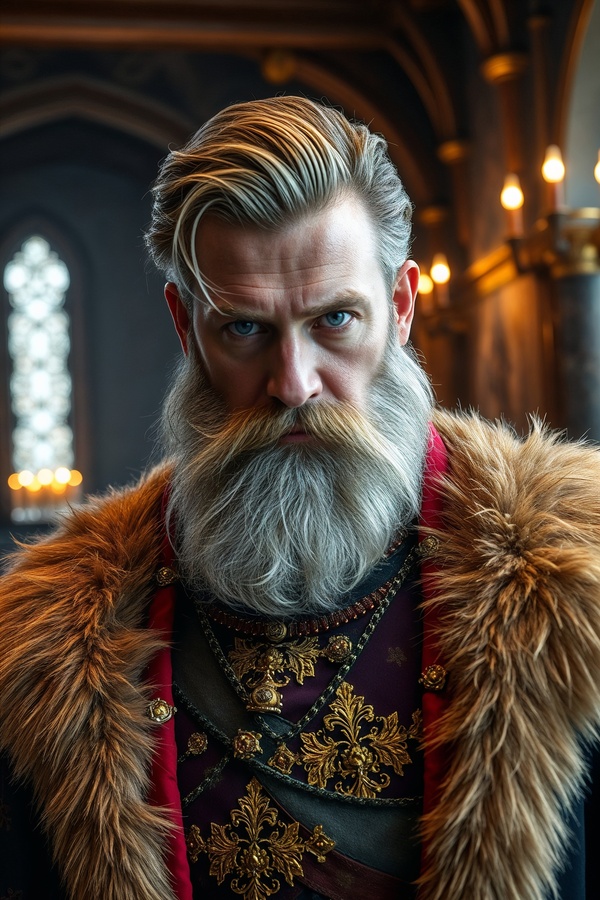
Classus Thelindor was born the only son of Duke Aldren Thelindor III, ruler of Kallendor and keeper of Alchester's ducal seat, during a period when the fiefdom stood at a crossroads between its storied equestrian past and an uncertain technological future. The Thelindor name carried weight across the Four Fiefdoms, the family having governed Kallendor for generations with a steady hand that favored stability and measured progress over radical ambition. Aldren himself embodied this tradition. A careful, deliberate ruler, he had invested modestly in the craftsmen and engineers who tinkered with experimental flying machines on the outskirts of Alchester, recognizing their potential without ever fully committing to their vision. He expanded the nascent Technology Academy, negotiated favorable trade agreements with the krill of the Merrow Woods for rare materials, and ensured that Kallendor's famous horse-breeding traditions remained the bedrock of its economy and culture. It was a competent reign, if not a transformative one, and it laid the groundwork upon which his son would build something far more ambitious.
Young Classus grew up in the East Tower, educated by the finest tutors Alchester could provide in matters of governance, military strategy, diplomacy, and the sciences. Where his father approached technology with cautious interest, Classus displayed an almost obsessive fascination with it from an early age. He spent hours in the workshops of the Technology Academy, questioning engineers about lift ratios and propulsion systems, sketching designs for vessels that existed only in his imagination. He rode horses as well as any Kallendorian nobleman—the Thelindor stables produced some of the finest mounts on the Vernesse Steppes—but his gaze always drifted upward, toward the open skies that stretched endlessly above the grasslands. Those who knew him as a boy recalled a restless intelligence paired with an iron stubbornness, a young man who argued with his tutors not out of disrespect but because he genuinely believed he saw possibilities they could not.
Aldren's death came when Classus was in his mid-twenties, not from violence or treachery but from a wasting illness that consumed the old duke over the course of a long, difficult year. The transition of power proceeded smoothly, as Aldren had prepared his son for the responsibility. But those who expected the younger Thelindor to govern as his father had—with patience and restraint—were quickly disabused of the notion. Within months of assuming the ducal seat, Classus redirected a significant portion of Kallendor's treasury toward the airship development programs his father had only tentatively supported. He elevated engineers and inventors to positions of influence traditionally reserved for the landed nobility, appointed scholars from the Technology Academy to advisory roles on his council, and made it known that Kallendor's future lay not on the backs of horses but in the skies above them.
The backlash was immediate and fierce. Traditional noble families who had built their wealth and status on horse breeding and land ownership saw their influence diminished by engineers and artificers who lacked pedigree but possessed knowledge the duke valued more. Taxes increased to fund the construction of what would become Alchester's magnificent airship docks, a sprawling complex of towers, platforms, and maintenance hangars that consumed resources on a scale unprecedented in the fiefdom's history. Merchants grumbled about the cost. Lords protested the redistribution of priorities. More than one noble house petitioned the Ducal Council to rein in what they called reckless spending on unproven fantasies. Classus heard their objections, considered them, and proceeded exactly as he had planned. He possessed the political instinct to know which grievances required concessions and which could be safely ignored, and he wielded that instinct with a precision that left his opponents perpetually off-balance.
The gamble paid off. Within a decade of his ascension, Kallendor launched its first fleet of practical airships, vessels capable of crossing the Vernesse Steppes in hours rather than weeks and carrying cargo that would have required dozens of horse-drawn wagons. The airship docks that had seemed an extravagant folly became the beating heart of a commercial revolution, transforming Alchester into the undisputed hub of inter-fiefdom trade and communication. Goods, people, and information moved through Kallendor at speeds the other fiefdoms could not match, and Classus leveraged this advantage with ruthless efficiency. He negotiated trade agreements that favored Kallendor's interests, offered airship transport services that made his kingdom indispensable to its neighbors, and quietly built an aerial military force that altered the balance of power across the Four Fiefdoms without a single battle being fought.
Approaching fifty, Classus Thelindor cuts an imposing figure—broad-shouldered, with a thick salt-and-pepper beard and piercing blue eyes that look straight through pretense. He governs from the East Tower with the restless energy of a man who believes he has not yet accomplished enough, surrounding himself with capable administrators and tolerating no incompetence among those who serve him. He is known for making unexpected decisions that confound his advisors, such as personally requesting a young, unproven inspector named William Wright to lead the investigation into a major treasury theft, bypassing more senior candidates because he saw something in the young man that others had overlooked. This willingness to bet on talent over seniority has earned him fierce loyalty from those he elevates and lasting resentment from those he passes over.
His reputation among the other fiefdoms is decidedly mixed. Kallendor's technological supremacy has made it the envy of Vranna, Anolga, and Seacea, but Classus's ambitions extend beyond mere innovation. Word has spread beyond Alchester's walls that the duke entertains the idea of declaring himself king—a claim to sovereignty that no ruler of the Four Fiefdoms has successfully maintained since the Fall of the Old Gods shattered the ancient Kingdom of Darshavon centuries ago. The other fiefdoms guard their independence jealously, and past claimants to the royal title have met with swift and unified opposition. Classus understands this history. He also understands that no previous claimant possessed an airship fleet, a treasury swollen by technological commerce, or the diplomatic leverage that comes from being the kingdom every other kingdom depends upon for rapid transportation and communication. The ascension to royalty requires time, political maneuvering, the right connections, and above all else, gold. Classus has proven himself patient enough to accumulate all four.
For all his vision and effectiveness, Classus is not without his blind spots. His faith in his own judgment can border on arrogance, and he has shown a troubling tendency to trust those closest to him without sufficient scrutiny, particularly when their goals appear to align with his own. The machinery of governance he has built is vast and powerful, but even the most capable ruler cannot watch every corner of his kingdom at once. Alchester thrives under his direction—its Technology Academy trains the brightest minds in the Four Fiefdoms, its airship docks stretch across the eastern skyline like monuments to human ambition, and its treasury funds projects that would have seemed impossible a generation ago. But the city also harbors shadows that the duke's gaze does not reach, and the gap between Kallendor's gleaming achievements and the darker currents running beneath them grows wider with each passing year.
Whether history remembers Classus Thelindor as a visionary who lifted his kingdom to greatness or as an ambitious man who reached too far depends on events that have yet to unfold. What remains certain is that he has already transformed Kallendor beyond recognition, reshaping a fiefdom of horse lords and grassland farmers into the technological heart of the known world. The airships that cross Alchester's skies bear his ambition aloft for all to see, and the throne he covets—a throne that has sat empty for five centuries—has never seemed closer to being claimed.