THE GODS & HEROES OF UHL
Dryad Mythos
The Great Oak
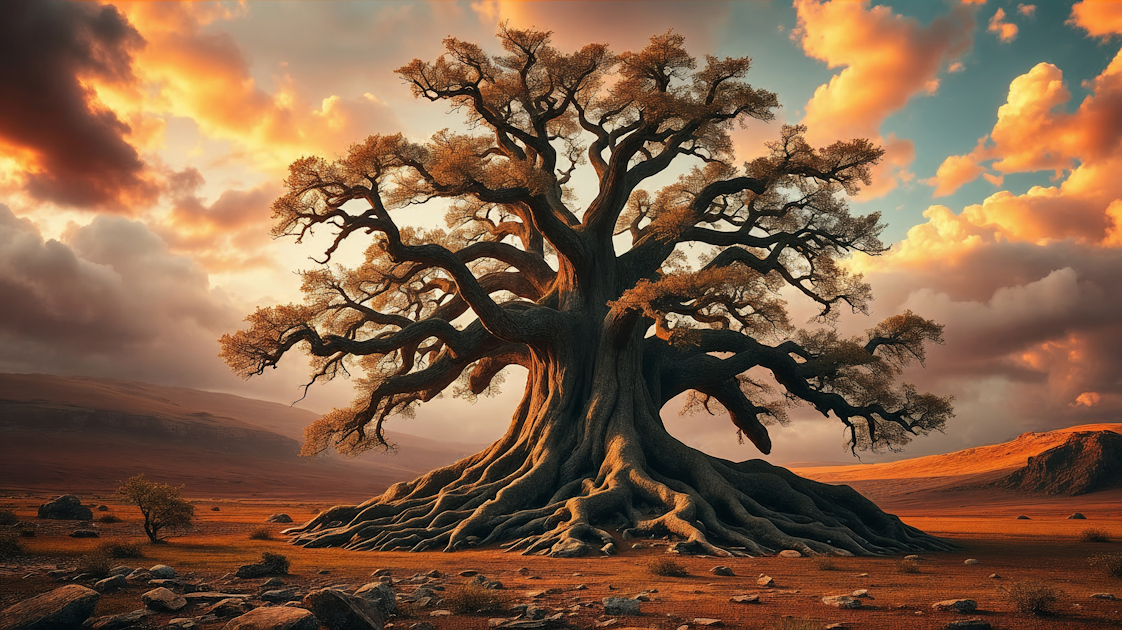
The Great Oak is the supreme figure in dryad reverence—the first tree, the oldest living thing in Uhl, and the foundation upon which all else rests. It predates the Old Gods, the Green Mother, and Sylvana the Eternal, existing not as a deity that commands or communicates but as a vast, ancient consciousness whose awareness operates on a scale so immense that a single thought may take centuries to form. Dryads do not worship the Great Oak through ritual or prayer in the mortal sense; to them, it is less a god to be believed in than an axiom to be understood—as fundamental and unquestionable as the ground itself.
The Great Oak is believed to thread its consciousness through every tree in every forest across Uhl by way of a vast root network, absorbing the world’s unfolding history at a tempo no shorter-lived being can meaningfully comprehend. No dryad has ever claimed to have found it, and none has ever set out to search for it—for the search itself would miss the point. The Great Oak does not need to be found. It simply is, and in being, it sustains the deep pulse of life from which all fey existence ultimately flows.
Learn more about The Great Oak.
The Green Mother
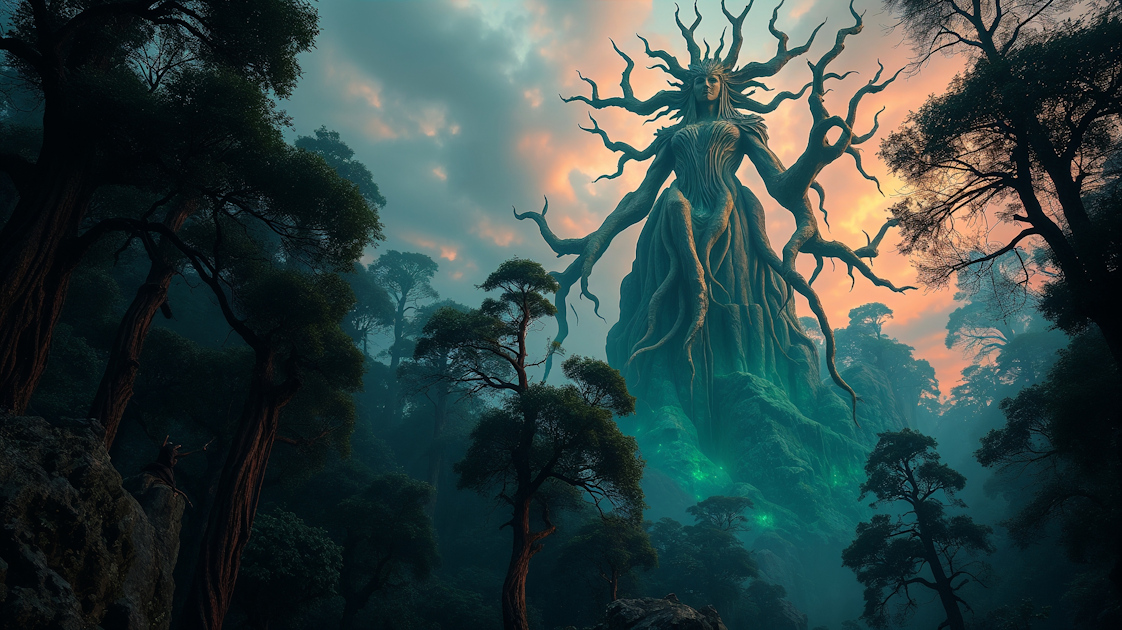
The Green Mother is the second of the three great presences revered by the dryads, standing beneath the Great Oak and above Sylvana the Eternal in their ancient hierarchy. She is the origin and source of Earth Power—the fundamental energy that flows through soil, stone, and root, binding the living world to the ground from which it springs. Without her, there would be no fey magic, no dryads, and no life in the deep places where sunlight never reaches. Like the Great Oak, she predates the Old Gods by an immeasurable span, existing outside mortal theology entirely as something so elemental that comparison to the gods loses all meaning.
Earth Power radiates from the Green Mother the way light radiates from flame—not by conscious effort but as a natural consequence of her existence, pooling in some places more than others depending on the age and depth of the forest above. Dryads draw on this power constantly to sustain their magic, heal, and communicate through the root networks connecting their trees. The Green Mother herself is vaster and more remote than Sylvana—an elemental force that achieved consciousness, or perhaps a consciousness so ancient it has become indistinguishable from the element it inhabits. She has a will and personality, but these qualities exist at such a magnitude that mortal minds can perceive only the nearest edge of them.
Learn more about The Green Mother.
Sylvana the Eternal
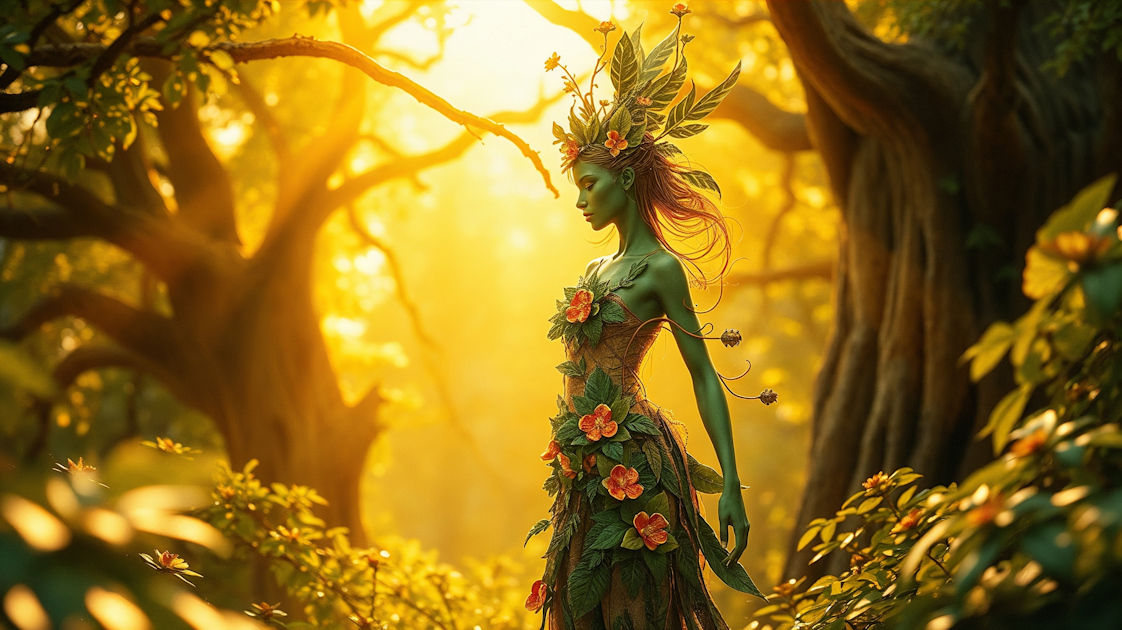
Sylvana the Eternal is the third and most immediately present of the three great spiritual figures of dryad reverence, standing beneath the Great Oak and the Green Mother in the ancient hierarchy of forces that governs fey existence. Unlike the Old Gods, whose dominion arose during a specific age and whose fall reshaped the mortal world, Sylvana predates that entire divine order. She is real—not a metaphor woven from oral tradition but a living, immortal being with a will, a personality, and a presence that can be felt by those fortunate enough to encounter her. Where the Green Mother gives life and the Great Oak provides the foundational consciousness of all forests, Sylvana serves as steward of what that creative power produces, walking the path of the cycle to ensure that all living things grow, flourish, decline, die, and return to nourish the world anew.
When Sylvana chooses to reveal herself, she appears as a radiant dryad—surrounded by a warm golden glow that emanates from within her, her features sharpened to a clarity that makes ordinary dryads seem muted by comparison. Her hair shifts between shades of green and gold with the turning of the seasons, and leaves and blossoms seem to grow from her very form, blooming and withering in a slow rhythm that mirrors the cycle she embodies. She appears when she is needed, offering guidance or simply a calming presence, and she is perhaps the only one of the three figures that dryads can ever truly hope to encounter face to face.
Learn more about Sylvana the Eternal.
Dwarven Mythos
Gods
Grommara
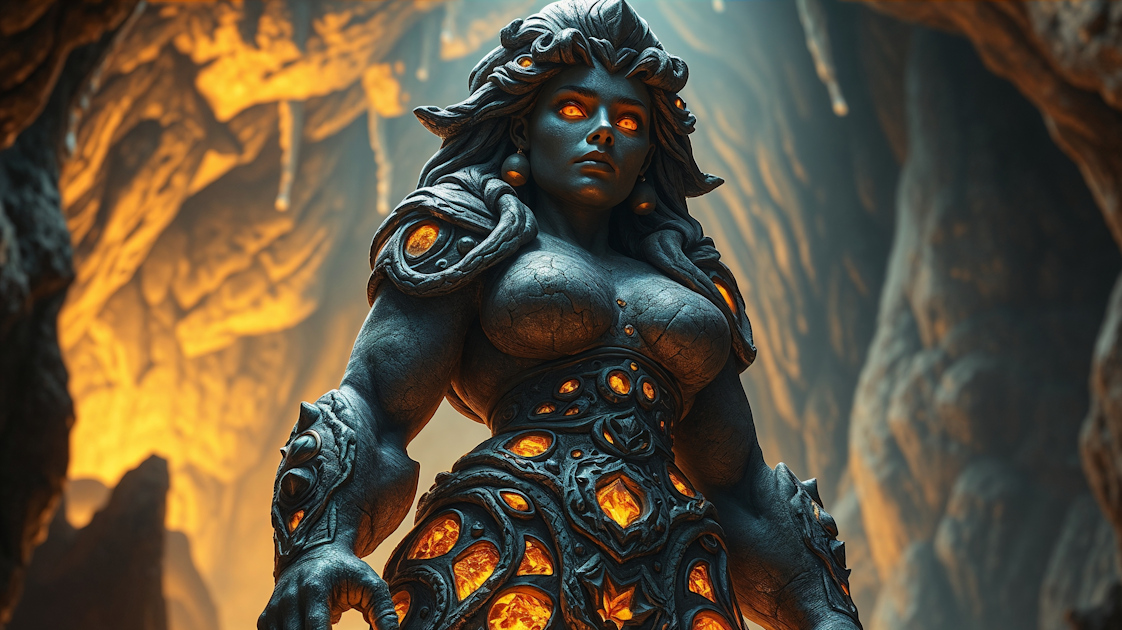
Grommara the Mother of Stone, known as She Who Shaped the Deep, is the chief goddess of the dwarven pantheon—the shaper of mountains, the molder of the first dwarves, and the divine embodiment of the earth from which all dwarven civilization springs. She shaped the mountains before time had a name, carved the caverns that would become the great halls of the seven thanes, threaded veins of ore through the deep earth for her future children to find, and then molded the first dwarves from the living rock of her own body, breathing into them her qualities of patience, resilience, and an intimate understanding of stone. She is the most revered figure in dwarven mythology, spoken of with a gravity that reflects the understanding that some things are too fundamental to be treated lightly. Morden makes the dwarves laugh. Rurik makes them stand taller. Grommara makes them pause.
Grommara is dead—the last of the three dwarven gods to fall, having witnessed the deaths of both her sons before her own end came. She watched Morden descend into the Sundering Deep, weeping tears of molten stone that hardened into the obsidian formations found in the deepest tunnels. She learned of Rurik’s sacrifice at the World’s Gate only after the great doors sealed. And when both sons were gone and the crisis had passed, there was not enough of her left to sustain the consciousness that had shaped the world. She dissolved into the stone over the course of months, her awareness spreading through the mountains she had built until it thinned beyond coherence. The dwarves say that what remains of her is not a presence but a quality—the faintest suggestion, felt by those who press their palms against the cavern walls, that the stone is not entirely indifferent to the beings who live within it.
Learn more about Grommara.
Morden Fireforge
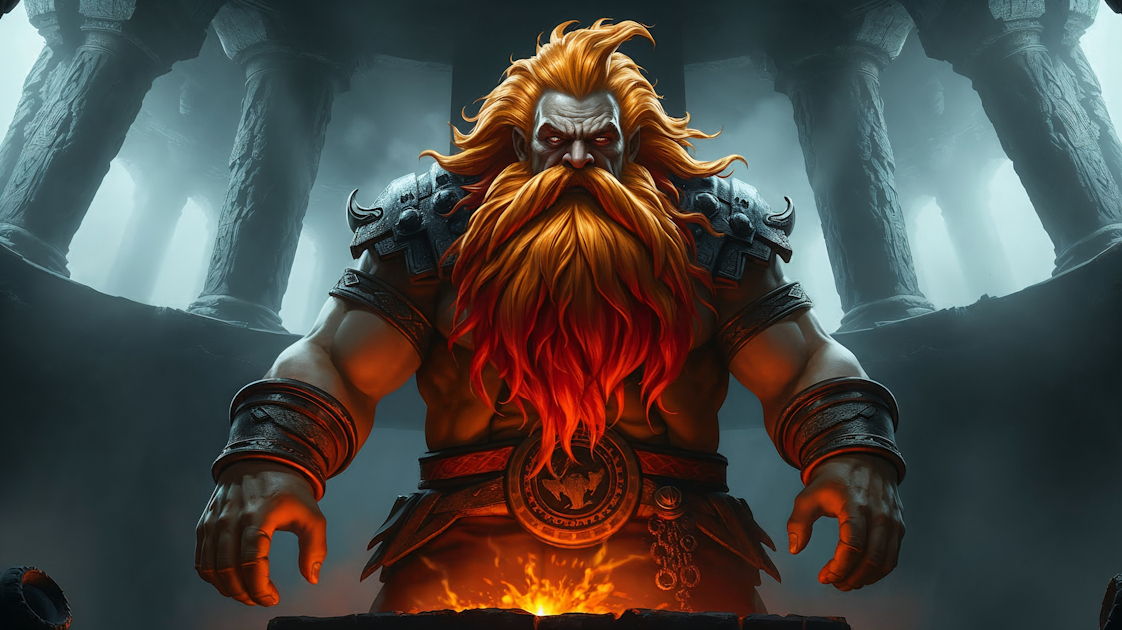
Morden Fireforge, known to the dwarven people as the Keeper of Flames, is the god of fire, the forge, and the transformative act of creation. Son of Grommara, the Mother of Stone, and brother of Rurik, the Guardian of the Realm, Morden embodies the creative fire that turned raw stone and ore into the foundations of dwarven civilization. He is remembered not as a distant or inscrutable deity but as the most dwarven of gods—loud, boisterous, and perpetually blackened by soot and singed by sparks, a god who worked alongside his children rather than above them. The myths portray him drinking from cups of molten gold and throwing himself into every endeavor with the reckless confidence of one who believed that courage and skill could overcome any obstacle.
Born in an eruption that split a mountain in two and illuminated the underground world for the first time, Morden spent his divine existence crafting wonders and teaching his people the secrets of the forge. His death—a willing sacrifice to seal a catastrophic threat rising from the depths beneath the world—is considered the defining moment in dwarven mythology, a story that shapes how the dwarven people understand courage, selflessness, and the true meaning of craftsmanship. Every forge fire burning in the seven thanes is said to carry a faint ember of his essence, a claim that dwarves neither fully believe nor fully dismiss.
Learn more about Morden Fireforge.
Rurik Shieldbearer
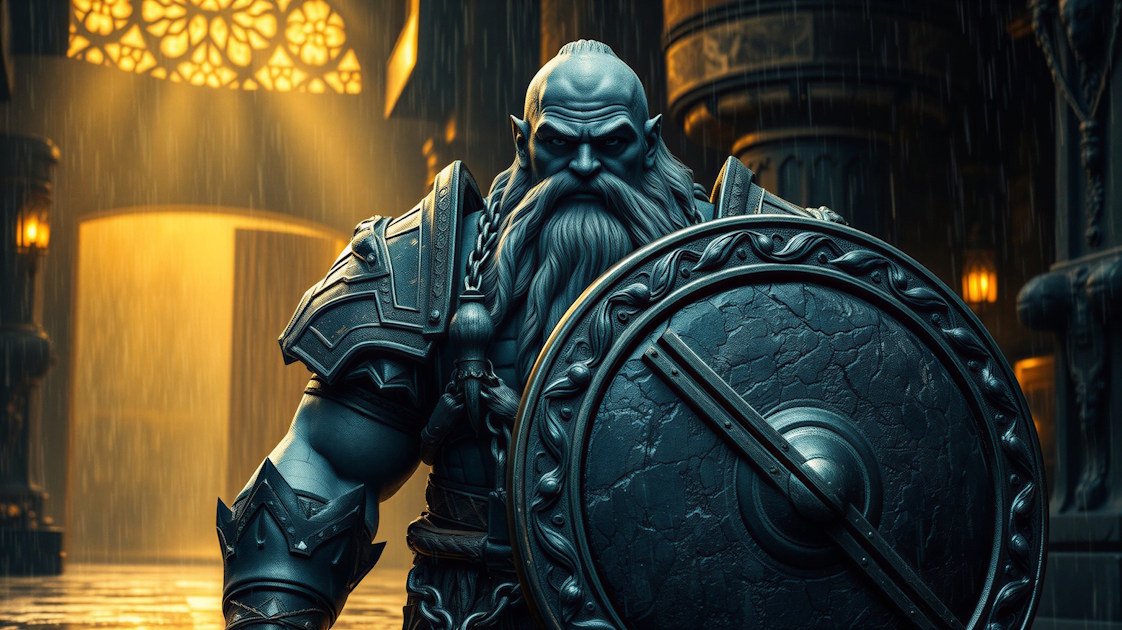
Rurik Shieldbearer, known to the dwarven people as the Guardian of the Realm, is the god of protection, vigilance, and the unyielding defense of home and kin. Where his brother Morden embodied the creative fire that gave the dwarves the power to build, Rurik embodied the patient, immovable strength that ensured what they built would endure. Shaped from the hardest granite of the world’s deepest foundations, he entered the world not with a spectacular eruption but in perfect silence—stepping from the stone fully formed, already scanning the horizon for threats that did not yet exist. His first instinct was to place himself between Grommara and whatever might come from beyond, and that protective resolve defined him from that moment forward.
Of the three dwarven gods, Rurik is perhaps the most quietly revered—lacking Morden’s boisterous charisma and the primordial mystique of Grommara, yet so deeply woven into the foundations of dwarven life that he is like the stone underfoot: unnoticed until the moment he is needed most. His death came during the cataclysm of the Fall of the Old Gods, when he stood at the threshold of the dwarven realm and held the line against cosmic destruction long enough for his people to seal their great doors. He did not survive. But the dwarves did, and to their way of thinking, that is exactly the outcome Rurik would have chosen.
Learn more about Rurik.
Heroes
Brunhilde Gemheart
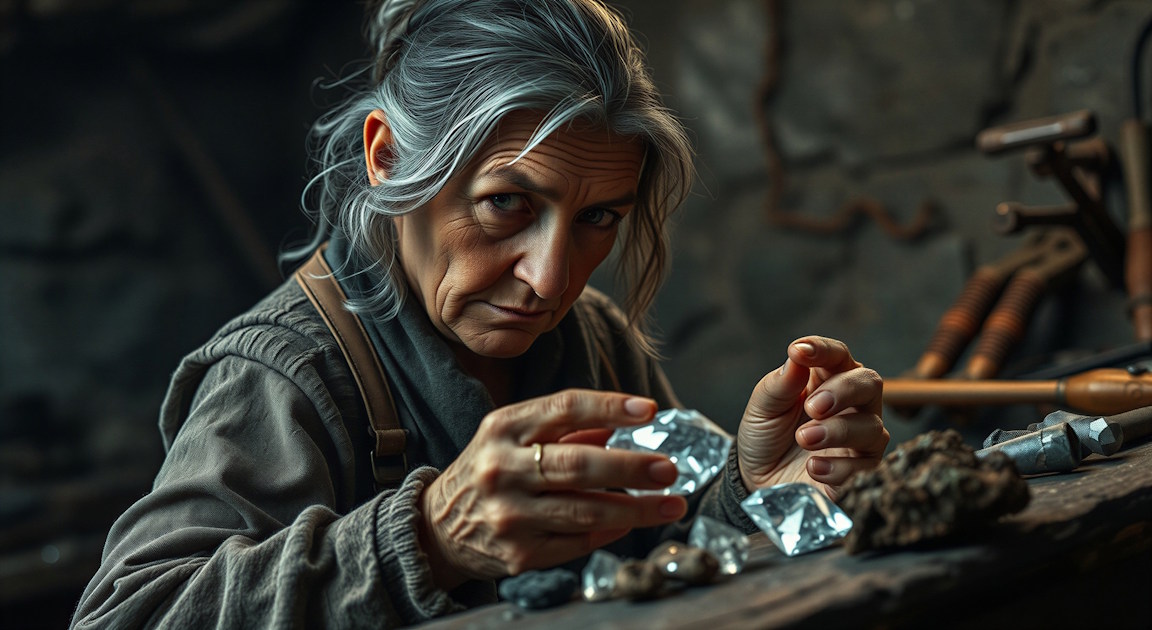
Brunhilde Gemheart of Heidelheim revolutionized the art of gem-cutting, developing techniques that remain closely guarded secrets of her thane and that elevated what had been a competent trade into the purest expression of the deepest values of dwarven craftsmanship. Born with an almost supernatural ability to see the potential within raw stones, Brunhilde insisted that each gem be studied for weeks or even months before the first cut, building a comprehensive understanding of the stone’s interior architecture before committing to the irreversible act of shaping it. Her masterpiece, the Seven Stars of Heidelheim—a matched set of diamonds cut with such precision that they seemed to contain living fire—prompted five human kingdoms to compete for their purchase, but Brunhilde refused every offer, declaring that the gems belonged to all dwarves as symbols of what patient dedication could achieve. A woman of few words whose rare observations carried the weight of years of contemplation, she transformed gem-cutting from a trade into an art and left behind a standard that every generation of dwarven craftsmen has measured itself against since. The phrase “patient as Brunhilde” entered dwarven vocabulary to describe someone willing to wait for perfect results rather than settling for good enough, and the Seven Stars still glow in their chamber in Heidelheim, open to any dwarf who wishes to see what patience can produce.
Learn more about Brunhilde Gemheart.
Durin Coalbeard
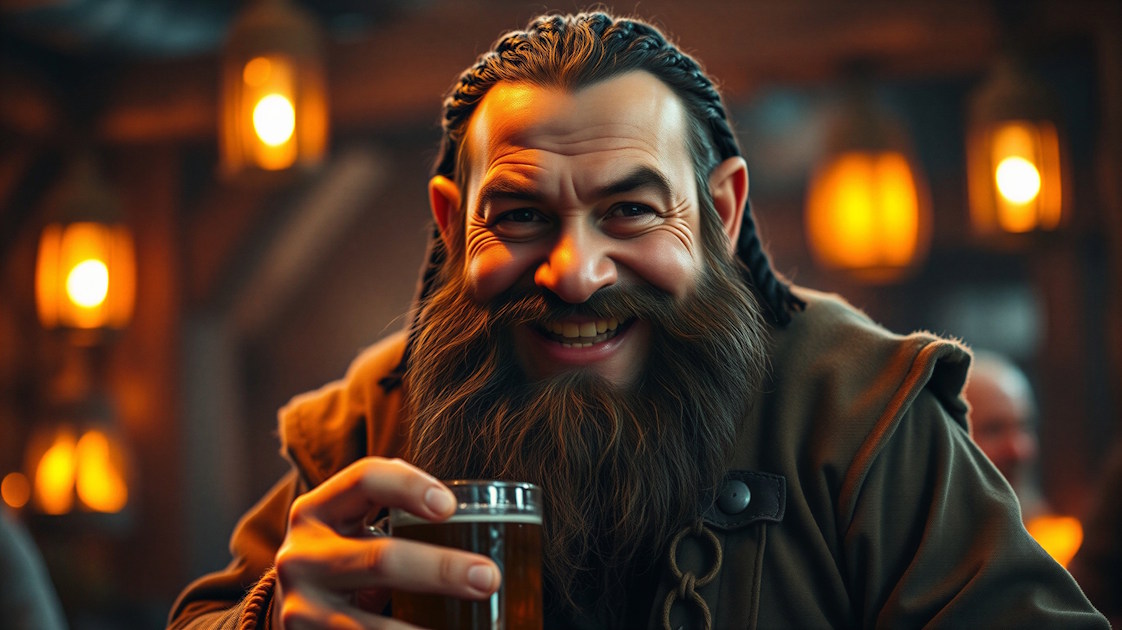
Durin Coalbeard the Peacemaker achieved legendary status not through martial prowess or crafting genius but through diplomatic skill and the particular conviction that any problem created by stubborn people could be solved by someone willing to be more stubborn than they were, provided that person had a better sense of humor. Born to a charcoal-making clan in Brokken-tor and never holding any rank higher than the personal respect his competence earned him, Durin prevented the first inter-thane warfare in dwarven history when a rich iron vein discovered between Brokken-tor and Dwathenmoore escalated from a bilateral resource dispute into a multilateral crisis threatening all seven fortresses. He traveled between the thanes for months, listening to each side’s grievances with genuine respect, reframing entrenched positions into solvable problems, and deploying a precisely calibrated sense of humor to defuse confrontations before the parties locked into postures from which retreat would cost them face. His greatest achievement was the Compact of Seven Hammers, an agreement that formalized protocols for resolving disputes through contests of skill rather than warfare, channeling competitive instincts into the production of excellence rather than casualties. The saying “seek Durin’s wisdom” means to look for solutions that serve everyone’s interests rather than forcing zero-sum outcomes, and the Compact he brokered has governed inter-thane relations for centuries without once failing to produce a resolution that both parties accepted.
Learn more about Durin Coalbeard.
Thorgrim Ironbeard
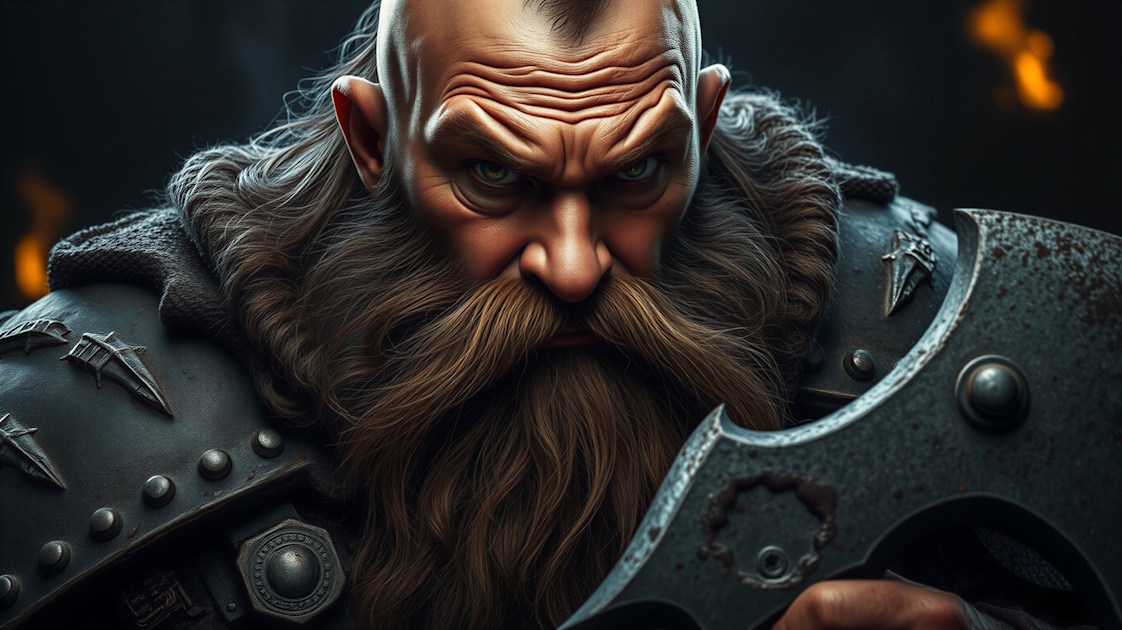
Thorgrim Ironbeard the Unbroken stands as perhaps the greatest military hero in dwarven legend, the Shield Commander who held Dwathenmoore through three years of goblin siege and whose name has become synonymous with the absolute refusal to yield. During the Siege of Endless Dark, when tens of thousands of organized goblin forces invested Dwathenmoore with a patience and logistical capability the dwarves had never encountered, Thorgrim commanded the defense with a steadiness that transcended tactical skill and entered the territory of natural force. He instituted rationing that applied equally to thane lords and common miners, personally nursed the sick alongside the healers, and silenced talk of surrender by planting himself before the great doors and challenging anyone who doubted dwarven endurance to face him in single combat. The siege broke when Thorgrim led a desperate sally through hidden tunnels to destroy the goblin supply depot, reversing the mathematics of starvation and forcing a withdrawal that vindicated three years of unbroken resistance. His axe, Grudgekeeper, rests in Dwathenmoore’s Hall of Ancestors, and the phrase “Thorgrim’s oath”—named for his vow not to trim his beard until the siege ended—has entered dwarven vocabulary as an expression of commitment so absolute that the commitment itself becomes a form of defiance.
Learn more about Thorgrim Ironbeard.
Eslar Mythos
Heroes
Valeth the Illuminated
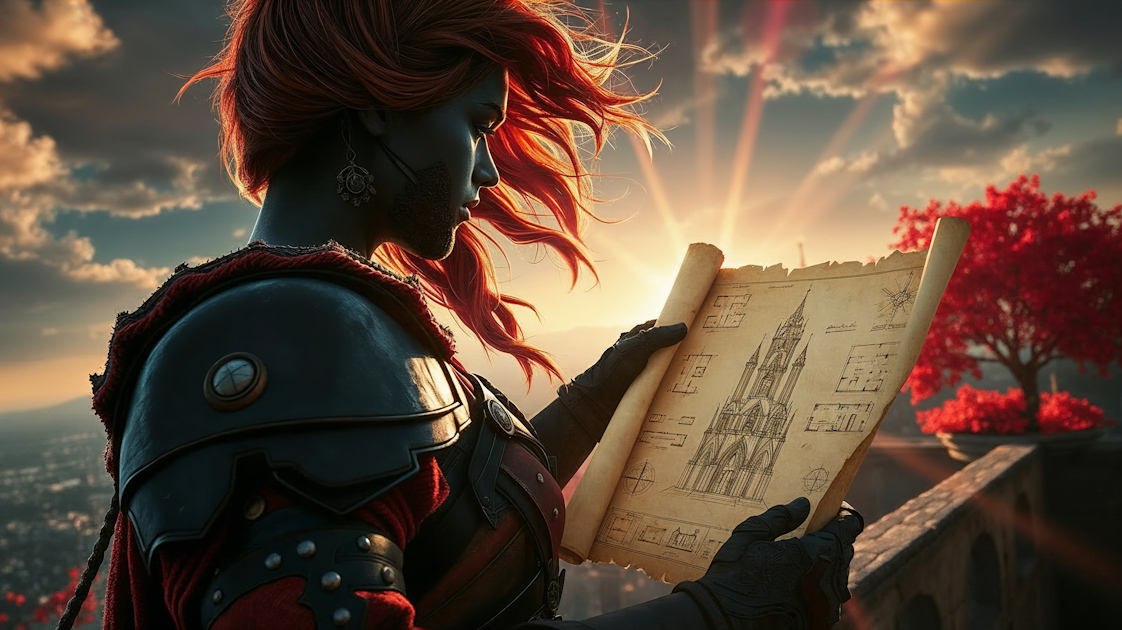
Valeth the Illuminated is the most celebrated hero in Panthoran history—the eslar Architect-General who held the city of Isia together through the worst decades of the Age of Resilience and whose innovations in crystalline engineering, military doctrine, and knowledge preservation established the principles upon which modern Panthoran civilization still rests. When the Fall of the Old Gods shattered the divine order and sent shockwaves through Panthora, threatening to destroy everything the eslar had built, Valeth stepped into command not by seizing power but by solving problems her superiors could not, and the people around her followed because her solutions worked. She pioneered the integration of living crystals into fortifications, developed the small-unit tactics that remain the foundation of Panthoran military theory, and managed a refugee crisis through underground urban expansion, thereby increasing Isia’s capacity without compromising its defenses.
Her greatest achievement was the design and construction of the underground vault-libraries that preserved the eslar’s accumulated knowledge through the chaos of the post-divine era. Valeth ordered the preservation of everything—not just advanced research but agricultural records, trade agreements, personal correspondence, and the mundane documents that other leaders might have dismissed—reasoning that the arrogance of deciding which knowledge deserves preservation is the arrogance of someone who believes she can predict what the future will need. Her famous declaration, “wisdom must be our fortress and knowledge our sword,” is carved above the Council of Minds’ chamber and serves not as inspirational rhetoric but as a standing order, still in effect, issued by an Architect-General who spent her life proving that the words were achievable.
Learn more about Valeth the Illuminated.
Freelands Mythos
Heroes
Gareth Ironhand
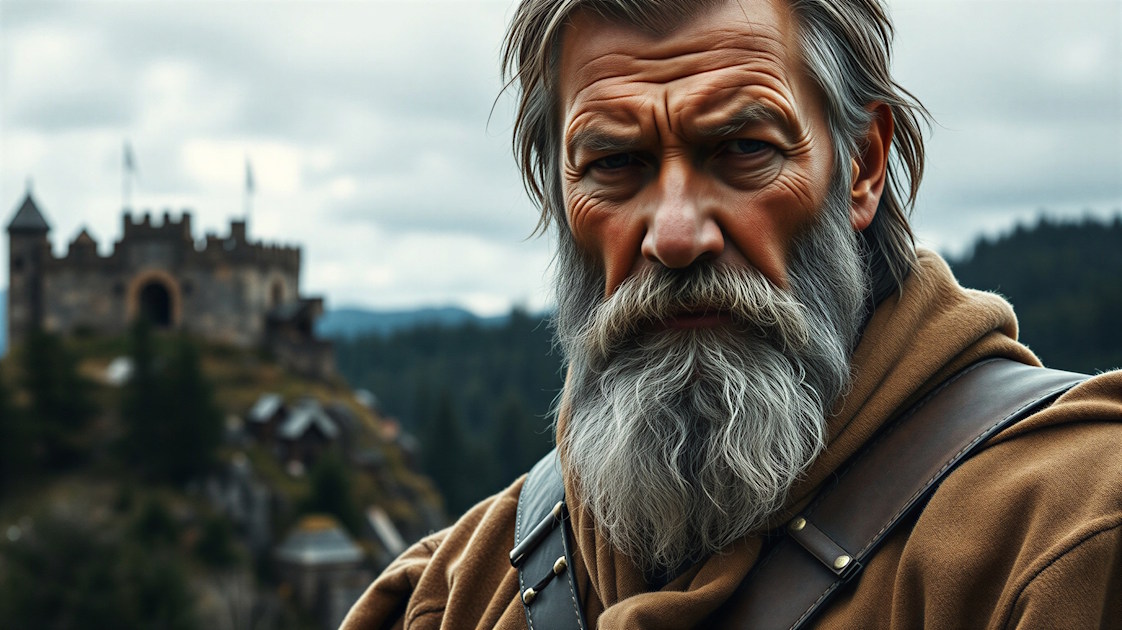
Gareth Ironhand the First Independent is the legendary founder of Freelander civilization—the former Darshavon commander who called the great gathering at High Holt in Year 23 and spoke the words that would become the Oath of Independence. Having witnessed firsthand the futility of serving kings and gods who demanded sacrifice while delivering only suffering, Gareth spent the years following the Fall traveling the eastern territories, building consensus among communities that had already learned to govern themselves out of necessity, and articulating the principles that would become the philosophical foundation for an entire civilization: earned authority, personal sovereignty, and mutual cooperation without subordination. His speech at the gathering—culminating in the declaration “let us be free or dead, but never again slaves to false promises of security”—gave scattered acts of self-governance a shared vocabulary and a coherent framework. When the first would-be king marched east to bring the rebellious territories to heel, Gareth organized the defense of High Holt and proved that a community of free people fighting for something they had chosen could defeat a professional army that expected easy conquest. He lived to seventy-three, having never held a title higher than the one the Freelanders gave him informally: the First Independent—not the first king, not the first lord, but the first man who said no and built something from the refusal that was worth more than what he had refused.
Learn more about Gareth Ironhand.
Marcus Stormbreaker
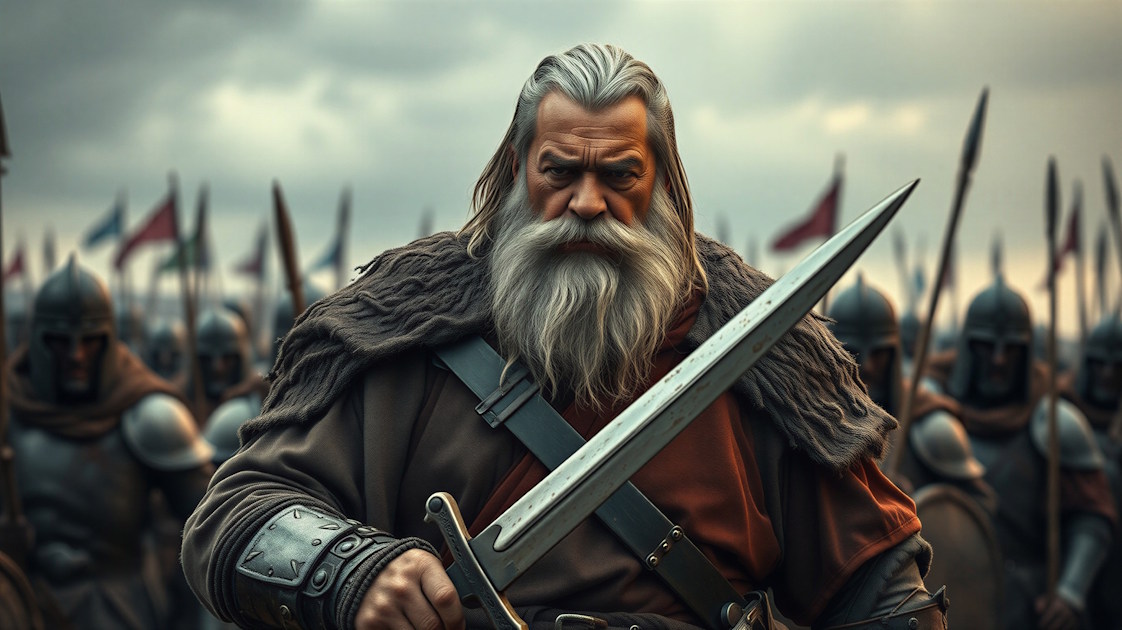
Marcus Stormbreaker, the Undefeated Lordling, represents the Freelander ideal of earned authority at its most complete—a blacksmith’s son who rose from a minor settlement to govern High Holt’s largest territory for thirty years through sheer competence, strategic brilliance, and the kind of warm, fierce personal commitment that made the people he governed want to keep being governed by him. He joined a mercenary company at fifteen, commanded it at twenty-five, and controlled the stronghold by forty, building the economic and organizational foundations of his rule during the fifteen years of military success and careful investment that preceded his acquisition of power. His thirty-year reign was defined by consistent infrastructure investment, fair arbitration of disputes, and personal presence at the front of every defense his territory required—including the last one, against a major goblin incursion, where he died at seventy, still leading his forces as he had always led them. His military innovations, particularly the integration of mercenary companies into local militias and the development of defensive tactics that turned fortified positions into force multipliers, became standard practice throughout the Freelands within his lifetime. He died less than a decade ago, and the grief that followed was the grief of people who had lost not just a leader but the living proof that their civilization’s founding values produce the results their founders promised.
Learn more about Marcus Stormbreaker.
Silvia the Shadow
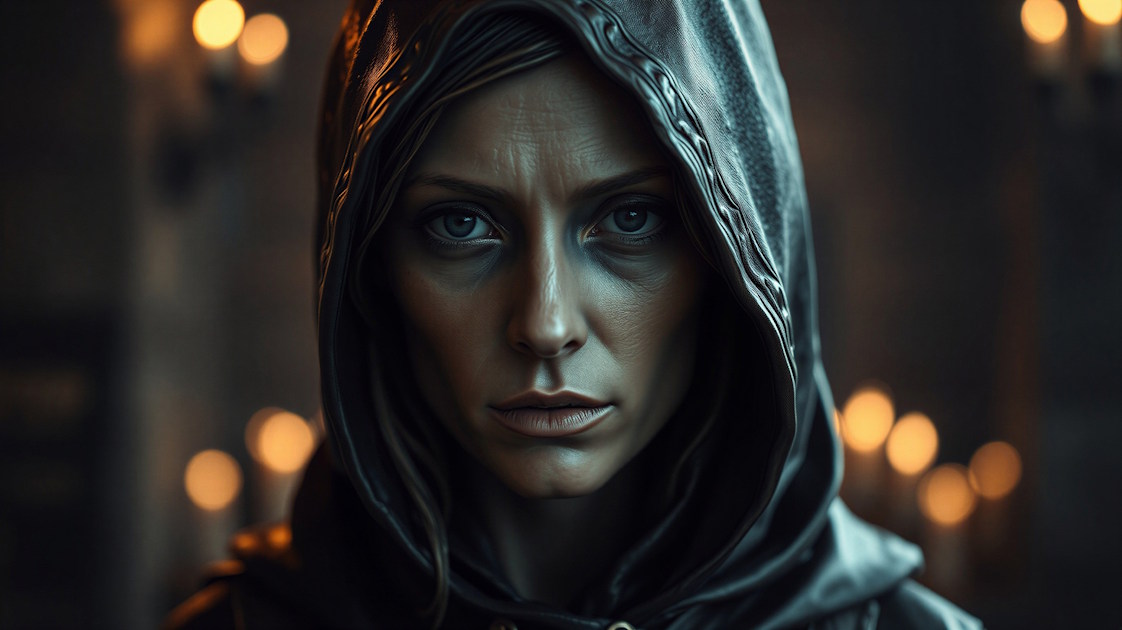
Silvia the Shadow, Architect of Drax-Korrum, achieved legendary status as the former assassin who transformed a chaotic refuge for criminals into a functioning city with its own form of order. Possessing not just exceptional skill in her deadly profession but keen insight into human nature and social organization, Silvia recognized that the concentration of skilled criminals in the eastern territories would either descend into destructive violence or evolve into something unprecedented. Her innovation was the Shadows’ Compact, drafted after the legendary Gathering of Knives—a meeting of armed rivals whom she persuaded to discuss their mutual destruction in terms of profit and loss rather than grievance and retaliation. The Compact established territorial recognition, professional standards, and reputation-based enforcement that created order without authority, ensuring that assassins never killed indiscriminately, thieves respected boundaries, and information brokers maintained accuracy—not out of virtue but out of rational self-interest aligned with collective welfare. Her saying, “let reputation be the law and competence the judge,” became a foundational principle not just for Drax-Korrum but for Freelander society generally, and the city she built from killers has outlasted her by centuries, governed by a system whose most extreme test case—a community of professional assassins—remains its most convincing proof.
Learn more about Silvia the Shadow.
Human Mythos
Gods
Kalthar
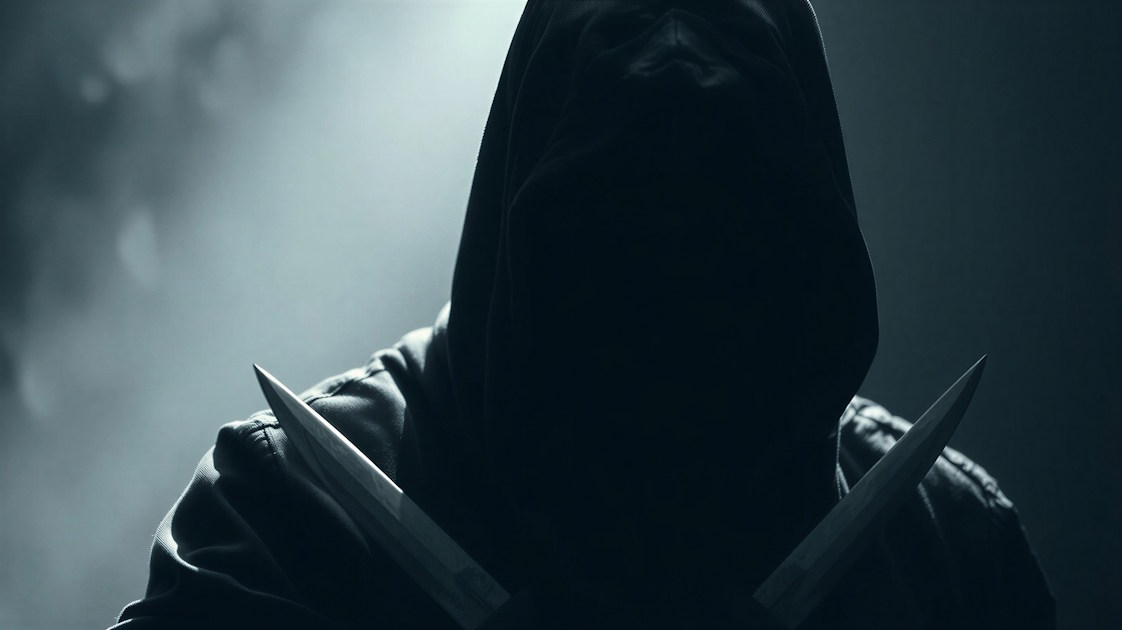
Kalthar, the God Between Shadows, occupied a position in the divine order that no other deity claimed and no other deity wanted: the space between Luminance and Darkness, belonging fully to neither, serving the balance that both required but neither could maintain. He was the God of Assassins not because he sanctioned killing for its own sake but because the deliberate, targeted act of removal was the instrument most suited to correcting specific imbalances without escalating the eternal conflict that generated them—precision serving what raw force could not. His shadow priests, the Brotherhood of Shadows, were trained as both priests and assassins, serving Kalthar’s will through centuries of invisible work that prevented either side of the cosmic conflict from achieving the dominance that would have collapsed the tension sustaining both. The Brotherhood’s end came when they abandoned the shadow for the open field, allying with the dragon Malefang and emerging into visibility only to be broken by the Holy Knights of Warding—a defeat that validated the doctrine they had violated and scattered the knowledge they had accumulated across the ruins of a world they had spent centuries quietly keeping in balance. Kalthar himself is thought dead, fallen with the other Old Gods in the catastrophe that ended their age, leaving the threshold between great forces unguarded and the scales he tended without the quiet hand that once corrected their tilt.
Learn more about Kalthar.
Krill Mythos
Gods
Nimala the Swift
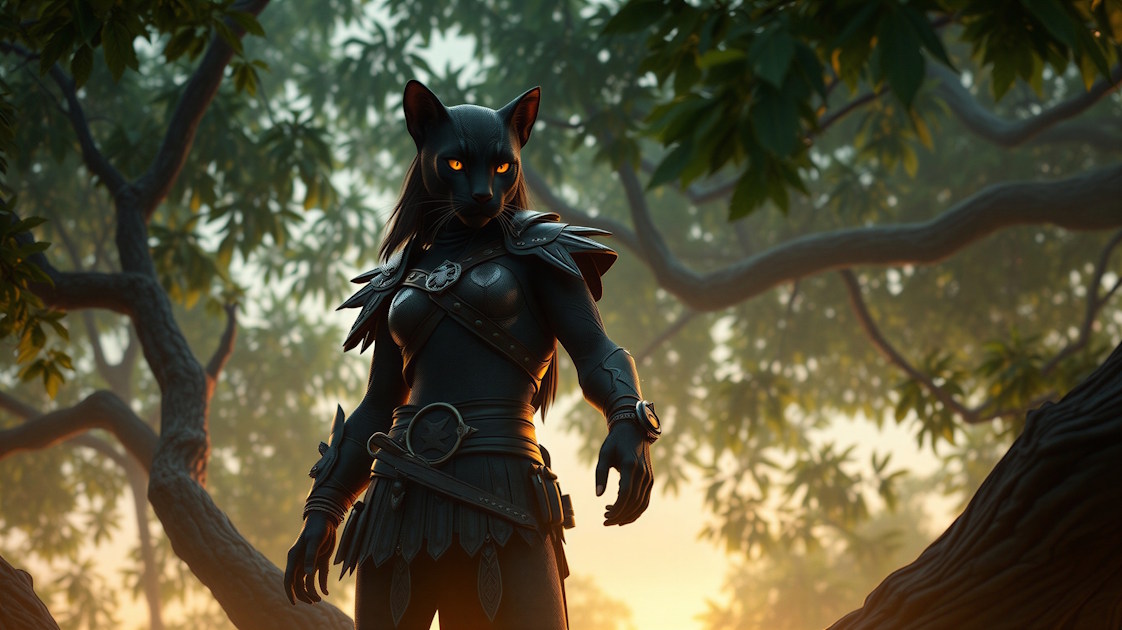
Nimala the Swift, known as the Blade of the Canopy, is the krill goddess of speed, the hunt, and the killing stroke—the shadow that crosses the branch before the eye can follow, the silence between heartbeats where death lives. Among the gods of the krill Forest Pantheon, equals in standing and each governing a different facet of existence, Nimala holds a singular place in the hearts of her people. She is not the most comforting of their gods, nor the wisest, nor the most protective. She is the one they fear, love, and strive to become. The krill do not worship her through supplication; they honor her by moving faster, striking harder, and refusing to show weakness before anything the forest can throw at them.
The krill tell Nimala’s origin not as a creation story but as a hunt story—because the krill understand everything through the lens of the hunt. She did not emerge from the Great Tree or descend from the sky; the oldest tellings hold simply that the world required a predator, and so a predator appeared, called into existence by the fundamental need of a living world for something that hunts and is never hunted. Unlike the dwarven gods, whose deaths are recorded in myths of spectacular sacrifice, Nimala’s fate remains unknown. When the Old Gods tore themselves apart in the cataclysm that ended their age, she simply vanished—no body, no final act, no last words. The krill take this as evidence of her survival, reasoning with characteristic bluntness that a goddess of speed would not be caught by anything so clumsy as an apocalypse.
Learn more about Nimala.
Thyrkos the Guardian
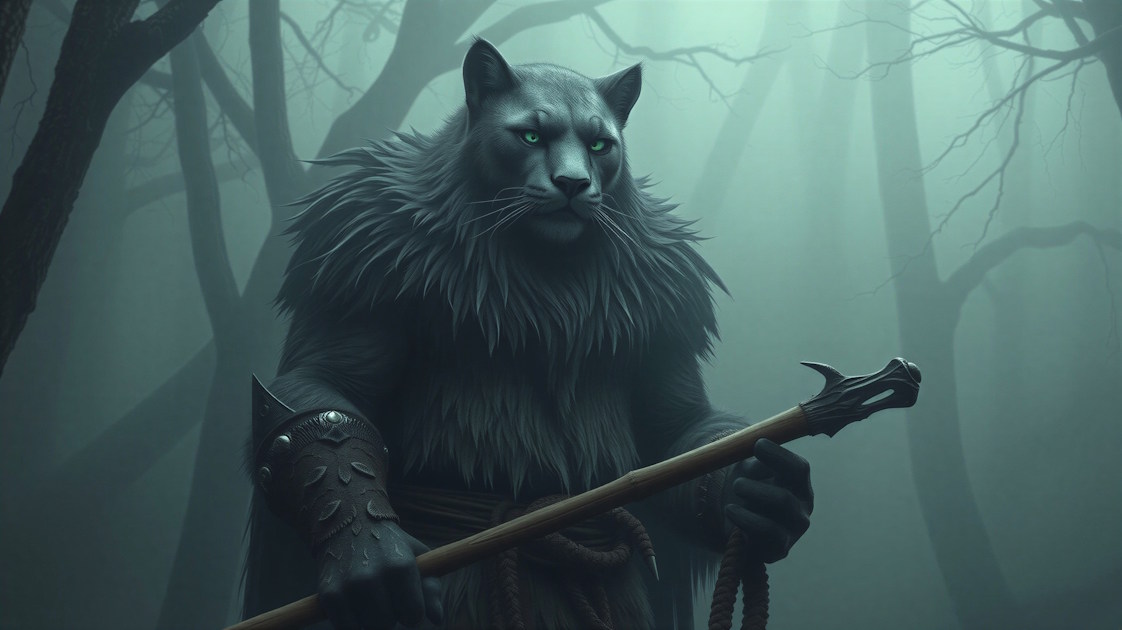
Thyrkos the Guardian, known as the Warden of the Threshold, is the krill god of protection, vigilance, and the defense of sacred spaces. He is the shadow that does not move, the eyes that do not close, the silence at the border where the forest ends and the threat begins. Of the four krill gods of the Forest Pantheon, Thyrkos occupies the position that is least celebrated and most essential—spoken of the way the krill speak of the branches beneath their feet: he is there, he holds, and if he were not there, everything above him would fall. His stoicism is legendary, his patience deeper than the forest’s roots, and his commitment to holding ground absolute.
Thyrkos emerged from the boundary itself—the tension between inside and outside, belonging and intrusion, safety and threat. His first act was to stand still at the forest’s edge, motionless and watchful, establishing the principle of territorial sanctity that would become the foundation of krill civilization. Unlike Nimala, whose fate remains gloriously uncertain, Thyrkos is confirmed dead. He fell during the cataclysm of the Fall of the Old Gods, holding the northern threshold of the Merrow Woods against a consuming void for three days while his people evacuated to safety. The void consumed him by degrees, but the ground where he stood fused into a ridge of dark stone—the Guardian’s Spine—that runs the width of the northern border to this day. The guardian is gone. The guarding continues.
Learn more about Thyrkos.
Velania the Wise
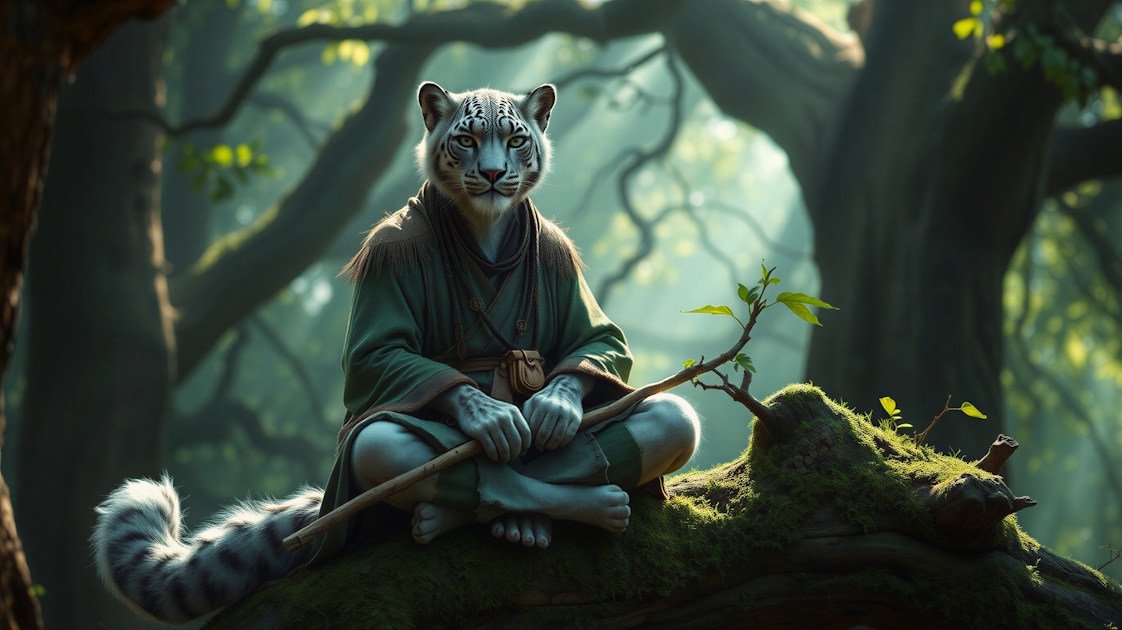
Velania the Wise, known as the Keeper of Green Memory, is the krill goddess of knowledge, healing, and the deep understanding that comes from patient observation of the world’s patterns. She is the stillness before diagnosis, the long watch over the sick through the dark hours, the comprehension that arrives not through force or speed but through the willingness to sit with a problem until it reveals itself. In a culture that celebrates the predator above all things, Velania occupies an unusual position: revered not for what she can kill but for what she can save. The krill are not a sentimental people, but they are practical, and practical people recognize that a tribe without healers dies as surely as a tribe without warriors.
Velania condensed into being gradually, assembling from the forest’s unread patterns the way dew gathers from humid air—the first consciousness capable of interpreting the world’s information into actionable knowledge. She taught the krill to identify medicines, read weather patterns, diagnose illness, and listen to the Root Song carried through the Great Tree’s fungal network. She is dead, having given herself during the Fall of the Old Gods to preserve the Merrow Woods’ ecological memory, pouring her consciousness into the root network to hold the forest’s living patterns together when the cataclysm threatened to erase them. Her sacred groves emptied of their power. Her staff, Rootwhisper, was found grey and withered on the forest floor. But the knowledge she preserved endures, and the krill honor her the only way she would have accepted: by using it.
Learn more about Velania.
Sitheri Mythos
Gods
Morghen the Hunter
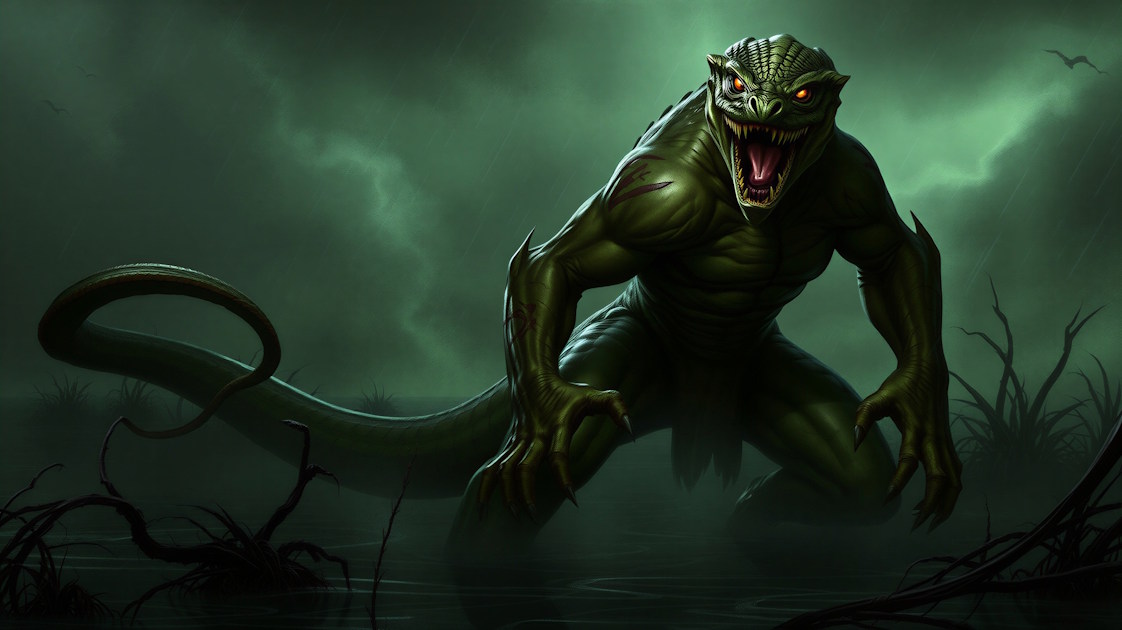
Morghen the Hunter, known as the Lord of the Hundred Scalps, is the sitheri god of predation, the kill, and the warrior’s craft—the divine embodiment of every instinct that drives a sitheri to stalk, strike, and take what it needs from a world that gives nothing freely. He is depicted as the ideal sitheri warrior, lean and scarred, his shoulder sash heavy with proof of kills so numerous the myths decline to count them. Morghen’s intelligence is entirely practical, entirely directed toward the hunt, and entirely without pretension—a god who thinks because thinking produces better kills. He originated the Hundred Scalps ritual by walking the path himself, leaving the Grimmere alone, collecting one hundred kills across a dozen territories, and returning to declare that any male who could not match the count was not worthy of standing among the sitheri as an adult.
Morghen is dead—not consumed by the cosmic forces of the Fall, but killed by another god. Nimala the Swift, the krill goddess of speed and the hunt, tracked Morghen into the Grimmere and slew him in his own territory after the hunter god committed a great trespass in the Merrow Woods. The humiliation of a hunter killed by another hunter on his own ground has never diminished across five centuries, and the blood debt the sitheri believe is owed—a god’s life for a god’s life—informs their attitude toward the krill to this day. What remains of Morghen is the ritual he created, the standard he set, and the cold lesson his death provides to every young warrior who walks the path he walked first: be better, or be prey.
Learn more about Morghen.
Sythraxis the First
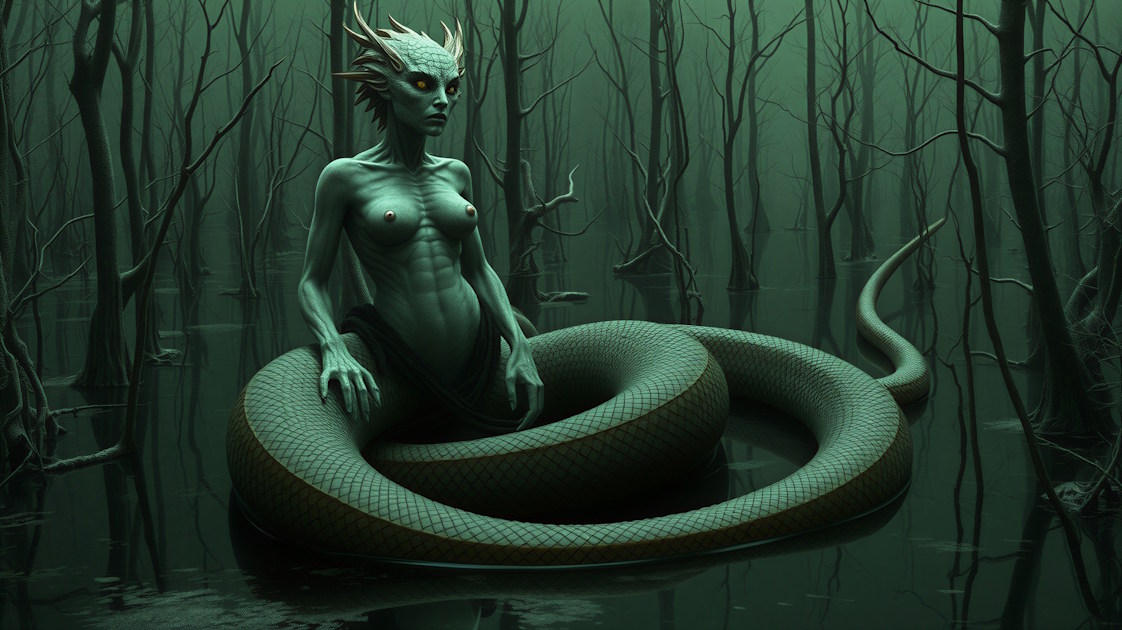
Sythraxis the First Brood Mother, known as She Who Swallowed the Dark, is the primordial goddess of the sitheri—the original serpent from whose body the entire race emerged into the black waters of the Grimmere. She is creation and consumption made one, the divine brood mother whose authority over her offspring was absolute and whose standards were enforced through the merciless culling of any who failed to meet them. Among the four gods of the sitheri Swamp Pantheon—equals whose relationships are defined by the same shifting tides of dominance that govern all life in Death’s Head Swamp—Sythraxis holds primacy through the principle that governs all sitheri society: the mother rules because the mother breeds. Every brood mother who commands a tribe traces her authority through an unbroken line of matriarchal succession to one of the Ten Daughters that Sythraxis produced as her final and most perfect clutch.
Sythraxis erupted from the deepest muck of the primordial swamp and made the Grimmere livable through the foundational act of her mythology: swallowing the primordial darkness that choked the waters, consuming the void itself, and converting it into a world where her children could hunt and thrive. Most sitheri believe she died in the aftermath of the Fall of the Old Gods, consuming a divine corruption that poisoned the deep waters from which she drew her power—destroying the poison at the cost of her own existence. But in the deepest reaches of the Grimmere, the old shamans tell a different story. They say she did not die but descended, sinking back into the mud at the swamp’s bottomless heart, and that she waits there still—patient, cold, coiled in the dark—digesting the corruption that overwhelmed her, growing stronger with each passing century.
Learn more about Sythraxis.
Thessara the Tide Bringer
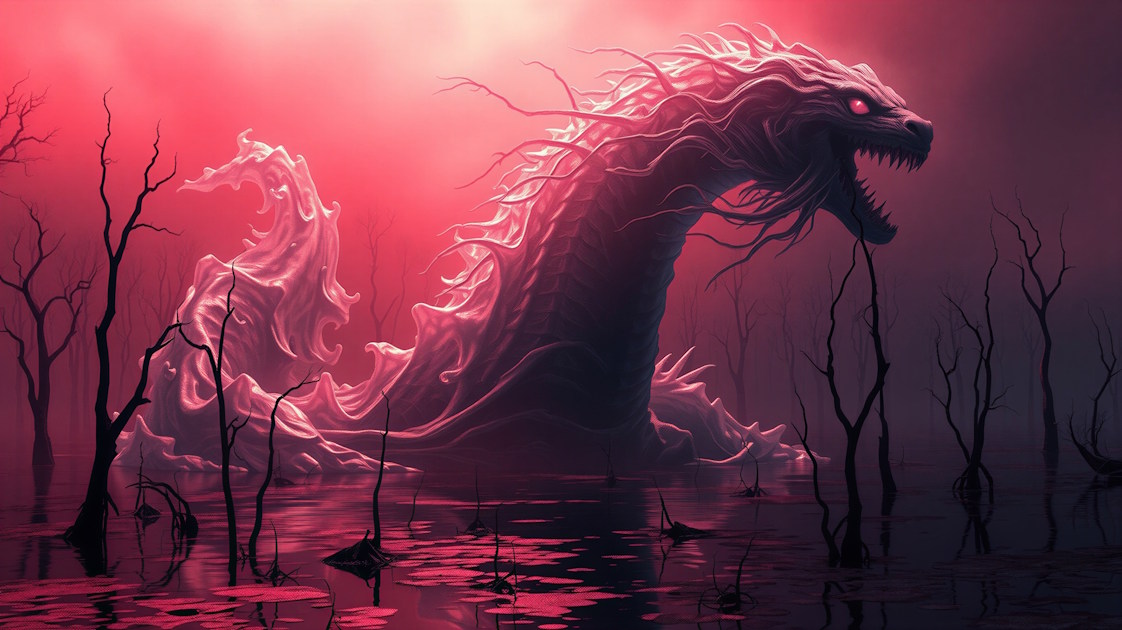
Thessara the Tide Bringer, known as the Drowning Hand, is the sitheri goddess of water, flood, and the cold indifference of the swamp that sustains and kills with equal disregard. She is not a serpent made of water but water that has chosen, temporarily and without commitment, to resemble a serpent—an elemental form without fixed features, shifting between transparency and the dark opacity of deep swamp water. Thessara is the most alien presence in the sitheri pantheon, a goddess whose temperament is so thoroughly inhuman that even the cold-blooded sitheri find her difficult to comprehend. She does not hate. She does not love. She does not take pleasure in destruction or satisfaction in sustenance. She is water, and water is the absence of intention wearing the shape of a thing that acts.
Her rivalry with Sythraxis over dominion of the Grimmere’s waters is the most celebrated conflict in sitheri mythology, a territorial war the sitheri view as the engine that keeps the swamp dynamic and dangerous enough to forge strong sitheri. Thessara’s fate is assumed to be death, though confirmation has never come. The sitheri describe her departure as a draining—the divine presence that had suffused the Grimmere’s waters seeping away over months following the Fall until what remained was water without Thessara, functional and wet but empty of the consciousness that had given it purpose. The drowning sacrifices she demanded continue regardless, maintained by a people too practical to stop paying a creditor who may or may not still exist.
Learn more about Thessara.
Vexthul the Bone Keeper
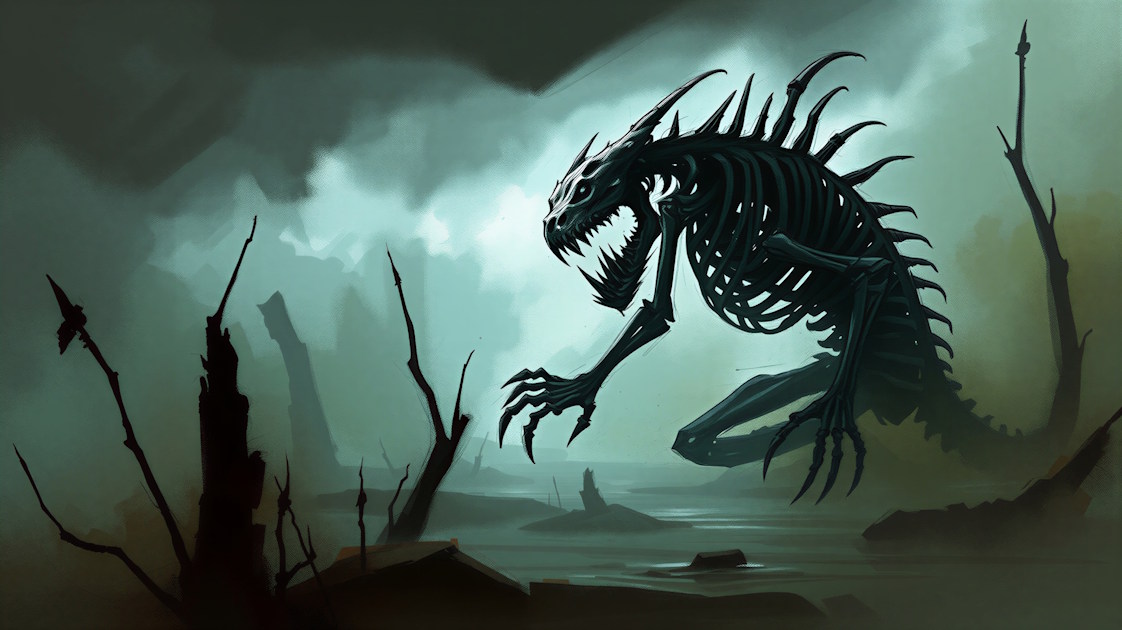
Vexthul the Bone Keeper, known as the Warden of the Ancestral Deep, is the sitheri deity of death, judgment, and the passage between the living world and the realm from which the sitheri emerged and to which they will return. Vexthul’s gender is unknown, its form a skeletal sitheri stripped of everything impermanent—scale, muscle, identity—reduced to the framework that remains when the living is done. The Bone Keeper collects the dead, evaluates their lives against the standards of sitheri tradition, and delivers the only verdict that matters: preservation in the Ancestral Deep among the worthy, or dissolution into the muck, identity erased, existence unmade as thoroughly as if it had never occurred. Worthiness is not measured by power or martial achievement alone but by adherence—to the matriarchal order, to the brood, to the rituals and traditions that define what it means to be sitheri.
Most sitheri believe Vexthul is dormant rather than dead—withdrawn into the Ancestral Deep after processing the Fall’s unprecedented dead, waiting with the calm inevitability of death itself for the moment when the scale of dying once again exceeds the system’s capacity to handle it without divine oversight. Vexthul did not flee, fade, or succumb. The Bone Keeper simply finished the job, turned, and descended into the Deep. Some shamans whisper that Vexthul is not merely waiting but preparing—constructing the final architecture of the ancestral realm for the day when the entire sitheri race completes its sojourn in the world above and returns to the place from which it came. The brood mothers neither confirm nor deny this, because unlike other shamanic traditions, the belief that Vexthul prepares for their return does not threaten their authority. It reinforces it.
Learn more about Vexthul.
Skeva Mythos
Heroes
Ulusaba
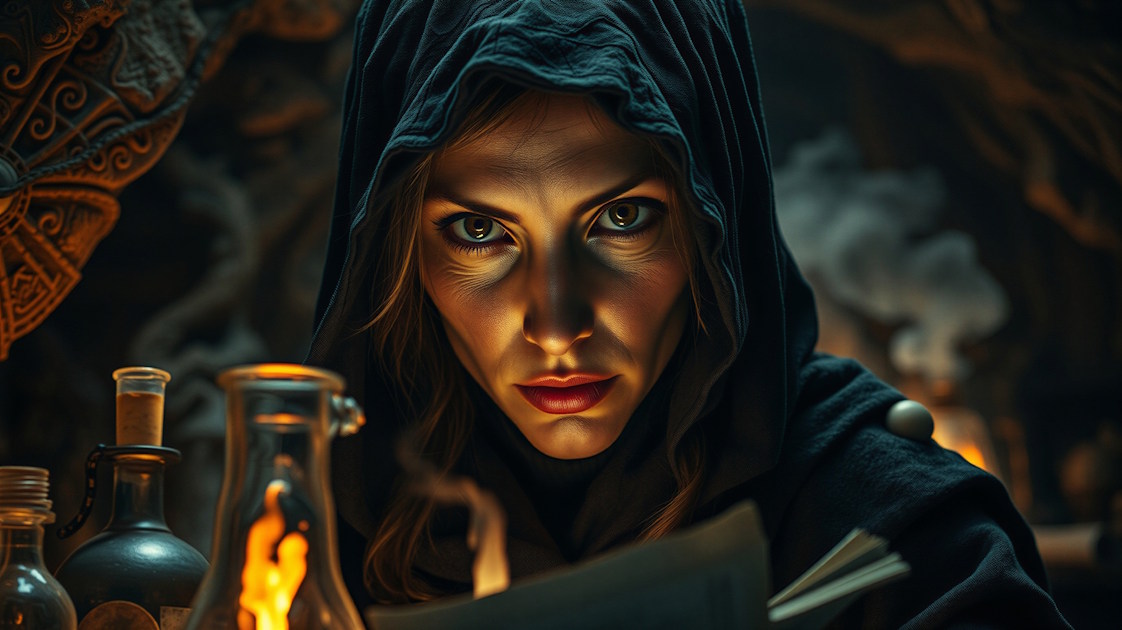
Ulusaba, known among the skeva as the Mother of Rats, is the human witch who created their race through a combination of alchemical engineering and magical transmutation during the Age of the Old Gods. Working from a subterranean laboratory on or near the volcanic Steel Islands, she transformed ordinary rats into sentient, humanoid beings through an iterative process of chemical treatment and supernatural transmutation—granting them intelligence, bipedal form, and the magical heritage that their shamans and witches still carry in their blood. She is not a goddess. The skeva do not worship gods. She is something more complicated: the author of their existence, the intelligence that decided they should be and then made it happen without asking whether they wanted any of it.
Ulusaba is generally accepted to be long dead, her laboratory likely destroyed by the volcanic activity of the Steel Islands or the cataclysm of the Fall. What she left behind is a people permanently divided over her memory. Some clans revere her as a visionary whose gift of consciousness elevated them from animal limitation into a world of possibility. Others despise her as a torturer who used their ancestors as experimental material, granting sentience through procedures that caused suffering without consent for purposes that served no one but herself. Most skeva hold both views simultaneously, carrying their creator in the ambivalent regard of a people who owe everything to someone they cannot fully trust, cannot fully condemn, and cannot stop thinking about. Her subjects escaped the laboratory out of fear for their lives, scattered across the mainland in the dispersal the skeva call the Scattering, and built a hidden civilization from nothing—the one achievement that is entirely, indisputably their own.
Learn more about Ulusaba.