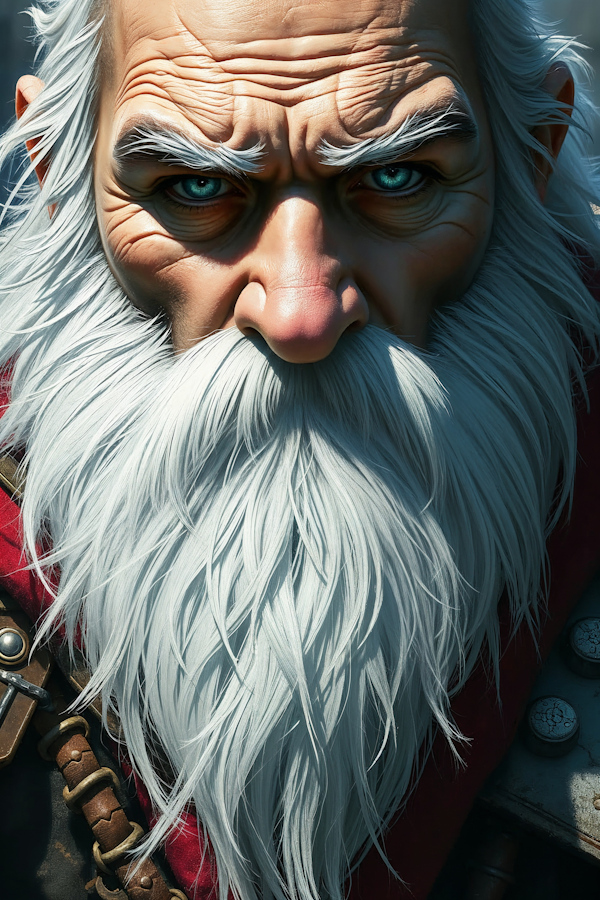
Dain Frostbeard is the kind of dwarf that other dwarves measure themselves against without resentment. He is not the cleverest of the thane lords, nor the most ambitious, nor the most politically sophisticated. What he is, and what has sustained his leadership of Heidelheim for longer than most surface kings manage to hold a throne, is steady. In a fortress where a wrong decision in autumn can kill people in February, where the margin between survival and catastrophe is measured in stored provisions and maintained heating systems and the precise timing of trade missions that cannot be delayed by even a single week, steadiness is not a modest virtue. It is the essential one. Dain Frostbeard possesses it in a measure that even his critics — and he has few — cannot dispute.
He was chosen as thane by the elder council of Heidelheim through a selection process that, by the accounts of those involved, generated less debate than most. Dain had spent decades serving the fortress in roles of increasing responsibility — forge supervisor, trade mission leader, Frost Guard liaison, elder council member — and at each stage, he had demonstrated the same qualities: sound judgment, genuine concern for the people under his authority, and the patience to think through decisions with a thoroughness that never crossed the line into paralysis. When the previous thane died, and the council convened to select a successor, Dain's name surfaced early and met no serious opposition. The other candidates, several of whom were more accomplished in specific disciplines, recognized what the council recognized — that Heidelheim needed a leader whose strengths matched the fortress's deepest requirements, and that no one in the community understood those requirements more completely than Dain.
His appearance suits him. He is broad even by dwarven standards, built like a foundation stone, with the ruddy complexion that comes from a lifetime spent in halls heated by forge fires against an outer world of perpetual winter. His beard is long and magnificent — frosty white, as his surname promises, worn in thick braids that reach nearly to his belt and have never been trimmed in accordance with the tradition that defines dwarven honor. His hair, equally white, is pulled back from a weathered face whose deep-set eyes carry the warmth that is his most distinguishing characteristic. Other thane lords project authority through severity or shrewdness or the weight of the wealth they command. Dain projects authority through the simple fact that he looks like someone you would trust to make the right decision when making the wrong one would get people killed. His hands are a smith's hands — scarred, thick-fingered, and capable — and he uses them when he talks, gesturing with a directness that mirrors his speech. He does not waste words. He does not embellish. He says what he means, means what he says, and expects the same from everyone around him.
The warmth that defines Dain's character is not softness. He has led Heidelheim through winters that tested the fortress's reserves to their limits, made decisions about resource allocation that meant some families went cold so that others could eat, and ordered Frost Guard patrols into conditions from which not every warrior returned. These decisions weigh on him visibly — he does not pretend that leadership costs nothing — but he makes them with the certainty of a man who has thought the problem through and found no better answer. What makes him beloved rather than merely respected is what happens after the hard decisions are made. Dain visits the families affected. He sits with the bereaved. He carries firewood to the elderly who cannot carry it themselves during the worst stretches of winter, a gesture that no thane lord is required to make but that Dain makes because it does not occur to him not to. He is, in the most literal sense of the word, a father to his people — protective, present, willing to share the burdens he imposes, and genuinely pained when the mountain inflicts suffering that his foresight could not prevent.
He married Hilda Stonehearth in his middle years, a union that joined two of Heidelheim's most established families and produced four children — three sons and a daughter — who have each pursued paths that reflect the fortress's diverse needs. His eldest son, Bram, serves in the Frost Guard with a natural aptitude for cold-weather operations that his father recognizes as exceeding his own youthful abilities. His second son, Oskar, has apprenticed with Heidelheim's master jewelers, developing a talent for the intricate filigree work that the fortress's long winters give its artisans the time to perfect. His daughter, Dalla, manages one of the Ice Garden complexes with a competence that has earned her respect independent of her father's name — no small achievement in a community where the thane lord's family is scrutinized for any suggestion that status substitutes for skill. His youngest son, Eirik, is still finding his path, showing interest in the lore-keeping traditions that preserve Heidelheim's oral history but not yet committed to a formal apprenticeship. Dain watches this youngest child with the patient attentiveness of a father who understands that some people need longer than others to discover what they are meant to do, and who trusts the process enough not to force it.
The succession question that hovers over his leadership is one that Dain acknowledges without anxiety. None of his children has pursued the broad preparation that would position them as obvious successors, and this troubles some members of the elder council who value predictability in matters of continuity. Dain's response is characteristically measured: the council chose him because he was the right person at the right time, not because his father held the seat before him. The same process will identify the right successor when the time comes, whether that person carries the Frostbeard name or not. This confidence in the system reflects Dain's broader philosophy of governance — that institutions built on sound principles will produce sound results if they are maintained with care and operated with integrity, and that trying to control outcomes beyond what prudence requires is a form of arrogance that the mountain punishes sooner or later.
On the question of dwarven reunification, Dain holds a position rooted in historical conviction rather than self-interest. He opposes it, and his opposition runs deeper than the sovereignty concerns that motivate some of his fellow thane lords. Dain believes that the unified dwarven kingdom, whose fall the thanes still mourn, was itself the source of many of the problems that the fall exposed. Centralized authority, in his view, created dependencies that left individual communities unable to sustain themselves when the center collapsed. The thanes that survived the catastrophe and built the civilizations that exist today did so precisely because they were forced to become self-sufficient — to develop their own governance, their own military capabilities, their own solutions to the unique challenges of their environments. Heidelheim would not be what it is if it had been able to rely on a distant capital for resources and direction during the centuries when the fortress was learning to survive the northern winters on its own terms. Reunification, Dain argues, would recreate the same vulnerabilities that nearly destroyed their people once before, trading the hard-won resilience of seven independent communities for the fragile convenience of a single authority that history has already proven incapable of enduring.
This conviction makes him a firm voice in inter-thane councils, though not a strident one. Dain presents his position with the same measured deliberation he brings to all matters of consequence, laying out his reasoning without rhetorical embellishment and leaving others to weigh it on its merits. He does not lobby, does not build coalitions behind closed doors, does not trade favors for votes. He simply says what he believes and trusts the other thane lords to arrive at their own conclusions. This approach frustrates those who think political outcomes require political methods, but it has earned Dain a reputation for honesty that lends his words a weight more calculating leaders struggle to match. When Dain Frostbeard says something, even those who disagree with him know that he means it without reservation or hidden agenda.
His relationship with the other thanes is shaped by this directness. He respects Vera Ironworks of Brokken-tor for her competence and shares her commitment to quality craftsmanship, though he finds the pace of her fortress's mechanical innovations sometimes unsettling in ways he cannot fully articulate. He regards Thorek Skywatcher of Akenraen-tor with the bemused affection of a dwarf who cannot fathom why anyone would choose to look up when there is so much of value to be found below, but who recognizes the sincerity of Thorek's convictions even when he does not share them. His feelings toward Vera Goldheart of Merkinjel are more complex — he appreciates the financial support that Merkinjel has provided during Heidelheim's harder years but distrusts the transactional nature of that generosity, sensing correctly that every gift from the Golden Vaults comes with an expectation attached. The krill of the Merrow Woods, with whom the dwarven thanes overview credits Heidelheim with maintaining limited diplomatic contact, interest Dain very little. Their ways are too far removed from his own for the relationship to produce much of value, and he sees no reason to invest effort in maintaining connections that serve neither party's genuine interests.
The changing weather patterns that have disrupted Heidelheim's seasonal cycles in recent years represent the most significant challenge of Dain's leadership. Winters that arrive earlier and break later, storms of unprecedented intensity, growing seasons compressed into periods too brief for the work they must accommodate — these shifts threaten the precise calibrations upon which the fortress's survival depends. The Ice Gardens require adjustments. Trade mission timing must be reconsidered. Construction and repair schedules that were once as predictable as the turning of the stars now require contingency planning that strains resources and tests the patience of even the most steadfast inhabitants. Dain has responded with characteristic deliberation, implementing adaptations where the need is clear while resisting the urge to overhaul systems whose long-term reliability has been proven across centuries. The weather may be changing, but Dain Frostbeard is not a dwarf who abandons what works until he is certain that what replaces it will work better.
In the gathering halls of Heidelheim, where the communal fires burn through winters that seem to grow longer with each passing year and the lore-keepers tell stories that stretch back to the foundation of the fortress, Dain Frostbeard occupies the thane's seat with the unforced authority of a leader who earned his position by being exactly what his people needed him to be. He is not flashy. He is not clever in the ways that make for entertaining stories. He is the dwarf you want beside you when the storm comes — calm, prepared, willing to share the cold, and absolutely certain that the fortress will outlast whatever the mountain sends against it because it always has and because the people inside it are too stubborn and too well-led to let it be otherwise. The fires burn. The elders counsel. The Frost Guard patrols the frozen passes. And Dain Frostbeard, frosty-bearded and warm-hearted, governs the Northern Bastion with the patience of a man who understands that endurance is not the absence of suffering but the decision to keep going despite it.