DRAKEMOOR
Introduction
Drakemoor is the city that made Vranna possible. In the desperate centuries following the Fall of the Old Gods, when the northern territories of shattered Darshavon had no center and no authority, it was the noble houses of Drakemoor that organized the defense of scattered communities, coordinated resistance against the goblin surge from the Ugull Mountains, and forged the coalition of local lords that eventually became a kingdom. The city earned its place at the head of Vrannan history through survival and governance at a moment when both were genuinely difficult to achieve.
That centrality did not last. When the kingdom's rulers recognized that Drakemoor's position—practical for defense, exposed to the north, and removed from the agricultural heartland—made it a poor administrative capital for a fiefdom whose strength came from its farms and trade routes, they moved the seat of government south to the newly founded Thesia. Drakemoor did not disappear or decline into ruin. It remained a substantial city, a first-order military stronghold, and the ancestral seat of the noble houses whose cooperation built the kingdom. But it ceased to be the center of Vranna's story, a demotion it has spent several centuries accepting with the particular dignity of a city that knows its own worth even when others have moved on.
Today, Drakemoor serves as Vranna's northern anchor — the most significant fortified position between the fertile lowlands and the Ugull Mountains, a city whose walls and garrison represent the first serious obstacle any force descending from the north would face. As Lord Gral's power in the mountains grows, that role has become less ceremonial and more operational with each passing year. The city that built a kingdom may yet have its most important chapter still ahead of it.
Through the Ages
Before the Fall (Before Year 0)
During the age of Darshavon's greatness, the site of Drakemoor served as a northern military outpost and administrative center for the territories bordering the Ugull Mountains. The crown maintained a garrison here to manage relations with the dwarven communities in the mountains and coordinate responses to the periodic goblin raids the mountains had always produced. The city was important but not exceptional—one of several fortified administrative centers that kept the kingdom's northern frontier functional.
The noble families who would later define Drakemoor's history were already present, their estates and influence rooted in the land-management and military traditions demanded by the frontier. These families spent generations learning the Ugull Mountains' rhythms—when the goblins raided and when they retreated, which passes were defensible and which were not, which dwarven clans were reliable partners and which required watching. That knowledge would prove invaluable when the central authority collapsed.
The Age of Resilience (Year 0–100)
The Fall of the Old Gods transformed Drakemoor from a provincial garrison city into the most important settlement in the northern territories virtually overnight. With Oslo fallen and the royal command structure destroyed, the city's noble families and military commanders made the decisions that would shape everything that followed. They closed the city's gates, organized the surrounding communities for collective defense, and dispatched riders to contact any surviving neighboring lords. The confederation they assembled over the following decades was imperfect and frequently contentious, but it held.
The early years were desperate. Goblin activity outside the Ugull Mountains increased dramatically without an organized royal response, and Drakemoor's walls bore the brunt of that pressure while the surrounding countryside struggled to maintain the agricultural production that fed both the city and the communities that depended on its protection. The noble families who managed this crisis — the Irongates, the Valmoores, the Drekka clan whose name the city itself bears — forged their reputations in those years, and their descendants have never allowed Vranna to forget it.
The Age of Change and the Capital's Transfer
As Vranna consolidated into a recognizable kingdom, Drakemoor served as its capital and the seat of its earliest rulers. For several generations, this arrangement worked, but its limitations became clearer as the kingdom expanded southward into the fertile valleys that would become its economic foundation. The agricultural heartland required administrative attention that a northern fortress city, three days' hard ride from the richest estates, could not efficiently provide. Trade routes bypassed Drakemoor for more central locations. Foreign diplomats complained about the journey. The kingdom's center of gravity had moved, even if its nominal center had not.
The founding of Thesia and the capital's transfer represented a pragmatic acknowledgment of these realities. The noble houses of Drakemoor resisted the change — some bitterly, over multiple generations — but the economic and administrative logic was irrefutable. In return, they negotiated the formalization of Drakemoor's military role and the recognition of the city's historical primacy, which survives in Vrannan ceremonial tradition to the present day. The ruler of Vranna is still formally invested in Drakemoor before taking up residence in Thesia, a low-cost ritual that maintains the northern houses' sense of proper historical respect.
The Present Era
Lord Gral's rise has restored operational urgency to Drakemoor's military function in ways no peacetime administration had anticipated. The city's garrison has been reinforced, its walls inspected and repaired where necessary, and its stockpiles expanded to support extended siege operations. Drakemoor's military commander, Lord-Commander Edra Valmoor, has spent the past five years converting the city from a ceremonially important fortress into a genuinely ready one—a distinction that matters when the enemy in the mountains is organizing with unprecedented intelligence and patience.
Geography and Layout
Drakemoor sits on elevated ground above the northern edge of Vranna's agricultural plain, its position chosen by founders who understood that visibility and defensibility outweighed commercial convenience. The city commands a clear view of the approaches from the Ugull foothills to the north and the open farmland stretching south, making it difficult for any significant force to approach without being observed well in advance. Three rivers drain from the nearby mountains, two of which pass within a mile of the city walls and have historically provided both water and a measure of natural defense on the city's eastern and western flanks.
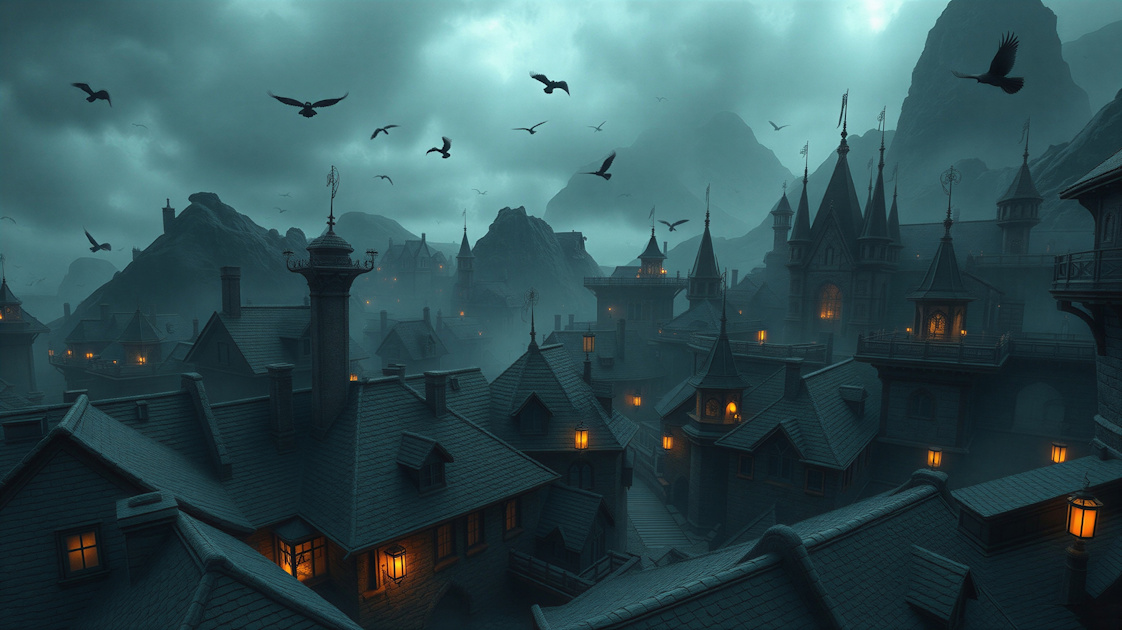
The city itself is organized around its military function in ways that centuries of civilian habitation have not entirely obscured. The walls are thick and well-maintained, their towers positioned for overlapping fields of fire rather than architectural aesthetics. The inner citadel, where the lord-commander and the northern noble houses maintain their primary residences, occupies the highest ground, its own walls representing a second line of defense that the city's military planners hope never to need. The civilian districts that fill the space between the outer wall and the citadel are older and denser toward the center, newer and more spacious near the walls — a pattern reflecting the city's growth outward from its military core over centuries of relative peace that may now be ending.
Governance
The queen appoints a Lord-Commander to administer Drakemoor from among Vranna's senior military nobility, traditionally, though not exclusively, drawn from the city's own great houses. The current Lord-Commander, Edra Valmoor of the house whose name appears in the city's oldest records, holds both civil and military authority within the city and the surrounding region, reports directly to Thesia on matters of kingdom-wide significance, and exercises broad independent judgment on local and frontier affairs. This concentration of authority in a single military commander reflects Drakemoor's frontier role—a city that may need to act decisively without waiting days for instructions from a distant capital.
The Council of Northern Houses, comprising the senior representatives of Drakemoor's old noble families, advises the lord-commander and serves as a political counterweight that prevents any single family from dominating city affairs. The council's authority is consultative rather than binding, but a lord-commander who consistently ignores its counsel finds administration increasingly difficult, as the noble houses control the estates, labor, and military contributions Drakemoor's defense depends on. In practice, the relationship is collaborative, shaped by the shared understanding that the threat from the mountains does not pause for political disagreements.
Districts and Landmarks
The Citadel and Great Houses
The inner citadel of Drakemoor is Vranna's oldest continuously occupied fortification, with foundations dating to the Darshavon era and upper structures rebuilt and modified over the centuries. The lord-commander's hall dominates its interior: a severe stone building whose walls display the lineage charts of every ruling family that has governed the city and the military records of the campaigns fought from its walls. The great houses maintain their primary city residences in the citadel district, their buildings reflecting the competition for prestige that centuries of proximity have generated — each grander than its neighbors in some carefully chosen detail, none so grand as to seem to challenge the lord-commander's primacy.
The Memorial Quarter
Drakemoor's most distinctive civic feature is the Memorial Quarter, a district of monuments, inscribed walls, and garden spaces dedicated to the city's military history. This is where the names of those who died defending the city during the worst of the post-Fall goblin wars are recorded — tens of thousands of names carved into stone over generations, a record so extensive that navigating the quarter requires knowing which campaign period you are researching. The quarter also hosts the annual investiture of Vrannan rulers, a ceremony held before the Wall of Founding, which lists the original noble families whose compact created the kingdom. Whatever Thesia may be, Drakemoor remains the place where Vrannan identity is formally consecrated.
The Market and Southern District
Drakemoor's civilian heart is less grand than its military precincts suggest, but more vital. The market serves both the surrounding agricultural communities and the garrison, its practical character shaped by the needs of people who have lived under the shadow of potential conflict for generations. The inns and taverns of the southern district cater to the steady traffic of soldiers, supply convoys, and the occasional diplomatic party making the ceremonial journey from Thesia for formal occasions. They are well-maintained and reasonably comfortable, their proprietors accustomed to serving officials and officers and appropriately discreet about the conversations they overhear.
Economy and Trade
Drakemoor's economy has always been military, with agricultural supplements, and the current era reinforces that character rather than changing it. The garrison's payroll, provisioning requirements, and equipment needs drive commercial activity throughout the city, supporting metalworkers, leather craftsmen, provisioners, and the entire supply chain that keeps fighting men and women equipped and fed. The surrounding estates produce grain, livestock, and timber that flow south to Thesia's markets, with Drakemoor taking its share as a waypoint and regional administrative center.
The city has never developed the commercial sophistication of Thesia or the export-oriented production that makes other Vrannan cities wealthy. Its merchants are practical rather than ambitious, its guilds modest rather than powerful, and its financial services focus on military supply contracts rather than the agricultural investment and commodity trading that define Vrannan commerce in the south. This is not failure—it is specialization, and Drakemoor's merchants understand that their city's prosperity depends on a strong garrison and a manageable northern frontier, giving them a clearer alignment of interests with military priorities than is common in more commercially minded cities.
Culture and Society
Drakemoor's culture is shaped by its history and its present circumstances in equal measure. The city takes its military heritage seriously in ways that go beyond ceremony — the noble houses maintain genuine martial traditions, their sons and daughters trained in weapons and tactics from childhood, the assumption being that every generation may need to defend what previous generations built. The Memorial Quarter is not merely a tourist attraction for the city's residents. It reminds them that their comfort rests on the sacrifice of people whose names are literally carved into the walls around them.
The relationship with the capital is complicated in the way relationships between old and new power tend to be. Drakemoor's nobles are proud of their primacy in Vrannan history and sometimes impatient with what they see as Thesia's softness—its commercial priorities, diplomatic caution, and distance from the northern realities Drakemoor lives with daily. Thesia's officials, for their part, appreciate the northern city's military value while sometimes finding its political culture rigid and its council of houses an inconvenient obstacle to efficient administration. Both cities understand they need each other. Understanding does not always produce affection.
Lord-Commander Edra Valmoor
The current military governor of Drakemoor is a woman whose family has defended this city since before Vranna was a kingdom and who has spent the past five years turning that historical weight into operational readiness. Valmoor is not a diplomatic figure by temperament or inclination — she speaks directly, expects directness in return, and has limited patience for the political maneuvering that Thesia's courtiers practice as a matter of professional habit. Her relationship with Queen Maren is one of mutual respect and occasional friction; the queen values Valmoor's military competence and honest counsel but occasionally wishes both came with more tact. Valmoor, for her part, serves the crown loyally and without reservation, but she makes clear that her loyalty is first to Vranna and its people, and second to any particular monarch's political convenience.
Concluding Remarks
Drakemoor does not concern itself with whether it is properly appreciated. It has work to do — walls to maintain, soldiers to train, a frontier to watch — and the appreciation of distant administrators has never been the foundation on which northern defenses rest. Instead, it has the particular confidence of a city that has been tested and held, that knows its own worth because it has demonstrated it rather than merely claimed it.
As Lord Gral's forces grow more organized and more ambitious, the question of whether Drakemoor is ready for the test that may be coming has moved from the background of Vrannan strategic planning to its foreground. Lord-Commander Valmoor believes it is. The memorial walls contain the names of generations who believed the same and were right. Drakemoor intends to add no new names to that record unless absolutely necessary — and to hold the line regardless of whether it must.