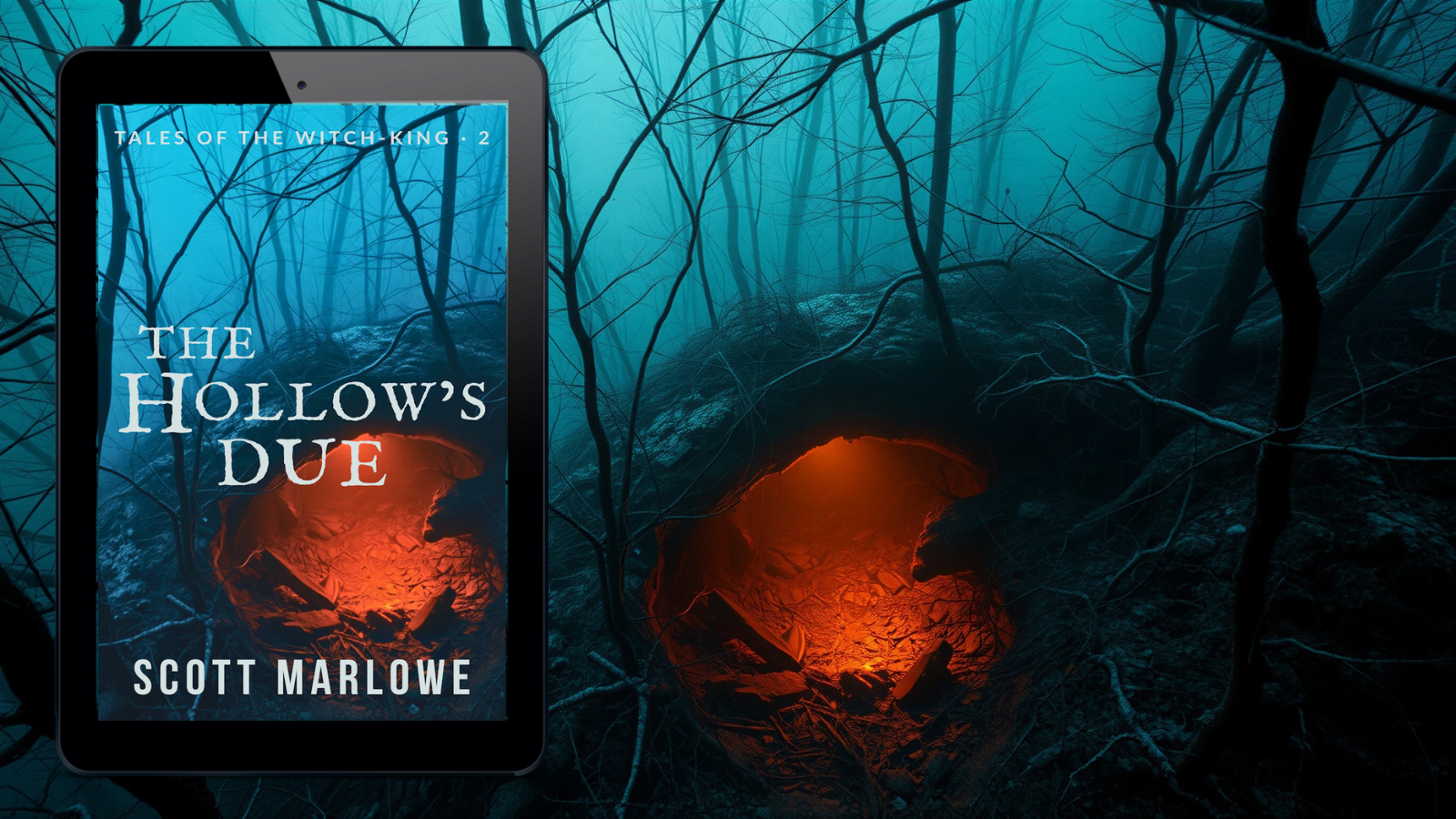
Chapter One: Five Missing Lines
Sleet driving in from the Bane Sea chilled Lista to the bone as she made her way down the icy avenues toward the Stabbing Sword. The storm had come off the water at dusk and taken the town, street by street. By full dark, it owned everything between her room and the harbor road.
Cobbles glazed over provided little purchase, forcing Lista to keep to the gutters where the muck gave her boots something to bite. She fell twice, anyway. The second time hard enough to put her palm through a skin of ice into the black water beneath. A carter’s boy under an awning asked whether she wanted a hand. She thanked him and got up on her own.
She passed windows glowing from within. The Gull had its shutters closed against the weather, and the fire showed orange through the seams. The Sailmender’s door stood wedged a hand’s width open to let the smoke out, and the smell of the place—roast mutton, wet wool, and spilled ale—followed her half a street.
Before, she would have gone into any of them. Shaken out her coat, found the corner nearest the hearth, taken four songs’ worth of requests and gone to bed warm and fed with coin left over. Every door on this road remained open to her and the songs she felt within her. But since the Hollow, she no longer possessed the spirit to sing them.
Three years on the coastal roads taught her to measure her stride in songs instead of distance, so she murmured the words to a ballad that had occupied her for three months now, trudging forward with her head buried into the wind. The first verse took her to the ropewalk’s turning, and the second and its refrain took her most of the way down the harbor road with the sleet coming level off the water. She worked through the third verse and the fourth, and then the measure reached the place where the words ended.
Five lines of nothing, so she took it from the top.
She started over four more times before she reached the Stabbing Sword. The tavern’s sign swung on its chains and cracked against the timbers with every gust. Years of salt wind had scoured away whatever the painted sword once stabbed. The blade remained, rust-brown, as if driven into bare wood.
Lista’s coat had gone dark at the shoulders half an hour ago. The sea-green wool dragged at her, soaked through to the linen beneath, and her skirt clung to her shins, its hem stiff with slush. Her soft boots, worn thin on too many roads to count, let the water in at every step. Only her satchel remained dry. She had wrapped it twice in oilcloth before leaving her room and carried it close to her chest, under her coat, the entire way.
Light leaked around the door. Behind it, a fiddle sawed at a reel. Tankards thumped. Someone’s laughter rose above the noise of the storm.
Lista had rehearsed what she meant to say the entire walk. She mouthed the words under her breath with the sleet stinging her cheeks, then pushed the door open.
Heat struck her face. The taproom stank of wet wool and tallow, spilled ale and mutton fat, and the storm had packed it to the walls. Drovers steamed by the hearth with their boots stretched toward the coals. Carters diced in the corner under the stairs. The fiddler spotted her in the doorway and lifted his bow off the strings, waiting for her to take up the tune.
Lista shook her head. Her hands had nothing to take it up with. Her lute lay in the dirt of Wilderwood beside a dead fire, where she had dropped it. Songs required passion and thought, and she had not been able to think past the nightmares since that night.
At the long table nearest the hearth, an old storyteller had the floor. She caught the words ‘witches’ and ‘vault’ before the door banging shut reminded her that she didn’t need to hear those sorts of stories anymore. She had lived them, and so she knew the rest without hearing it. Four young men and a girl with a new bow leaned in around him, their cloaks still beaded with sleet. One wore a sword so new that the scabbard creaked. He laughed at something the old storyteller said and slapped the table for another round. At first thaw, he announced, they would see for themselves what all the fuss was about.
Three months ago, Lista had sat at that same table with her songbook open, taking down the storyteller’s best lines. They would make a fine ballad, she remembered thinking. Now, she wished she had never come to the tavern that night.
She kept her face from the hearth, threading between the tables toward the back of the room. She found Cassian sitting alone at the company’s table, beneath the smoke-black beam where Daegra cracked his head whenever he forgot to duck. Three chairs stood empty around him. A trencher of mutton and barley sat before him, a round loaf torn in half, and a jug of the dark red that the barkeep sold by the measure to men with coin and by the jug to Cassian.
He looked well.
His face had color. A barber had trimmed his hair and shaved his patchwork of facial hair. A tailor had brushed his blue doublet until the nap stood up, and the silver clasp at his throat winked in the lamplight. He tore the bread and mopped the trencher with it like a man at the end of an honest day’s work. Cassian wasn’t afraid to get his hands dirty, but she doubted he’d ever worked an honest day in his life.
Lista saw her own face that morning in the washbasin. Hollows under the eyes. Lips split from chewing them during what sleep she got. She had not slept a night through since autumn. Most nights she lay awake until the hour before dawn, the hour her mother rose to sing the liturgy, and dropped off then for an hour or two at most. Each morning, she woke hoarse as a cantor after the long vigil, though she had no memory of singing.
Cassian set down his bread and grinned at her arrival. “There she is.”
He hooked the chair beside him out with his boot. Lista took the one across instead, Marella’s chair, with its back to the wall and the entire room in front of it. With fingers too stiff to work the toggles on her coat, she fought them loose one at a time, peeled the sodden wool off her shoulders, and hung it over the chair to dry. The satchel stayed in her lap.
“You look half-drowned,” Cassian said.
“It’s sleeting.”
He waved down the keeper’s girl. “Something hot for her. Mulled wine, with the good—”
“Hot water,” Lista said. “Honey, if there’s any.”
The girl left. Cassian’s eyebrows rose, the scarred one a beat behind the other.
“You don’t sound good.”
“It’s the cold.”
Hot water and honey. Her mother’s cure for a cantor’s throat, taken at dawn before the liturgy. Lista had drunk half a pot of it each morning since autumn. Little good it had done. But since she found some small comfort in its sweetness, she drank it anyway.
“The others?” she asked.
“I sent the potboy for them after supper. In this weather, they’ll get here when they get here.” He refilled his cup and tipped the jug toward her. Lista shook her head. “I wanted to hear it first, anyway.”
“I’ll tell you everything I found. Tonight, all of it.” She drew a breath that scraped her throat. She fidgeted with her fingers in her lap. She would tell him everything she learned, but she had other words to say first. Words she’d spoken to her washbasin, to the ceiling of her room at three in the morning, and to the sleet on the way here. She said them now, before the water arrived and before she lost her nerve. “But I’m not going into those woods again.”
Cassian didn’t look surprised to hear her say that. “Nobody’s asking you to.”
“You will,” she said. “Maybe not tonight, but you will. So I’m saying it here and now, where it’s warm and dry and nothing is chasing us. I know I said it once before at the border, but I’m saying it again. I won’t have you telling me later that fear had anything to do with my decision.”
“You were frightened. We all were.”
“Cassian.”
He settled his wine cup onto the table and raised both palms. “You have my word. I won’t ask you. Now, what did you find?”
He’d asked the question a week after they limped home from Wilderwood.
How do we defeat the Witch-King?
Lista wanted to know too, though not because of the Holdfast’s treasure. Her mother used to say a song set down is a song laid to rest. Lista had believed it all her life. Find the thing, write it down, and give it voice, leaving it nowhere to go. So she started looking for the answer to that question because, at first, she enjoyed the challenge. Then it became a way to distract her from the nightmares. Finding something had not been hard. That troubled her more than anything else. Doors she expected to wait at for a season opened at the first knock. Books she had hunted for weeks waited on the first shelf. Before, she would have called it luck.
The serving girl set down a steaming cup. Lista wrapped both hands around it and let the heat bite into her fingers until they ached, then drank. The honey coated her throat. The rawness stayed.
Cassian pushed his trencher aside. “Feel better?”
She gave him a thin smile, keeping the rest to herself.
“All right,” he said. “Tell me.”
She untied the satchel and unwound the oilcloth. The pages inside came through dry: copies in the old temple script, a sheaf in the court hand of the principality’s vanished kings, a border grandmother’s harvest ballad in Lista’s own cramped writing, the ink blotted where her hand had shaken. She laid them across the table in the order she found them, squaring each to the edge.
Behind her, the storyteller dropped his voice for the last line—the most foreboding—of his tale.
And the Hollow always collects its due.
The young group laughed. The boy with the new sword banged his mug on the table and shouted for the fiddler.
Lista shivered, and she noticed her fingers tapping beside the pages. She didn’t know when they started. A slow, falling measure, over and over: the song she had pieced together, line by line, from the pages on the table, and never once sung aloud. She pressed her hand flat on the table to stop the tapping.
Across from her, Cassian’s gaze followed the movement.
“Are you all right?” He reached out to touch her hand. “We made it out, Lista. We’re safe.”
Lista pulled her hand away so Cassian couldn’t feel how cold it’d gone. “I know that.”
Cassian didn’t argue. He unhooked the silver clasp at his throat, rounded the table, and settled his cloak over her shoulders before she could refuse. The Vrannan wool held his warmth and smelled of woodsmoke and sword oil.
“You’re blue at the lips,” he said, dropping into his chair. He pushed the torn half of the loaf across the table. “Eat something.”
She tore off a corner of the bread to keep him from asking twice. It had no taste, but she chewed and swallowed it anyway while he watched. She drank another sip of her honey water, then she laid two fingers on the nearest sheet.
“We have his name,” she said. “Almeric gave us that much at the fire.”
Cassian lifted his cup in a mock toast. “Lord Caelmir the Resplendent.”
She noticed he kept his voice lowered when he said it.
Lista continued. “In ancient times, when a nation crowned a king, a cantor sang his name into the blessing. That’s the essence of a crowning. The oil and the circlet were for the crowd. But the song made the coronation official. The king’s name woven into it made the appointment binding.”
“And Aldric’s people sang it out of him.”
They remembered Almeric’s words, spoken that night while the Wilderwood’s shades watched them. “They didn’t just kill him,” Almeric had said. “That would have been mercy. Instead, they performed a ritual of unmaking—stripped him of his titles, his lands, his very name. They dragged him here, to Wilderwood, and cast him into the corruption of the Hollow.”
Lista touched the temple fragments. “They sang the crowning ritual in reverse.”
Cassian frowned. “Come again?”
“They didn’t need a new rite to unmake a king. They took the one that made him and sang it in reverse, verse by verse, until the man existed without a name. Then the Hollow took what remained.”
Cassian leaned back in his chair. “Meaning?”
“That if someone sings it forward, it returns his name to him. Turns him back into Caelmir and banishes the Witch-King for the duration of the song.”
At the hearth, the fiddler played a jig, and the young company stamped the floorboards in time.
“It took three months for me to piece this together.” Lista moved her fingers along the pages as she named them. “Two fragments from the keepers’ archive at home, copied off rolls older than the principality. A sheaf from a dead magistrate’s library. His heirs sold it by the pound.” She reached the last page, the one in her own handwriting. “And this. Each autumn the border villages crown a harvest king. Some drunken farmer’s son in a wheat-straw circlet, hauled around the green on a hay cart. The song they sing over him is the crowning liturgy of the old kings, near enough word for word. They think it’s about barley.”
Cassian laughed, loud enough that a gambler glanced up from his dice. For a breath, Cassian was the boy who had bought her supper the night she joined them, and Lista almost smiled.
“So you have it. A way to defeat him.”
“I have most of it.” She swung the pages around to face him, one after another. “Look at the ends.”
Both temple copies ended in the same century-old note, set down in the copyist’s neat hand: Here the roll is burned. The court sheaf ran clean to its final page, where damp had eaten the last lines of ink to lace. Beneath the last verse that Lista had written out of the harvest ballad sat five rows of dashes.
“Everyone in the village hummed that part,” she said. “Nobody has sung the words in living memory. When a singer forgets a verse in those hills, they say a witch has the words.”
Cassian set a fingertip on the top row of dashes. “Five lines.”
“The same five. Burned in the rolls, rotted in the sheaf, forgotten in the village.”
“Bad luck.”
“I thought so too, so I tried to rebuild them.” She had not planned to tell him this part. “I had the meter and the rhyme. I wrote five lines of my own to fit, so I could at least hear it all in my head. When I woke the next morning, the page was blank. So I wrote them again the next night, and the next.” She drew a breath. “Words the Hollow takes don’t stay on paper, Cassian. Not even the ones you make up to stand in for them.”
“So sing what you have.”
“It won’t work. Without the end, it’s a song about barley.”
Cassian’s chair creaked under him as he shifted. For a while, neither spoke, and the jig wore on across the common room, a stamp on every fourth beat.
“The rest of it, then,” he said at last. “Almeric claimed the forest took him and merged him with it. Was the old man lying?”
“No, he had it right.” She slid the court sheaf toward him and put her finger on a line he couldn’t read. “They say it plainer here than he did. The Hollow is the root of everything in Wilderwood. The Witch-King is one more thing it owns. No different from the ghouls and shades.”
“A dog on a chain.”
“If you like.”
His features eased. His jaw loosened, and color rose in his cheeks.
“I told Daegra as much before the frost,” he said. “You don’t have to kill the master to get past his dog.” He rapped two knuckles on the table. “The Hollow doesn’t matter. We only need to get past its guard to get at the treasure.”
“Not with half a song, you won’t.”
“Half a song is better than nothing. I know it’s missing the important part, but we’re closer, right?”
She should have stopped there. But one more thing waited in the court sheaf, and it had nothing to do with the rest. She told him anyway because she couldn’t help herself. Of everything she read in three months, this alone she wanted to show someone.
“A clerk wrote this in the margin, beside the account of the unmaking.” She found the cramped writing squeezed in alongside the court’s elegant script. “It reads, another can satisfy the wood’s due, standing in the taker’s stead.” She lifted her eyes, pleased despite herself.
“What does it mean?” Cassian asked.
“It’s the temple law for penance. A cantor can sing a penance on behalf of someone who can’t. My mother sang a dozen a year for fishermen’s widows, though I’ve never seen it written as a warning or maybe even a curse.”
Cassian poured more wine into his cup. “Go on. What about the missing verse?”
She drew the harvest ballad across the table and laid her palm over the dashes. “Where does anything go that the Hollow takes? Those five lines are in the wood the same as the shades. And there’s only one mouth the Hollow speaks through.”
She watched him try to work it out and fall short, so she tried a different approach.
“Before the Witch-King arrived, do you remember the first voice? Come closer, it said.”
Cassian’s hand drifted to his right forearm, where Almeric’s fingers had dug in above the wrist. He rubbed at it through the sleeve. Any bruise there had faded three months ago.
“I remember.”
“It wasn’t the Witch-King. He speaks with a hundred voices at once. That was a single voice. Not a man’s, not quite a woman’s.”
“Then what?”
“What’s left of a woman after three hundred years.”
Cassian squirmed for no reason. “Are you asking or telling me?”
Lista let out a huff. “I’m talking about Morwenna. Almeric said the thing under the roots ate her first. Body, soul, and magic. In a manner of speaking, he was right. But legends aren’t always precise.” She touched the temple fragments, one and then the other. “Every account I found says the Devourer—the Hollow—took her in. Nothing says it finished her.”
At the hearth, the jig ended in a clatter of boots and applause.
“So the witch is still alive?” Cassian asked, crossing his arms.
“Not alive,” Lista said. “But not dead, either.”
Cassian swallowed.
Lista’s throat tightened. She had come here to lay the thing to rest. She had laid it out instead, sheet by sheet, squared to the table’s edge, and each page pointed in the same direction. Still, she hadn’t said it yet, and she didn’t have to, either. She could keep it to herself and let Cassian’s ambitions end with it. Instead, Cassian spoke the final truth for her.
“I think what you’re saying,” he said, “is that the witch has the missing five lines.”

Join today to receive a notification when I have a new release available or when I'm taking part in a mega-sale where you can get some great book deals. As a thank you, I'll send you two free eBooks—The Assassin's Dilemma and The Hall of Riddles.